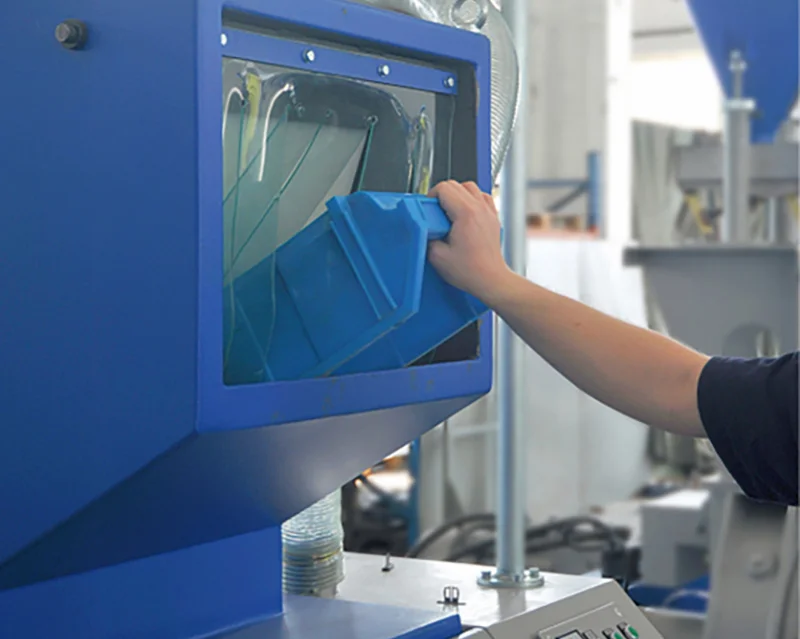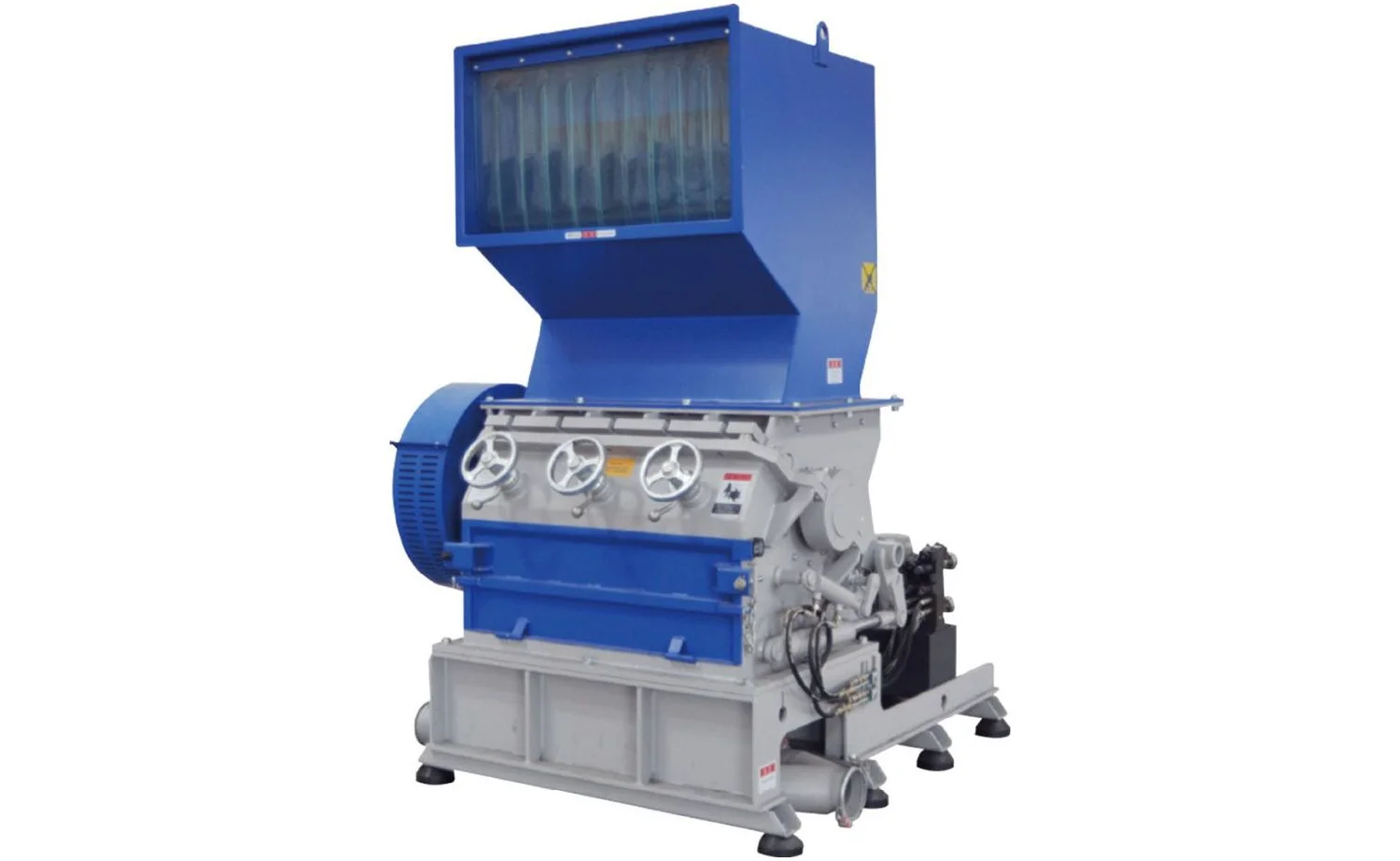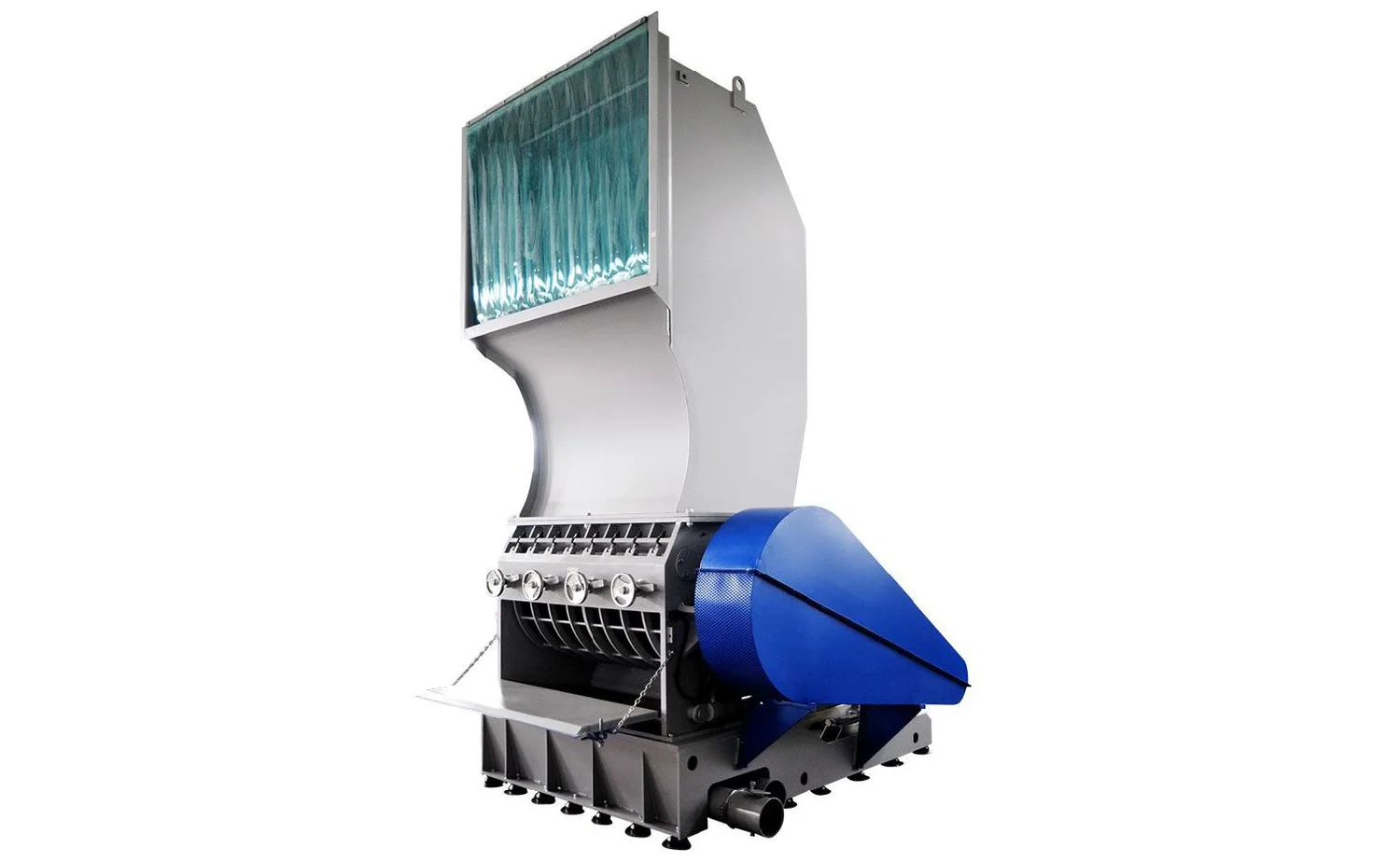
Choosing the right granulator is crucial for achieving efficient plastic recycling, reducing waste, and maintaining consistent regrind quality. GSH Heavy-Duty Granulators from Zerma America are engineered for demanding industrial applications – processing thick, bulky, or highly rigid plastic scrap. This guide helps you determine the ideal GSH model size and configuration based on material type, feed style, and production volume, ensuring maximum operational performance and long-term cost savings.
Why the Granulator Choice Matters:
In the plastic recycling world, efficiency depends heavily on selecting the right equipment. Choosing the right granulator is essential to maintaining a smooth and profitable plastic recycling process. A properly sized and configured machine delivers consistent regrind quality, prevents excessive wear and energy use, and reduces downtime caused by jams or overload. When matched correctly to the material and production demands, the granulator becomes a reliable asset that improves product recovery, lowers processing costs, and supports a more sustainable manufacturing operation. Simply put – the right granulator ensures your recycling system performs at its highest efficiency every day.
A granulator that is underpowered or improperly configured can result in:
- Excessive dust and fines that reduce material quality
- High motor load and overheating, leading to premature equipment failure
- Frequent stoppages and accelerated blade wear, increasing downtime and costs
- Inconsistent granule size that affects reprocessing efficiency
- Poor downstream performance, including extrusion blockages or pelletizing issues
By selecting the ideal GSH Heavy-Duty Granulator, recyclers and manufacturers can achieve:
- Higher regrind quality with consistent particle size for efficient reprocessing
- Lower operational costs through energy-efficient cutting and optimized performance
- Longer machine and blade life thanks to robust engineering and reduced wear
- Greater production profitability with improved uptime and fewer material losses
As a trusted Plastic Recycling Equipment Supplier, Zerma America delivers tailored granulation solutions for every type of operation – from small molding facilities focused on in-line scrap recovery to large industrial recycling plants processing high-volume waste streams.
Key Selection Criteria for Choosing the Right GSH Granulator:
Selecting the correct GSH Heavy-Duty Granulator requires evaluating how well the machine aligns with your specific material characteristics, production volume, and processing workflow. The right configuration ensures efficient cutting performance, consistent regrind quality, reduced downtime, and long-term operational savings.
Below are the most important factors to consider when choosing the best granulator for your plastic recycling application.
1. Material Type:
Every plastic material responds differently during the size-reduction process – based on hardness, thickness, and reinforcement content. To ensure efficient cutting, optimal energy use, and longer blade life, your selected GSH Granulator must be configured to match the specific characteristics of the scrap you process.
Your GSH model should match your material characteristics:
| Material Category | Examples | Recommended Configuration |
| Thick, rigid scrap | HDPE purgings, PP crates | High-torque motor + 7-blade rotor |
| Large molded parts | Automotive housings, bins | Large cutting chamber + heavy-duty flywheel |
| Hard engineered plastics | PC-GF, Nylon-GF | Abrasion-resistant knives and plates |
| Mixed industrial scrap | Multi-cavity rejects | Staggered rotor for aggressive cutting |
2. Feeding Method:
How material enters the granulator is a critical factor in system performance and throughput efficiency. The right feeding method ensures smooth, consistent delivery of scrap into the cutting chamber — preventing jams, improving cutting stability, and reducing operator labor. Whether material is fed manually, via conveyor, robotics, or pneumatic systems, your GSH Granulator should be configured to seamlessly integrate with your production flow for safe, continuous, and contamination-free granulation.
Your production flow determines the proper feeding setup:
| Feed Style | Operation Type | Best Match |
| Manual Loading | Low-volume operations | Smaller GSH models or optional tilt hoppers |
| Conveyor Feeding | Centralized scrap recycling | Mid- to large-size GSH granulators |
| Robotic or Crane Feed | Bulky scrap & purgings | Oversized hopper inlets with controlled feed |
| Pneumatic Discharge | Clean closed-loop production | Screen + blower conveyance integration |
The smoother the feed system — the higher the throughput consistency.
3. Throughput & Production Volume:
Throughput — the amount of material processed per hour — plays a vital role in choosing the correct GSH Heavy-Duty Granulator. Daily scrap generation, peak shift volumes, and future production increases must all be factored into the selection. A properly sized machine prevents bottlenecks and maintains stable cutting performance.
A GSH model should comfortably operate below peak motor load to ensure:
- Efficient and consistent granulation
- Quieter running and reduced vibration
- Lower heat generation and stress on components
- Longer service life for both the motor and cutting tools
Right-sizing throughput capability helps avoid overloading, excessive wear, and energy waste – ensuring reliable operation across all production conditions.
4. Output Size Specification:
The screen installed in the granulator plays a crucial role in determining the final granule size. Selecting the correct screen ensures the regrind is suitable for its intended downstream use.
Screen size impacts:
- Granule uniformity and consistency
- Amount of dust and fine particles generated
- Smoothness and stability of downstream processing (extrusion, molding, pelletizing)
Common screen size guidelines in plastic recycling:
- 6–10 mm → Ideal for injection molding regrind with strict flow requirements
- 10–12 mm+ → Suitable for blow molding or extrusion where larger granules are acceptable
Note: Smaller screen sizes produce finer and higher-quality material, but they also require more cutting energy, which can increase power consumption and blade wear.
Selecting the right screen ensures the regrind meets quality standards while maintaining efficient machine performance.
Additional Considerations:
Beyond material, feeding method, and throughput, several practical factors can significantly impact long-term granulator performance and cost efficiency. When selecting a GSH Heavy-Duty Granulator, it is essential to also consider:
- Maintenance accessibility — quick-change blades and easy screen access minimize downtime
- Sound enclosures — help maintain a quieter and safer working environment
- Energy consumption — properly matched motor size prevents wasteful power use
- Wear-resistant components — hardened steels extend machine and knife life
- Space and installation layout — correct footprint ensures safe and efficient servicing
- Safety features — chamber interlocks, overload protection, and mechanical guards keep operators protected
These factors directly affect machine uptime, operating costs, and overall return on investment — making careful evaluation a key part of equipment selection.
Benefits of Choosing Zerma America:
As a leading provider of plastic recycling industrial granulators, Zerma America delivers proven technology designed to meet the rigorous demands of industrial recycling. We engineer GSH Heavy-Duty Granulators that combine reliability, performance, and long-lasting durability — ensuring maximum material recovery and reduced operational cost.
What you gain with Zerma America:
- High-performance GSH Heavy-Duty Granulators specifically built to process thick and rigid plastic scrap
- Custom-engineered system configurations tailored to your material type, feeding method, and production goals
- Local technical support, spare parts availability, and expert installation for fast and reliable service
- Trusted by major recyclers across North America for consistent throughput and exceptional regrind quality
We don’t just supply machinery – We enable smarter, more profitable, and more sustainable recycling systems.
Ready to Improve your Recycling Efficiency?
Choosing the right GSH Heavy-Duty Granulator can transform your plastic recycling process — delivering cleaner regrind, higher throughput, and greater profitability.
Conclusion:
Selecting the ideal GSH granulator starts with understanding your material behavior, feeding style, and production throughput. When matched properly, a GSH Heavy-Duty Granulator delivers outstanding reliability, superior cutting performance, and long-term cost savings in any recycling or manufacturing environment.
Whether you’re processing purgings, rigid molded parts, or specialized engineering plastics, Zerma America ensures you get the exact machine configuration needed to boost productivity and support a circular economy.
Frequently Asked Questions (FAQs):
1. What makes GSH Granulators “heavy-duty”?
GSH Granulators are engineered with rugged cutting chambers, reinforced rotor designs, and high-power drives that handle thick, bulky, and rigid plastics with ease. Their wear-resistant components and robust construction allow them to run continuously in demanding industrial recycling environments while delivering reliable, high-quality regrind.
2. Can GSH Granulators process reinforced or engineered plastics?
Yes. GSH Heavy-Duty Granulators can be equipped with abrasion-resistant knives, wear plates, and heavy-duty rotors designed to withstand materials such as glass-filled nylon, polycarbonate, and other engineering plastics. This ensures efficient cutting performance without premature wear.
3. Are GSH Granulators suitable for post-industrial and post-consumer plastics?
Absolutely. Their strong cutting performance and contamination-tolerant design allow GSH models to handle a wide variety of industrial scrap, as well as challenging post-consumer materials like bottles, packaging films, and mixed plastics — improving recovery and reducing landfill waste.
4. Can a GSH Granulator be integrated with conveyors or automated feeding systems?
Yes. GSH machines are designed to integrate seamlessly with conveyors, crane loading, pneumatic discharge systems, or robotic scrap handling setups. This automation significantly increases throughput, reduces labor, and ensures a safe and consistent feeding process.
5. Does Zerma America provide installation, operator training, and spare parts support?
Yes – Zerma America provides complete lifecycle support for all GSH Granulators. Our local technical team supports installation, testing, operator training, and routine maintenance. We stock essential spare parts to minimize downtime and keep your production running smoothly.