As a plastics facility grows, its scrap handling strategy often does not grow with it. Individual beside-the-press granulators that made sense for a ten-press operation can become difficult to manage across fifty presses running multiple resins. Maintenance is spread thin, knife inventories multiply, and ensuring consistent regrind quality becomes harder to control when size reduction is happening in dozens of places simultaneously.
Central granulation offers an alternative model: consolidate size-reduction capacity into fewer, purpose-built machines, and route scrap to them systematically. For the right operation, that shift simplifies maintenance, improves regrind consistency, and gives production managers better visibility into material flow.
What Centralized Granulation Actually Looks Like
In a centralized setup, scrap from production cells is collected and conveyed, typically by pneumatic or mechanical conveying systems, to a dedicated granulation area. There, one or more central granulators sized for sustained, high-volume throughput process the incoming material into uniform regrind, which is then returned to production or directed to storage.
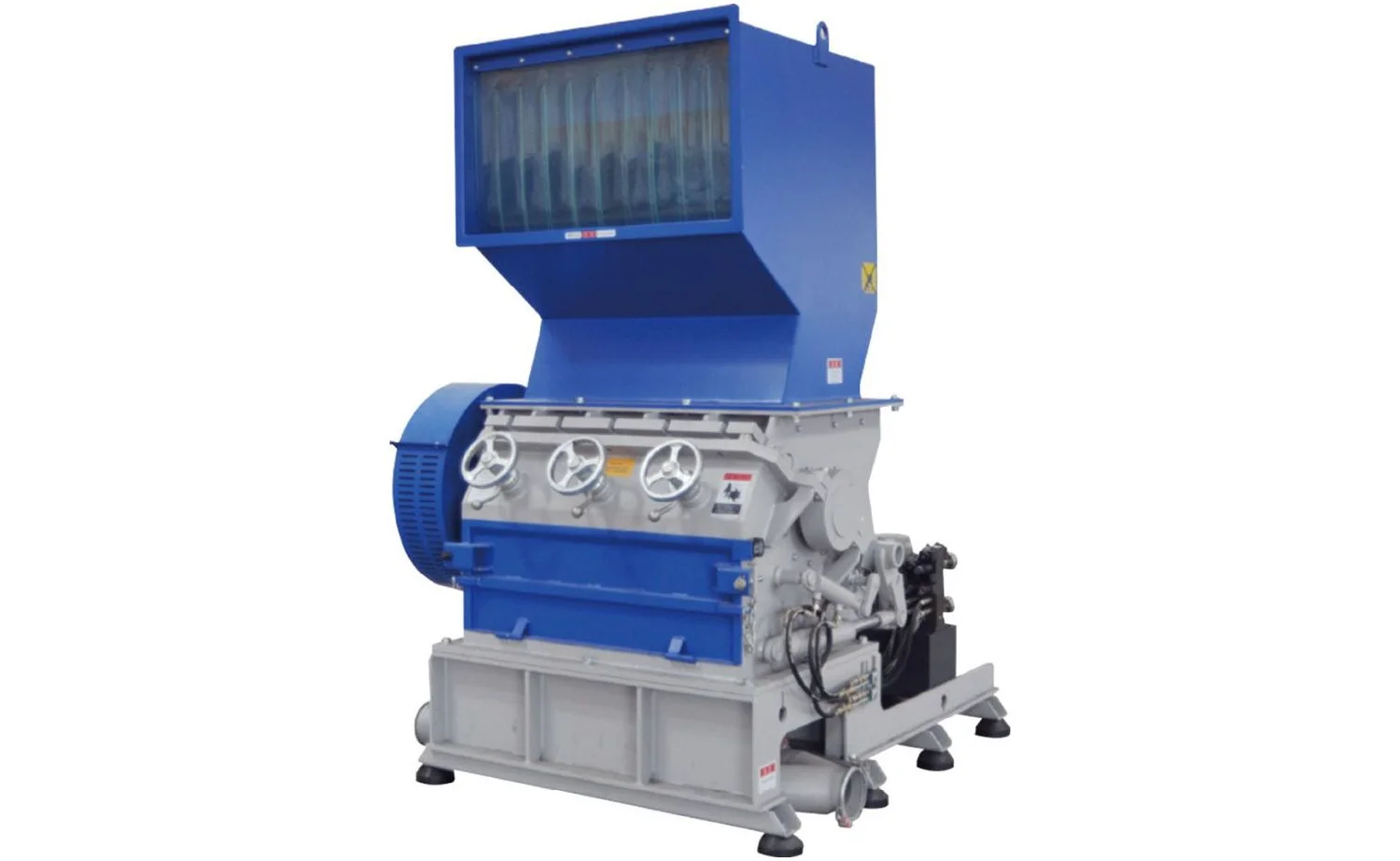
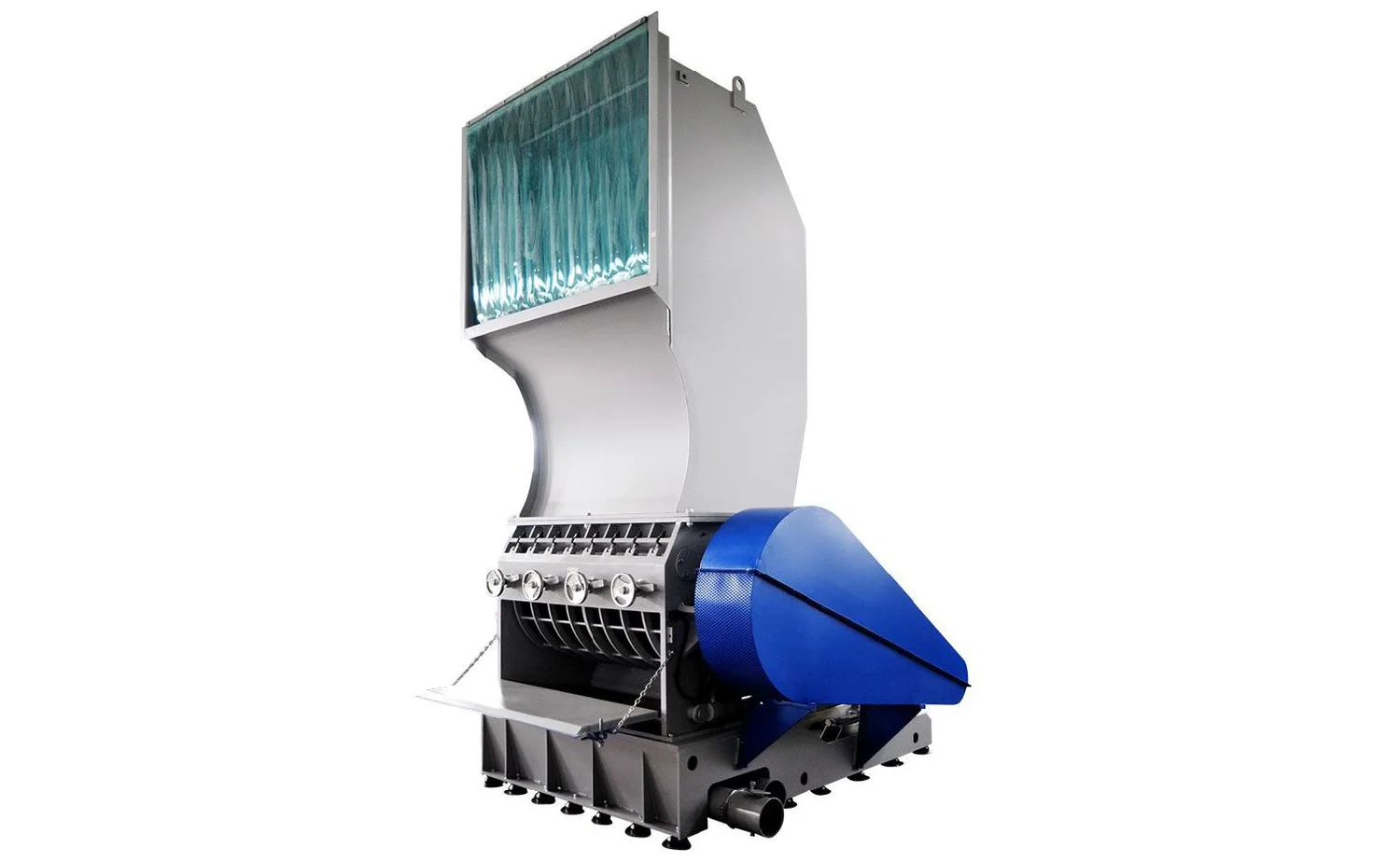
The central granulation station can be designed around the specific material mix the facility runs. Metal detection upstream of the granulator protects cutting chambers from contamination. Air separation or cyclone systems downstream manage fines. The GSH heavy duty granulator is purpose-built for exactly this type of application, handling the sustained throughput demands that multiple small machines were previously sharing. Everything is in one place, under one maintenance program.
The Maintenance Case for Centralization
The maintenance argument for central granulation is often underappreciated until a facility has lived with a distributed fleet long enough to feel its cost. When granulators are scattered across a production floor, knife changes happen on different schedules, wear monitoring requires technicians to visit multiple machines, and spare parts inventories have to account for every configuration in the fleet.
Consolidating to a smaller number of well-matched central granulators changes that equation. Maintenance teams develop deep familiarity with a limited set of machines. Knife and screen inventories simplify. Planned service intervals replace reactive maintenance across a scattered fleet. Over the course of a year, those efficiencies accumulate in ways that show up on the maintenance budget.
Regrind Quality and Throughput Predictability
A central granulator running at designed capacity and with properly maintained knives and screens produces consistent regrind particle size across every batch. That consistency is harder to achieve when the same material is being processed by a mix of machines of different ages, configurations, and maintenance histories.
Predictable throughput also simplifies inventory planning. When regrind production is tied to a known machine running at a known rate, it becomes easier to match supply to what the molding or extrusion floor actually needs, rather than managing regrind availability as an unpredictable variable.
Resin Separation Requires Deliberate Design
The most important planning consideration in any centralized system is how resin streams stay separate. If multiple materials are running simultaneously, scrap collection must keep them segregated before they reach the granulator, or the regrind has no value. Dedicated collection bins by resin family, scheduled processing windows, and clearly marked conveying paths are all standard approaches, but they require deliberate design before the system is installed, not after.
ZERMA America designs central granulation systems built around the specific materials and production volumes of each facility. From the GSH heavy duty granulator to complete conveying and separation configurations, we help larger operations move from a distributed fleet to a system that actually matches how the plant runs.
Have Questions? We’re Here to Help.
Reach out to the ZERMA America team directly:
Shop Online at Virtus Equipment Direct
Virtus Equipment Direct is our new online store for plastics recycling and size-reduction professionals. Browse machines, spare parts, knives, screens, and maintenance kits, all in one place. Visit virtus-equipment.com/direct to explore our catalog and place an order today.