Two granulators with identical horsepower can differ by a factor of three in blade life. The reason is rarely the motor. It is the steel in the knives and the geometry that presents them to the plastic.
Ask two questions about any granulator and you can predict most of its operating cost: what are the knives made of, and how does the rotor hold them against the material? Horsepower gets the attention on a spec sheet, but a motor only supplies energy. What that energy does to your plastic, and how long the machine keeps doing it well, comes down to metallurgy and geometry. This article is written for the engineers who have to live with those decisions.
Blade steel controls how long an edge stays sharp against a given material. Rotor geometry controls how efficiently that edge is used, how much of the motor’s energy becomes cutting instead of heat, and what your regrind looks like. Get both right for your feedstock and blade life, energy use, and regrind quality all improve at once.
Why the steel grade matters more than the hardness number
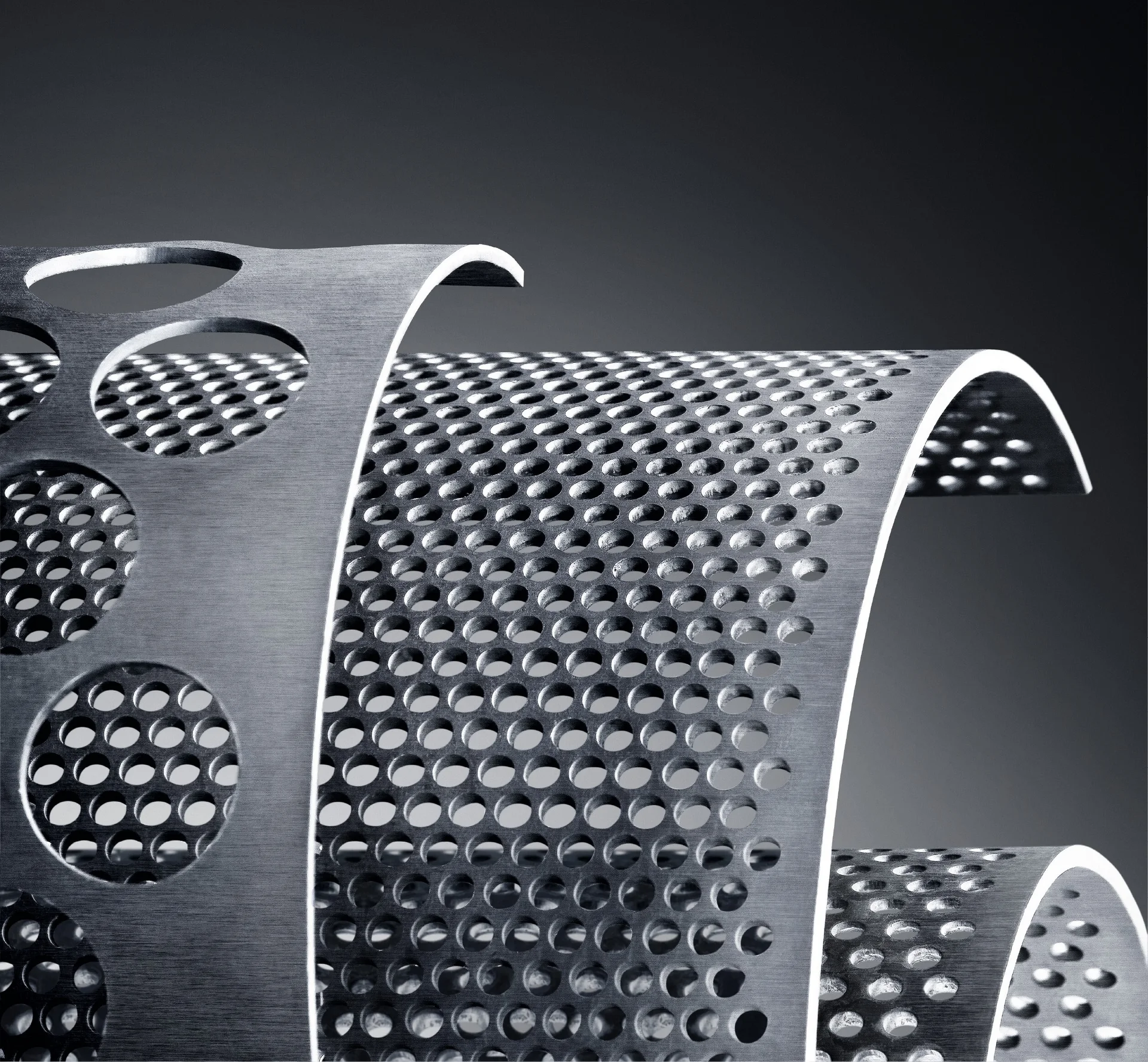
Most people reach for a single number, Rockwell hardness on the C scale (HRC), and stop there. Hardness matters, but it describes resistance to indentation, not resistance to the specific kind of wear a granulator blade actually sees. Cutting plastic is an abrasion problem. Fillers like glass fiber, talc, and calcium carbonate act like fine sandpaper on the cutting edge, and the property that resists that is wear resistance, which comes largely from the hard carbides distributed through the steel, not from hardness alone.
D2 tool steel is the workhorse for a reason. It is a high-carbon, high-chromium cold-work tool steel that reaches roughly 55 to 62 HRC after heat treatment, and its chromium-rich carbides give it strong resistance to the sliding, abrasive wear that dulls a blade.[1][2] That combination, hard enough to hold an edge, carbide-rich enough to resist abrasion, and affordable enough to re-sharpen many times, is why it shows up across so much industrial cutting and shearing tooling.[3]
The trade-off is corrosion. D2 is sometimes called semi-stainless: its chromium content gives it more corrosion resistance than plain carbon steel but less than a true stainless grade, so in wet granulation or humid feed it needs more care.[2] This is exactly the kind of detail that should drive a blade-steel choice, and it is why matching the steel to the feedstock beats chasing a single hardness figure.
Edge life vs. feedstock, indexed to clean plastic on D2
Relative blade service life. Clean, unfilled plastic on standard tool-steel blades is the baseline (1.0×). Abrasive and reinforced feeds shorten life sharply, which is what drives premium steel or carbide-tipped choices.
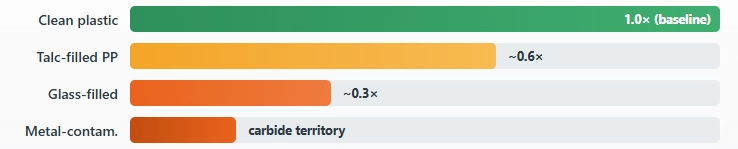
Directional ranges compiled from published granulator engineering guidance on how filler and contamination reduce edge life and when premium or carbide-tipped blades pay back.[4] Your results depend on resin, filler load, screen size, and maintenance.
The three geometry decisions that shape your regrind
Once the steel is chosen, geometry decides how well it is used. Three things matter most.
1. Open-rotor vs. closed (solid) rotor
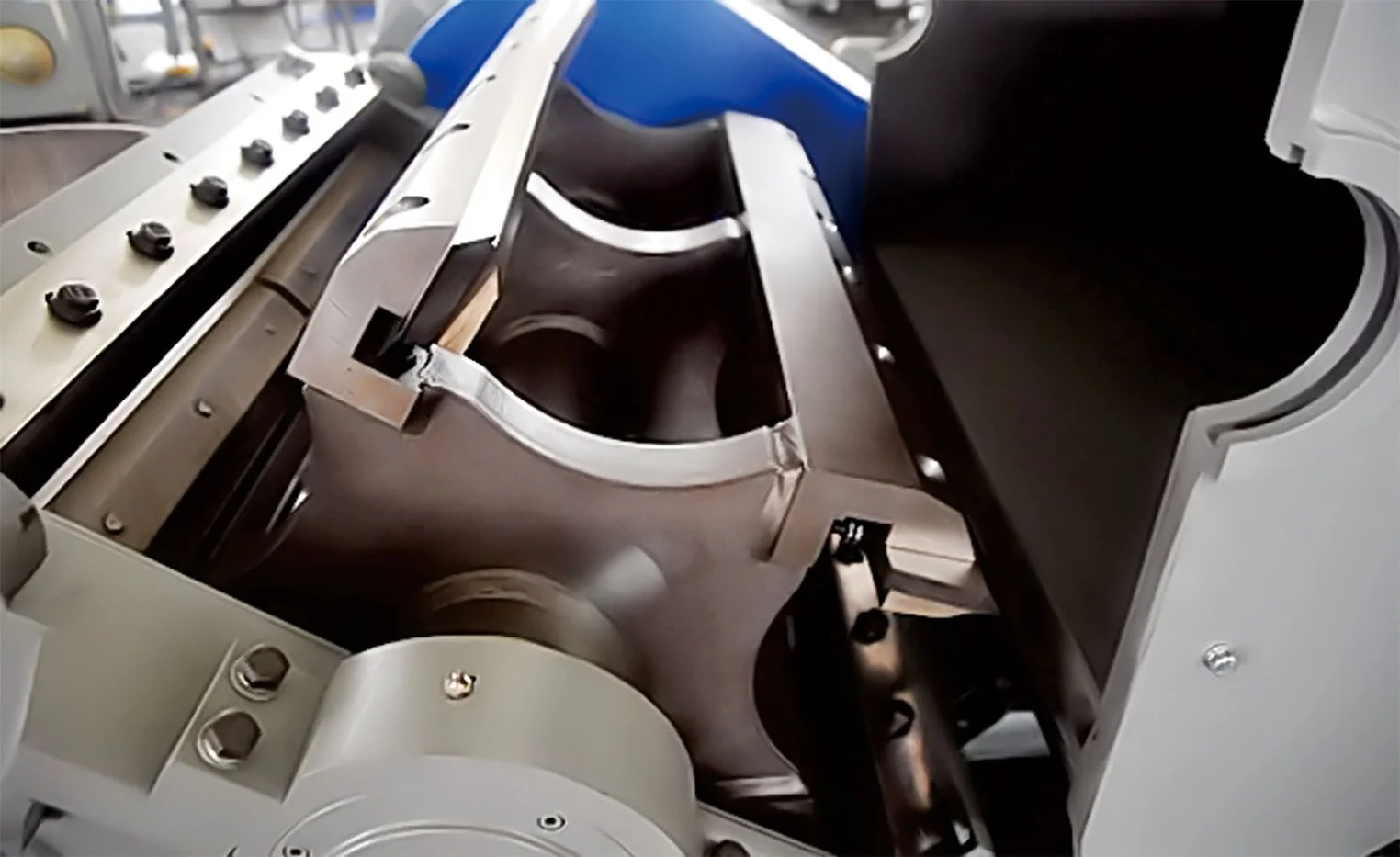
An open rotor runs cooler and lighter, which suits thin-wall parts, film, and heat-sensitive resin where you want to avoid melting and fusing. A closed or solid rotor carries more mass and momentum, which helps power through thick-wall parts, purge, and dense scrap without stalling. The choice is not about which is better; it is about matching rotor thermal mass to what you feed.
2. Cutting circle and knife count
More rotor knives mean more cuts per revolution and a finer, more uniform particle, but each additional knife also takes a bite of torque. Fewer, more aggressive knives bite harder into bulky scrap but tend toward a coarser, more variable output. Matching knife count to material is how you keep both throughput and particle uniformity where you want them.
3. The cutting gap
The gap between rotor and bed knife is the single most important adjustment on the machine, and the one most often neglected. Set too wide, the blades tear and smear plastic instead of shearing it cleanly. Published maintenance guidance puts a healthy rotor-to-bed gap in roughly the 0.15 to 0.30 mm range, and warns that letting it open past about 0.5 mm can waste a meaningful share of motor energy while degrading cut quality.[4] A five-minute gap check protects both your power bill and your regrind.
| Design element | Favors… | Watch out for… |
|---|---|---|
| Open rotor | Film, thin-wall, heat-sensitive resin | Less momentum for dense scrap |
| Solid rotor | Thick-wall parts, purge, bulky scrap | Heavier, higher inertia |
| Higher knife count | Fine, uniform regrind | Higher torque demand per cut |
| Tight cutting gap | Clean shear, energy efficiency | Needs disciplined maintenance |
| Premium / carbide blades | Filled & abrasive feedstock | Higher upfront cost per set |
Where this shows up in the ZERMA range
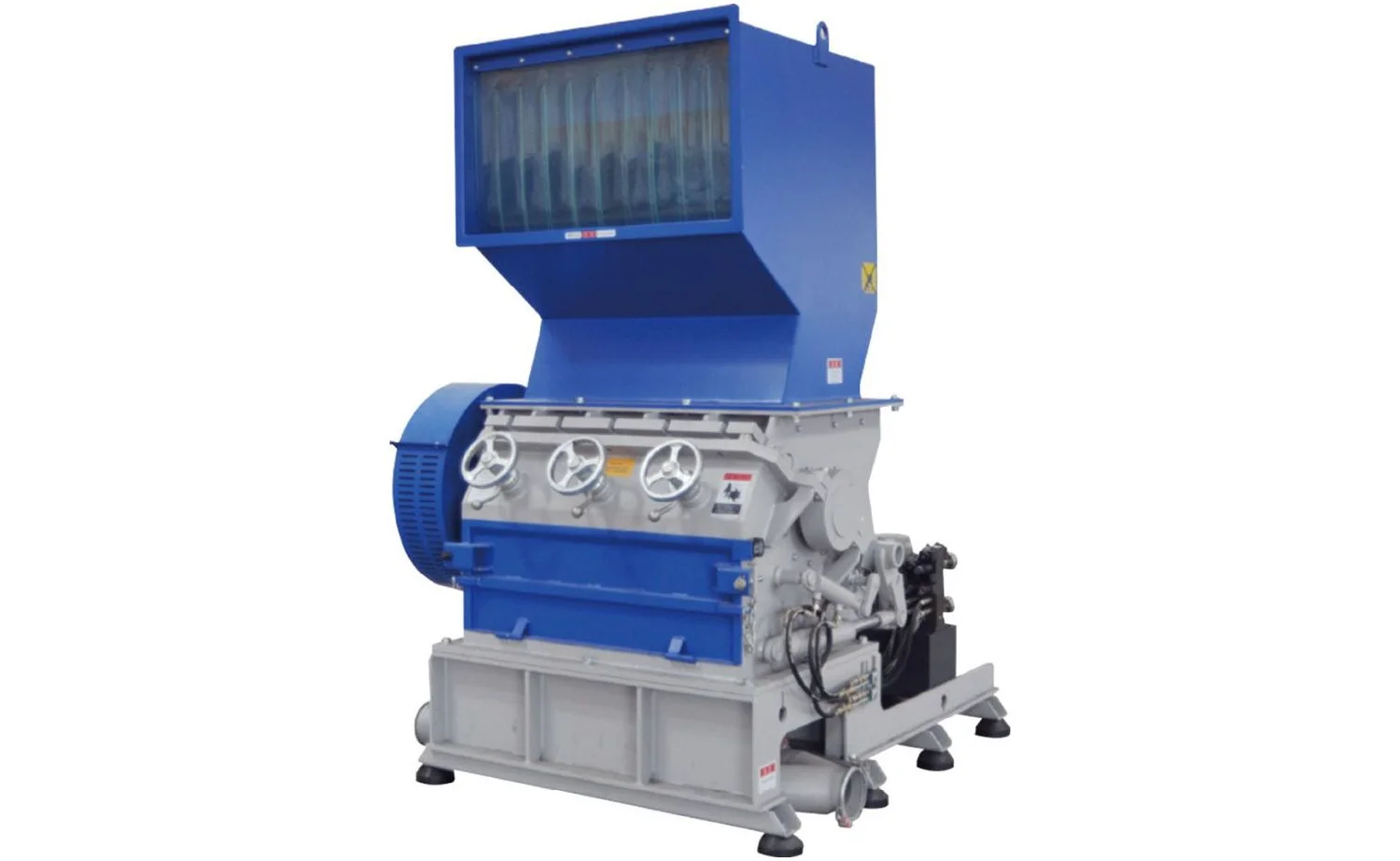
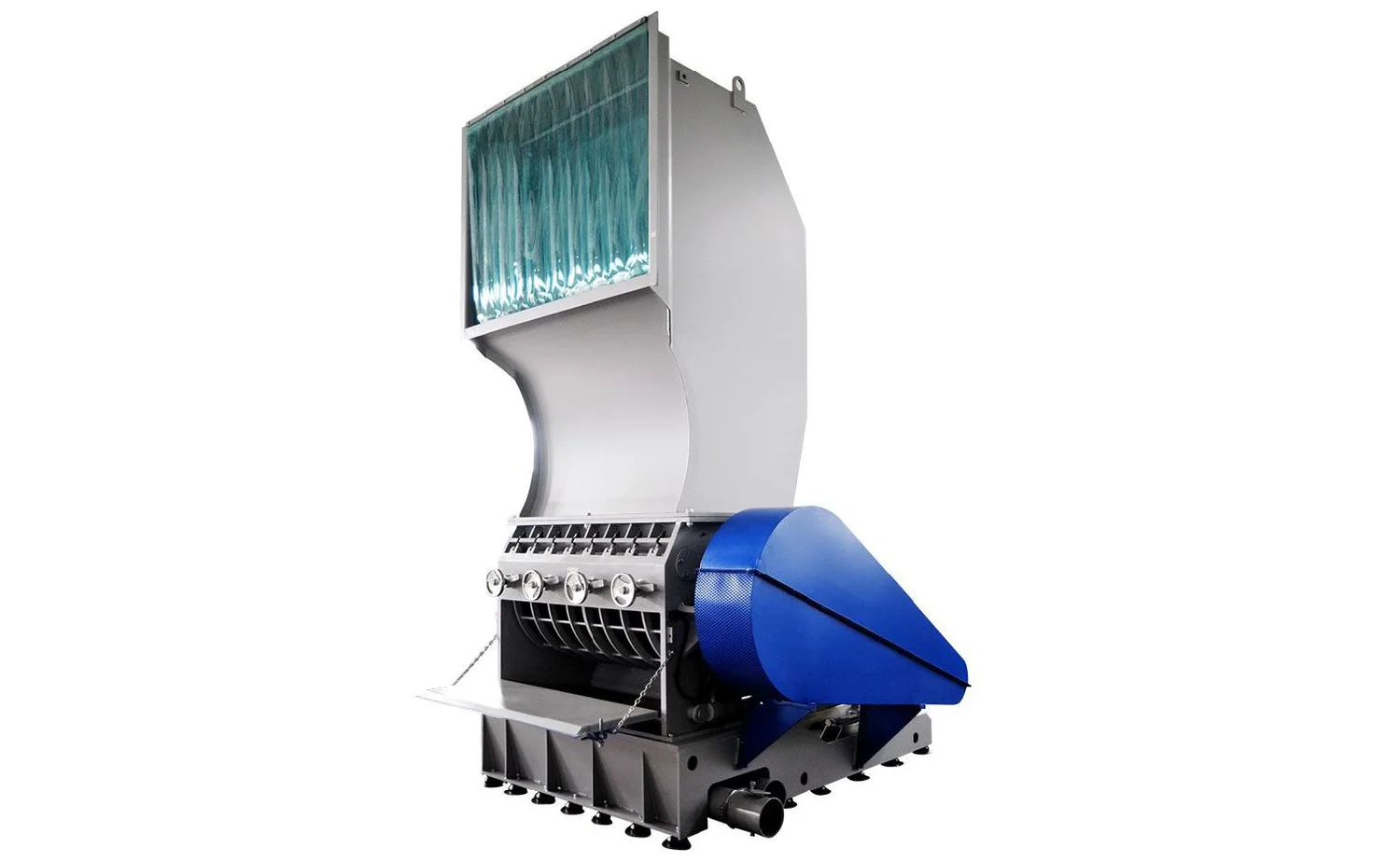
These are not abstract choices. ZERMA builds different rotor and blade configurations precisely because feedstock varies so widely. If you are processing tough, filled, or high-volume material, the heavy-duty granulator platform is engineered around exactly the metallurgy-and-geometry logic above. For thick-wall or bulky parts, a slow-speed or beside-the-press design changes the equation again.
Not sure which blade steel fits your material?
Send us a sample. ZERMA runs material testing so the blade, hardness, and rotor are matched to your actual feedstock, not a guess.
Frequently asked questions
Is a harder blade always better?
No. Beyond a point, added hardness trades away toughness and the edge becomes prone to chipping on impact. For abrasive or filled plastics, wear resistance from carbide content matters more than a higher hardness number, and for feed that may hide metal, toughness or a carbide tip protects the edge better than raw hardness.
How often should the cutting gap be checked?
Treat it as a routine check, not an annual one. Published guidance keeps the rotor-to-bed gap in roughly the 0.15 to 0.30 mm range; letting it drift wider wastes energy and tears plastic instead of cutting it. A quick feeler-gauge check on a set schedule protects both regrind quality and your power bill.
Can one granulator handle both clean and glass-filled material?
It can, but the blade steel and re-sharpening schedule should be set for the more abrasive of the two. Running filled material on blades chosen for clean plastic is the most common reason a machine seems to “wear out” faster than expected.