An intermediate bulk container holds something like 275 gallons. Empty, it weighs a fraction of what it can carry, and it still occupies every cubic inch of the space it did when full. That gap between the mass of a thing and the volume it takes up is where a surprising amount of money goes missing in a recycling operation.
You pay to store it. You pay in floor space while it waits. You pay for the trailer that hauls it, and that trailer fills up on volume long before it reaches its weight limit. Every one of those costs is being levied on air.
Volume reduction ratio is the number to ask about
Throughput in pounds per hour is the figure everyone quotes, and for dense material it is the right one. For bulky material it is close to meaningless on its own, because the constraint was never mass. It was space.
The metric that actually governs the economics of processing containers, bins, and pallets is volume reduction: how many cubic feet go in versus how many come out. Shred a wheelie bin and the resulting material occupies a small fraction of the space the intact bin did. That reduction is what turns a trailer that fills on volume into a trailer that fills on weight, and it is what stops bulky scrap from consuming floor space you would rather use for production.
Which raises the design question. If the whole point is processing large, low-density items, the machine needs somewhere to put them.
More chamber, same footprint
The obvious way to build a shredder for bulky parts is to build a bigger shredder. It works, and it costs you floor space, which is the resource you were trying to protect in the first place.
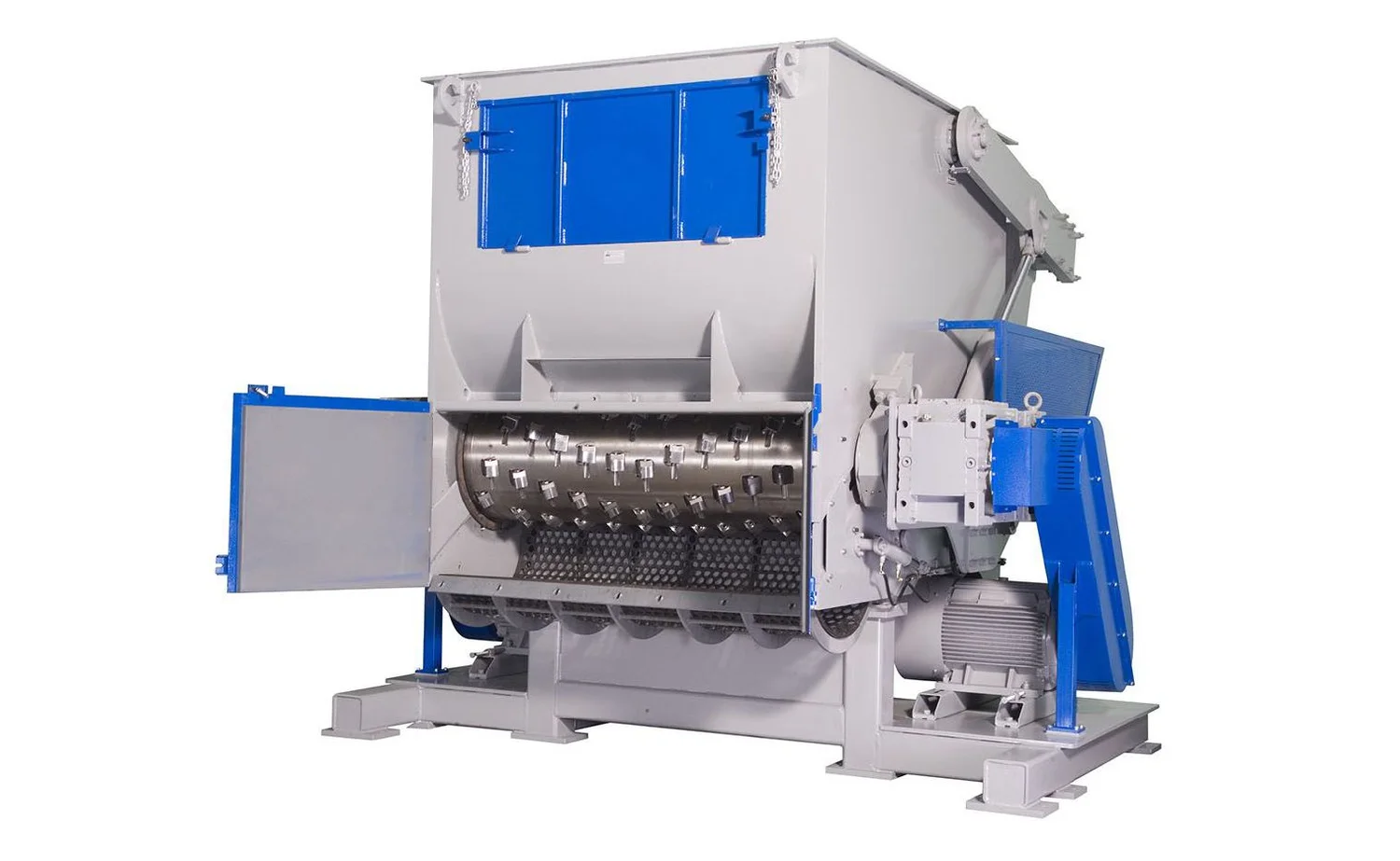
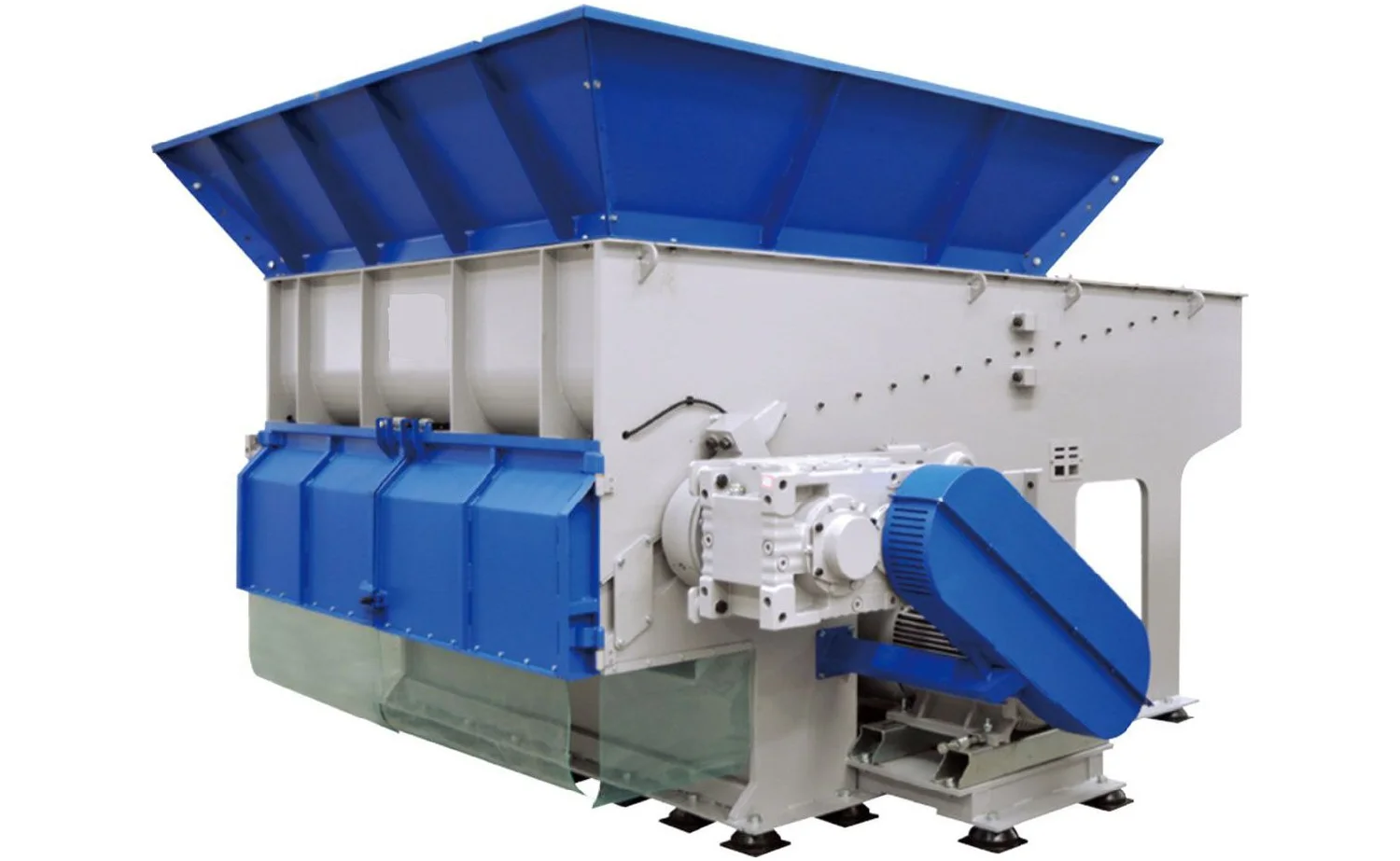
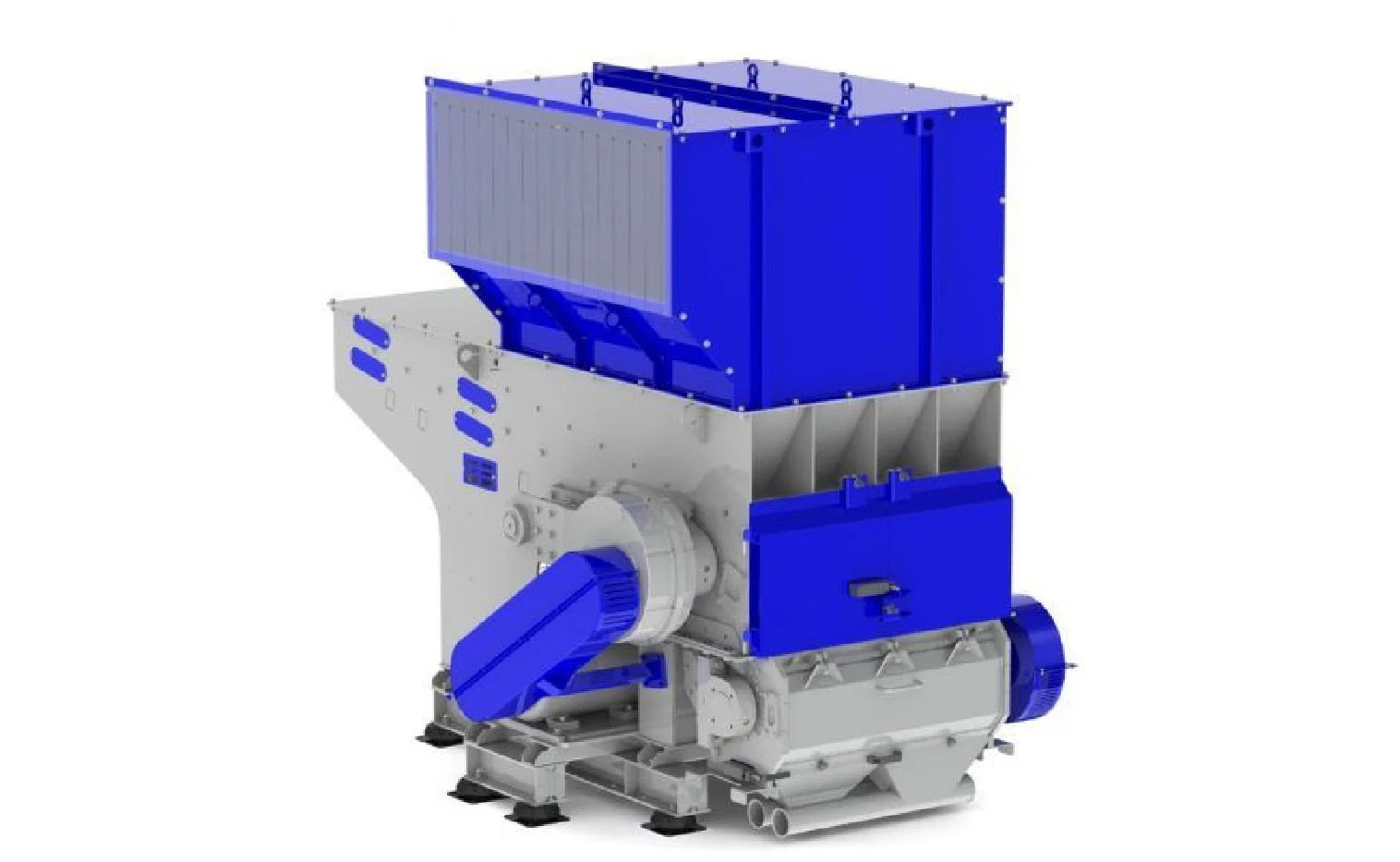
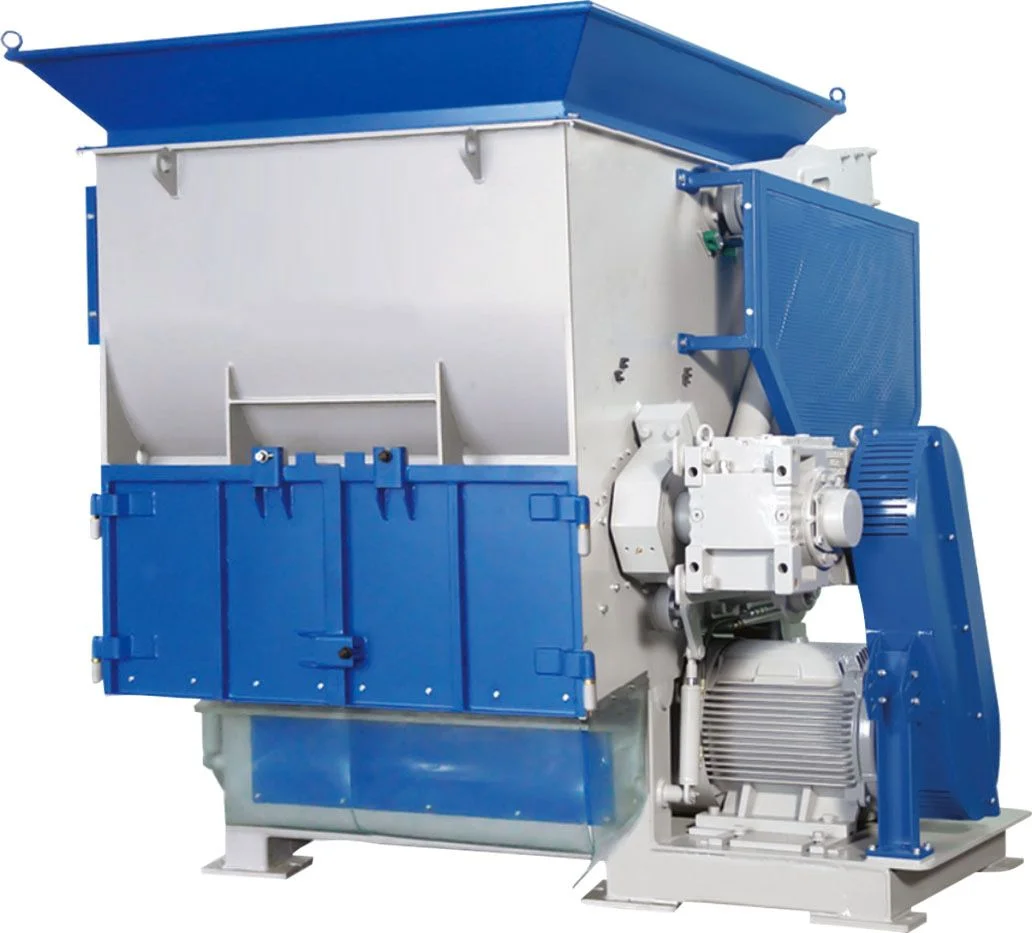
The ZIS takes a different approach. Its hydraulic pusher system is redesigned to sit internally, and that redesign creates approximately 35 percent more space in the cutting chamber compared with a standard model, while simultaneously increasing both the power and the speed of the ram. The usable volume grows. The machine’s outline does not.
That is a meaningful distinction on a crowded floor. You get a chamber that can actually swallow an IBC or a stacked set of bins, without surrendering the square footage that a proportionally larger machine would demand.
The housing matters more than it sounds like it should
Bulky parts do not enter a machine politely. They bounce, they shift, they resist. A completely enclosed welded steel housing does two jobs here: it adds structural stability under those irregular loads, and it prevents material spillage, which on a machine handling large containers is not a cosmetic concern but a housekeeping and safety one.
Underneath, the ZIS runs on the proven ZERMA platform: a 457 mm E-type rotor in widths from 1200 mm to 2000 mm, driven by an oversized gearbox for high torque, with outboard bearings keeping contamination away from the bearings and a hydraulic screen cradle making output size changes quick. The concave ground square knives rotate to a fresh edge when one side wears, and a weld-on hard facing wear package is available for abrasive or filled material.
What goes in
| Containers | IBCs, wheelie bins, and large drums, the classic low-density, high-volume problem |
| Pallets | Plastic pallets and large rigid parts |
| General recycling | Plastic and wood recycling, plus rubber and bulky waste, with optional wear protection for abrasive or filled material |
| Not this machine | Small dense scrap and clean sprues are more economically handled by a granulator. Large diameter pipe belongs on a ZRS, and whole tires on a ZXS-T. |
Bulky is not the same as tough
Worth separating these, because they get conflated and the confusion leads to buying the wrong machine. A wheelie bin is large but not especially hard to cut. Purge is small but extremely hard to cut. The ZIS is built for the first problem. If your material is genuinely tough, abrasive, or running around the clock at high volume, that is the ZXS, and no amount of chamber volume substitutes for the drivetrain that job requires.
See what your material reduces to
Volume reduction is easy to describe and much more convincing to watch. Ship us a sample of your actual containers, bins, or bulky scrap. Tell us your volume and your target output size. We run it at our Fort Myers facility, film the test, and send you the footage with a confidential technical analysis, so you can see exactly what comes out the bottom.
Our YouTube channel carries ZERMA shredder demonstrations across a range of materials.
Keeping it running
Knives and screens are high-wear items on any shredder. The concave ground square knives rotate to a fresh edge when one side wears, which stretches their life, but replacements are eventually needed and they are stocked at Virtus Equipment Direct, our online parts store. Our service team handles installation, commissioning, and operator training, and our service line is bilingual in Spanish.
Frequently asked questions
What makes the ZIS different from a standard shredder?
Its internal ram design creates roughly 35 percent more cutting chamber space than a standard model, while increasing ram power and speed, and it does so without enlarging the machine’s footprint. That extra internal volume is what lets it swallow IBCs, wheelie bins, and large drums that a standard chamber cannot accommodate.
Why does volume reduction matter more than throughput for bulky material?
Because the constraint is space, not mass. Storage, floor space, and hauling are all charged against volume, and a trailer carrying intact containers fills up on volume long before it hits its weight limit. Reducing the volume is what recovers those costs.
Can the ZIS handle general recycling too, or only large containers?
Both. It is optimised for voluminous parts but retains the versatility for general plastic and wood recycling, plus rubber and, with a wear package, abrasive or filled material.
Is a bigger chamber the same as a tougher machine?
No, and the distinction matters when you are choosing. Bulky is not the same as tough. If your material is genuinely hard, abrasive, or running nonstop at high volume, that calls for the heavy duty ZXS drivetrain rather than additional chamber volume.
Terms worth knowing
Volume reduction ratio. The ratio of input volume to output volume. For bulky, low-density material this is the number that governs your storage, handling, and hauling costs, far more than throughput by weight.
Internal ram design. A hydraulic pusher built inside the housing, which enlarges the usable cutting chamber (by roughly 35 percent on the ZIS) without enlarging the machine’s footprint.
Enclosed welded housing. A fully enclosed steel housing that adds stability under the irregular loads bulky parts create and prevents material spillage.
Reversible knives. Concave ground square knives that rotate to a fresh cutting edge when one side wears, extending service life.
Wear package. Optional weld-on hard facing and wear-resistant components for abrasive or filled material.
Related ZERMA machines
- ZSS general purpose shredder for mixed everyday scrap
- ZXS heavy duty shredder when the material is tough rather than merely large
- ZHS horizontal shredder for varied material shapes and sizes
- GSH heavy duty granulators as the second stage that turns shredded output into regrind