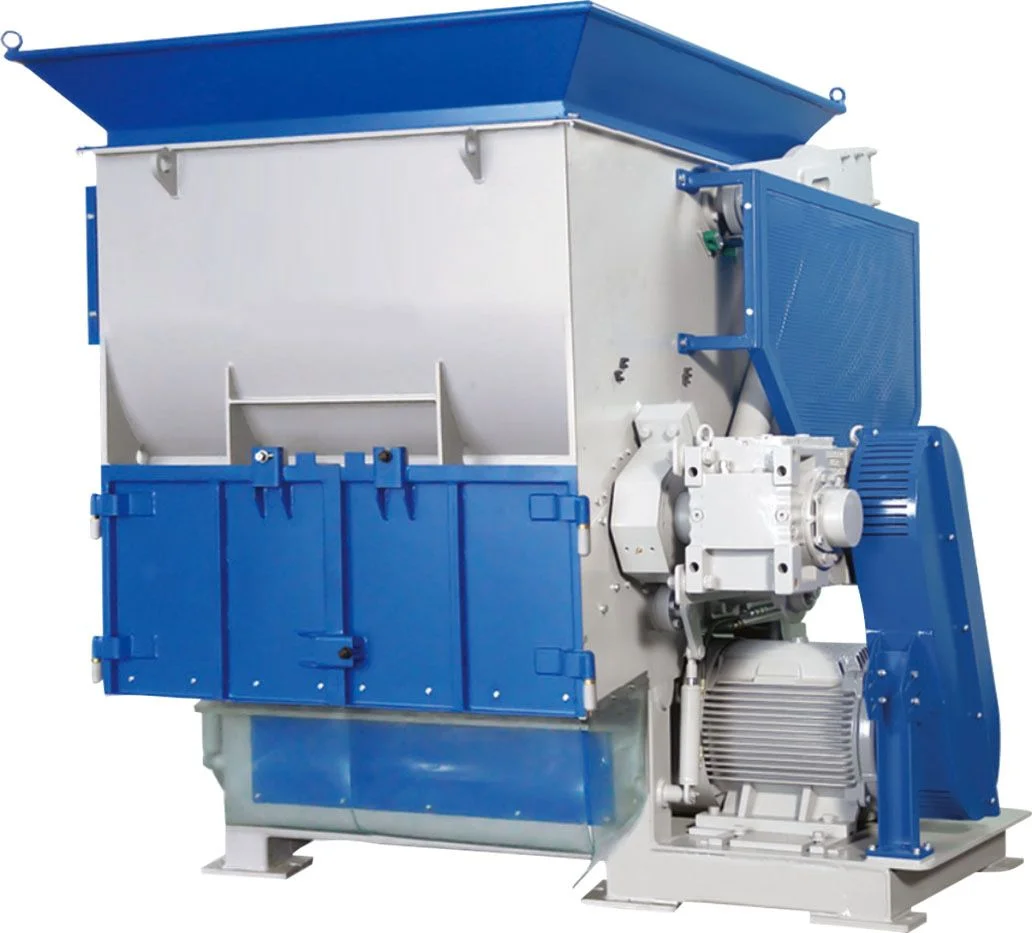
Water tanks, playground equipment, and industrial containers are made efficiently by rotational molding. Recovering the scrap from those operations requires a completely different approach than injection or blow molding recycling.
What Rotomolding Produces and What Gets Scrapped
Rotational molding, also called rotomolding, produces large hollow plastic parts by slowly rotating a heated mold filled with plastic powder. The material coats the interior walls evenly as the mold rotates. More than 80 percent of all rotomolded products are made from polyethylene. Typical products include large-volume water tanks, agricultural containers, industrial bulk containers, children’s playground equipment, traffic barriers, and traffic cones.
Scrap in a rotomolding operation comes from startup material, end-of-run batches, out-of-spec finished parts, and products that reach end of service life. The key difference compared to injection molding or blow molding scrap is the scale of the parts. A 500-gallon water tank that fails an inspection is not something you feed into a standard plastic granulator. Getting that material from full-size part to finished regrind requires two distinct stages of size reduction, and skipping the first stage is not an option.
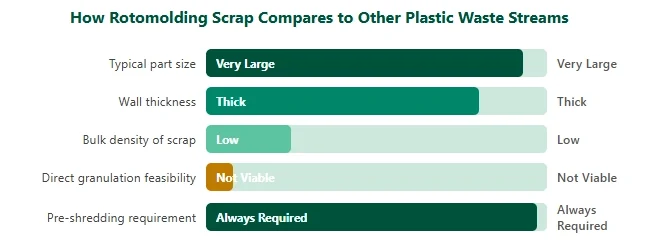
Relative characteristics compared to injection and blow molding scrap. Actual values depend on specific product dimensions and wall thickness.
Why a Standalone Granulator Cannot Handle Rotomolded Parts
A plastic granulator works by cutting material that feeds through the hopper throat opening into the cutting chamber. Even a large central granulator hopper is not designed to accept a full-size water tank or playground component. Attempting to force parts of that scale into a granulator creates feeding problems immediately, overloads the rotor, and risks machine damage.
Even if a part could physically enter the cutting chamber, the combination of large hollow geometry and thick polyethylene walls would stall the rotor on first contact. Polyethylene is tough and flexible, and it resists clean cutting when it arrives in an un-pre-reduced form. The result would be jamming, overheating, and damage to the machine, not regrind.
Two-stage processing is the established standard for rotomolding plastic waste recycling precisely because of these characteristics. An industrial shredder handles the first stage, reducing large hollow parts to manageable chunks. A heavy duty plastic granulator handles the second stage, producing the final consistent regrind particle ready for reprocessing.
Two-Stage Processing Flow for Rotomolded Plastic Scrap
Full-Size Part
Pre-Shredded Chunks
Finished Regrind
The ZCS Shredder-Granulator Combination performs both stages in one integrated system for facilities that prefer a single-unit solution.
ZERMA America Equipment for Rotomolding Scrap Recovery
ZERMA America’s industrial shredder and plastic granulator lineup covers both stages of the process. Multiple shredder options are available depending on part volume, wall thickness, and required throughput rate.
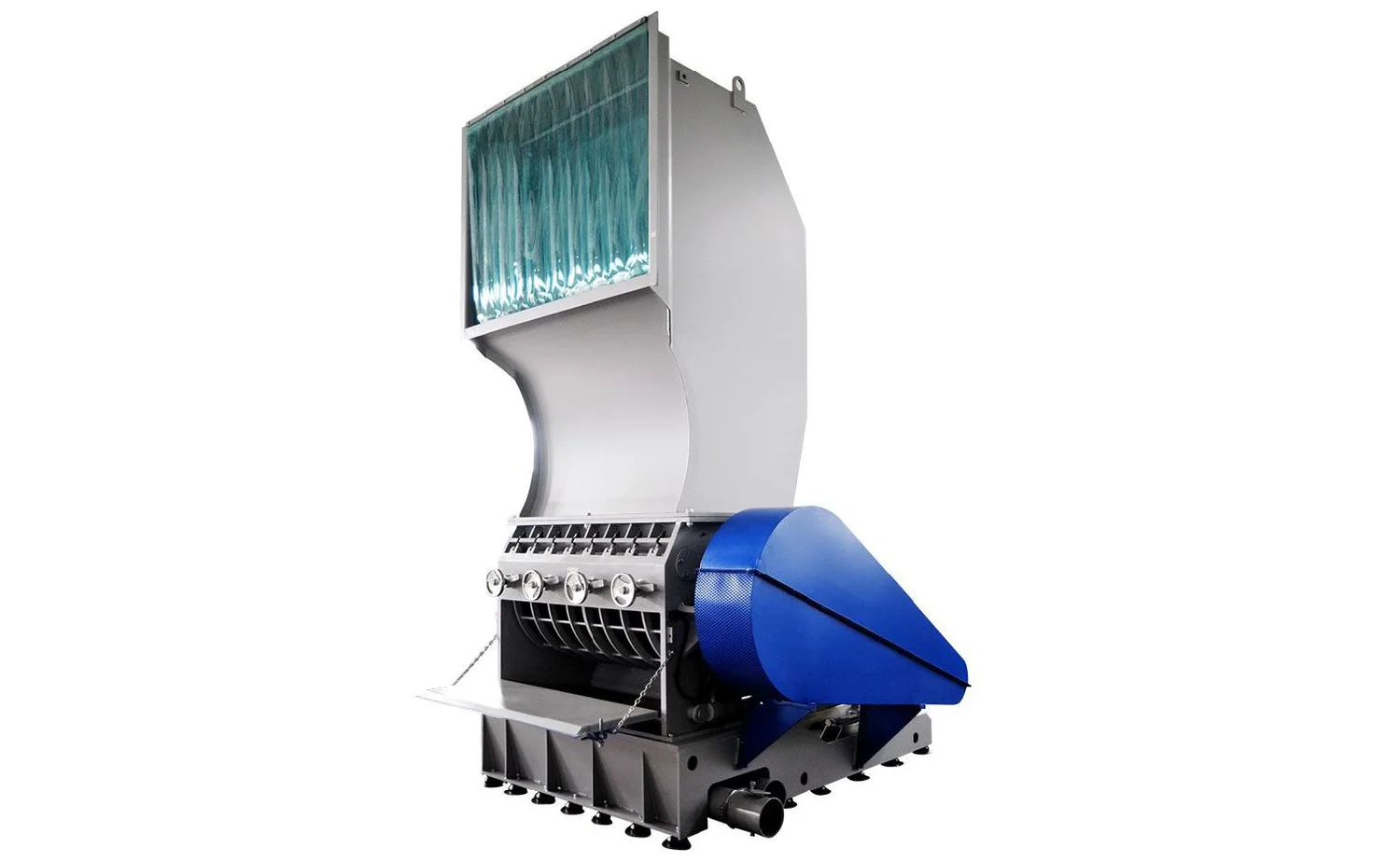
ZIS Big Volume Shredder
Designed for high internal volume and high-throughput shredding of large, bulky plastic parts. The primary industrial shredder choice when significant volumes of large hollow rotomolded parts need continuous first-stage reduction.
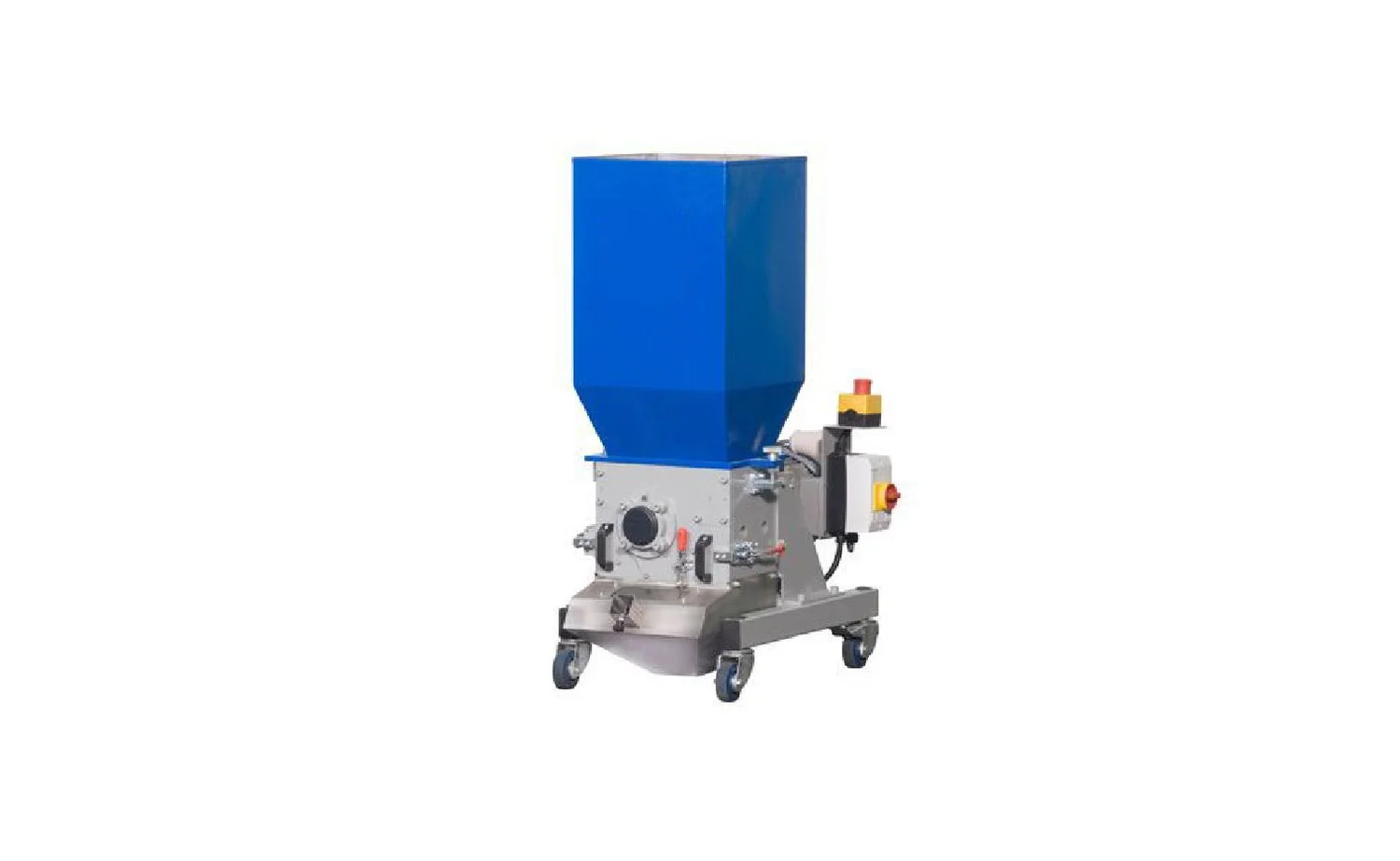
ZXS Heavy Duty Shredder
A powerful single-shaft industrial shredder with a two-speed swing ram design for demanding applications. Strong choice when wall thickness or material density is the primary processing challenge rather than part volume.
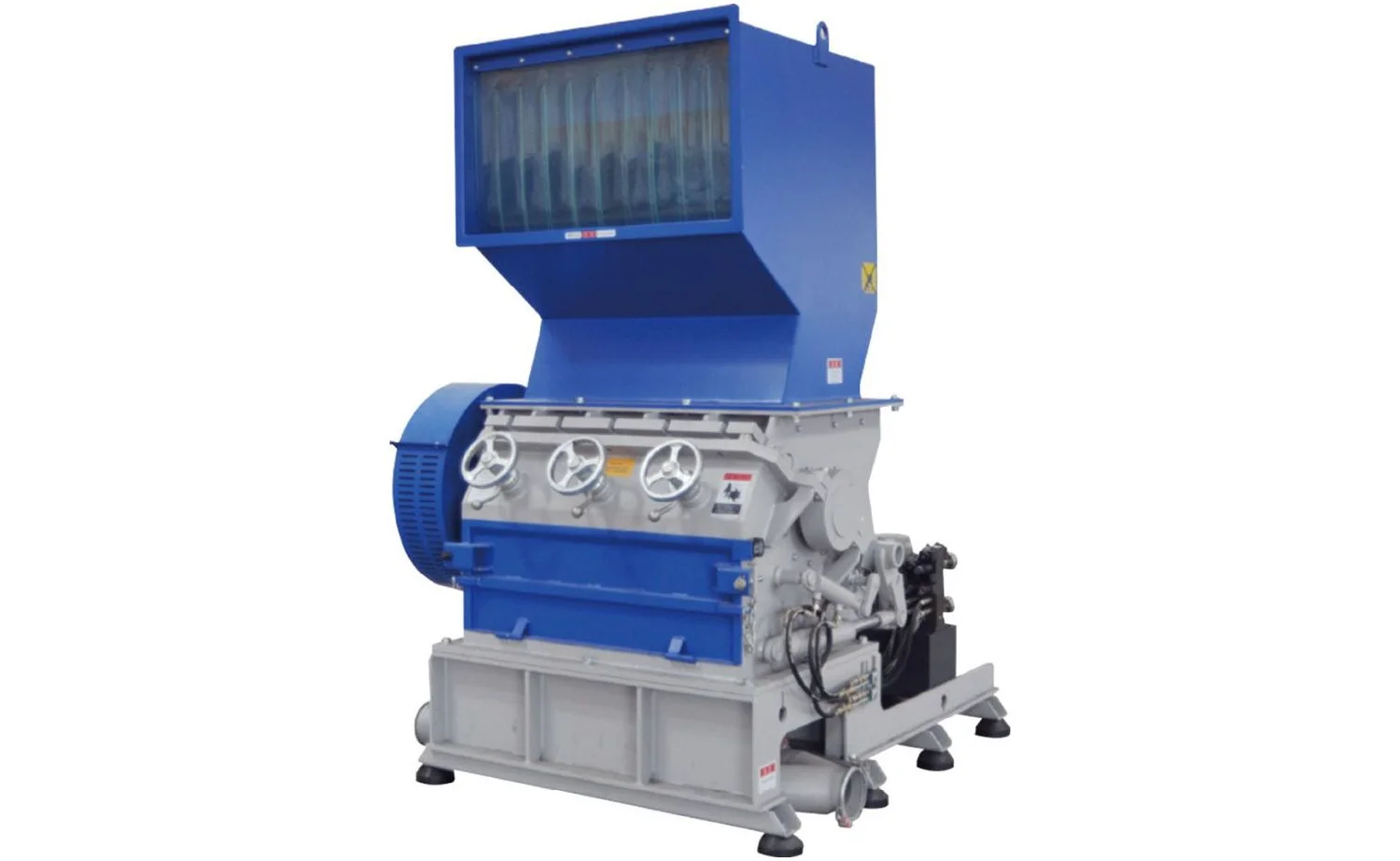
GSH Heavy Duty Granulator
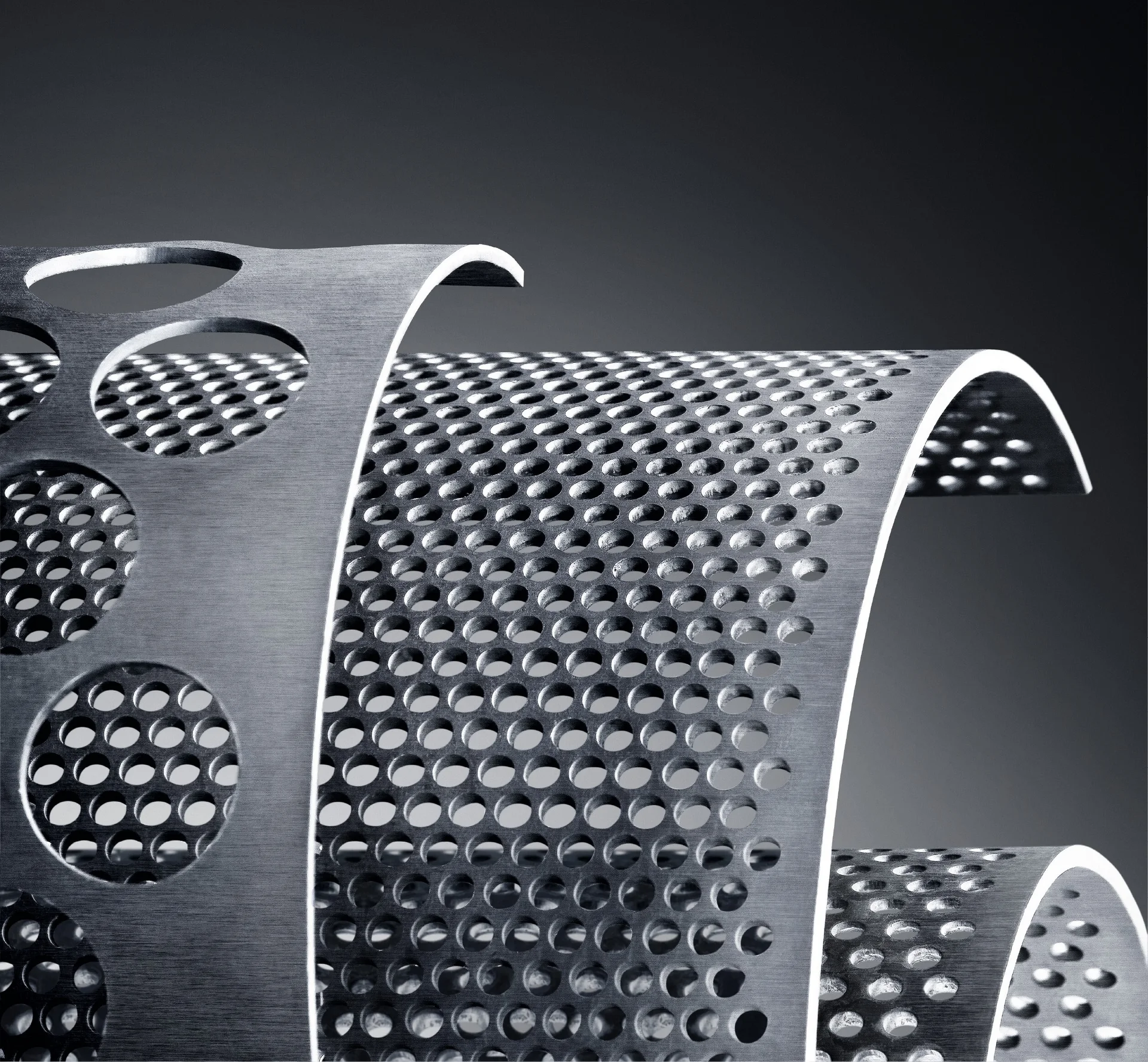
ZERMA America’s central plastic granulator workhorse for the second stage. Accepts pre-shredded PE chunks and produces consistent regrind sized by screen selection. Multiple rotor designs are available for varying material densities and throughput requirements.
ZSS General Purpose Shredder
For facilities processing mixed plastic scrap that includes rotomolded parts alongside general production waste, the ZSS handles a wide range of material types. It works well as a flexible first-stage industrial shredder option when scrap streams are varied.
Regrind from Rotomolded Polyethylene
Polyethylene regrind from rotomolding scrap is generally a high-quality recoverable plastic material. PE does not degrade significantly through a single granulation pass when the industrial plastic granulator is correctly configured. The resulting regrind can be blended back into rotomolding compound at appropriate rates or sold to resin reclaimers at meaningful value.
The primary quality considerations are contamination from UV stabilizers, colorants, and any surface treatments on finished parts. Particle size consistency also matters, since it affects how the regrind blends with virgin compound in the rotomolding process. Correct screen selection in the granulator determines the output particle size range.
Equipment Selection Guide for Rotomolding Plastic Waste Recycling
| Operation Type | Stage 1: Industrial Shredder | Stage 2: Plastic Granulator |
|---|---|---|
| High-volume large parts (tanks and containers) | ZIS Big Volume Shredder | GSH Heavy Duty Granulator |
| Thick-walled or high-density PE parts | ZXS Heavy Duty Shredder | GSH Heavy Duty Granulator |
| Mixed scrap including rotomolded parts | ZSS General Purpose Shredder | GSH Heavy Duty Granulator |
Processing rotomolded scrap or evaluating a two-stage plastic recycling system? ZERMA America can help match the right industrial shredder and granulator to your application.