We have written before about when a combination shredder and granulator makes sense as a system: the throughput logic, the market shift toward hybrid machines, the regulatory pressure pushing processors toward harder feedstocks. That piece makes the strategic case.
This one is about something narrower and, if you are recycling your own molding waste back into product, more immediately consequential. It is about what happens to material in the gap between two machines.
The gap nobody specifies
A conventional two-stage line is a shredder, a conveyor, and a granulator. Everyone specifies the shredder carefully. Everyone specifies the granulator carefully. The conveyor is usually treated as plumbing.
But consider what the conveyor actually is from the material’s point of view. It is an open surface, in a working plant, carrying warm plastic fragments across an unenclosed distance. Dust settles on it. Anything that falls from above lands on it. If a different resin ran through the line an hour ago, residue is still in the system. The material spends time exposed, and exposure is where contamination happens.
For a recycler selling regrind by the ton, a small amount of contamination is an economic haircut. For a molder putting regrind back into their own product, it is a quality event, and the failure often does not show up until the material is already in a molded part.
The closed system argument
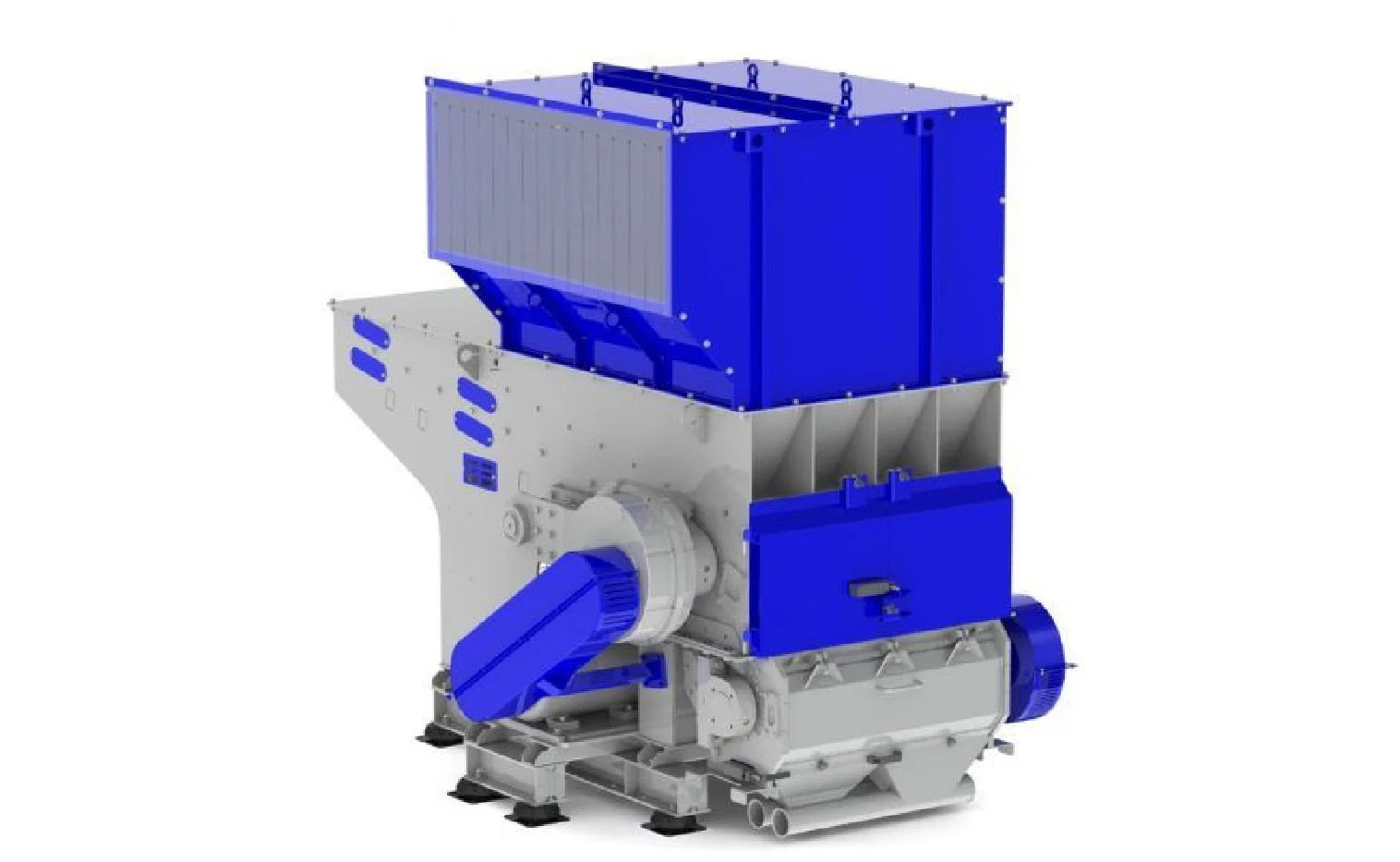
The ZCS removes the gap by removing the conveyor. The shredder stage sits above the granulator stage and feeds it directly, inside one enclosed unit. Material goes in bulky at the top and comes out as regrind at the bottom, and at no point in between is it exposed to the plant environment.
Being a closed system, the ZCS reduces the contamination risk that comes with moving material across an open conveyor belt between two separate machines. That is the single strongest reason to choose this architecture for in-house molding waste, where the regrind is going straight back into the product you sell.
The floor space argument is real too, and it is the one most people lead with. A shredder, a conveyor run, and a granulator laid out separately take a meaningful footprint. Stacking the two stages vertically fits into an existing workshop where a full line would not. But the space saving is the visible benefit. The contamination control is the one that shows up in your scrap rate.
Two stages, engineered to match
| Shredder stage | 400 mm E-type rotor with the proven ZERMA knife and knife holder design, driven by a high-torque gear drive. The gear drive, rather than a direct drive, is what lets the top stage handle tougher input material. |
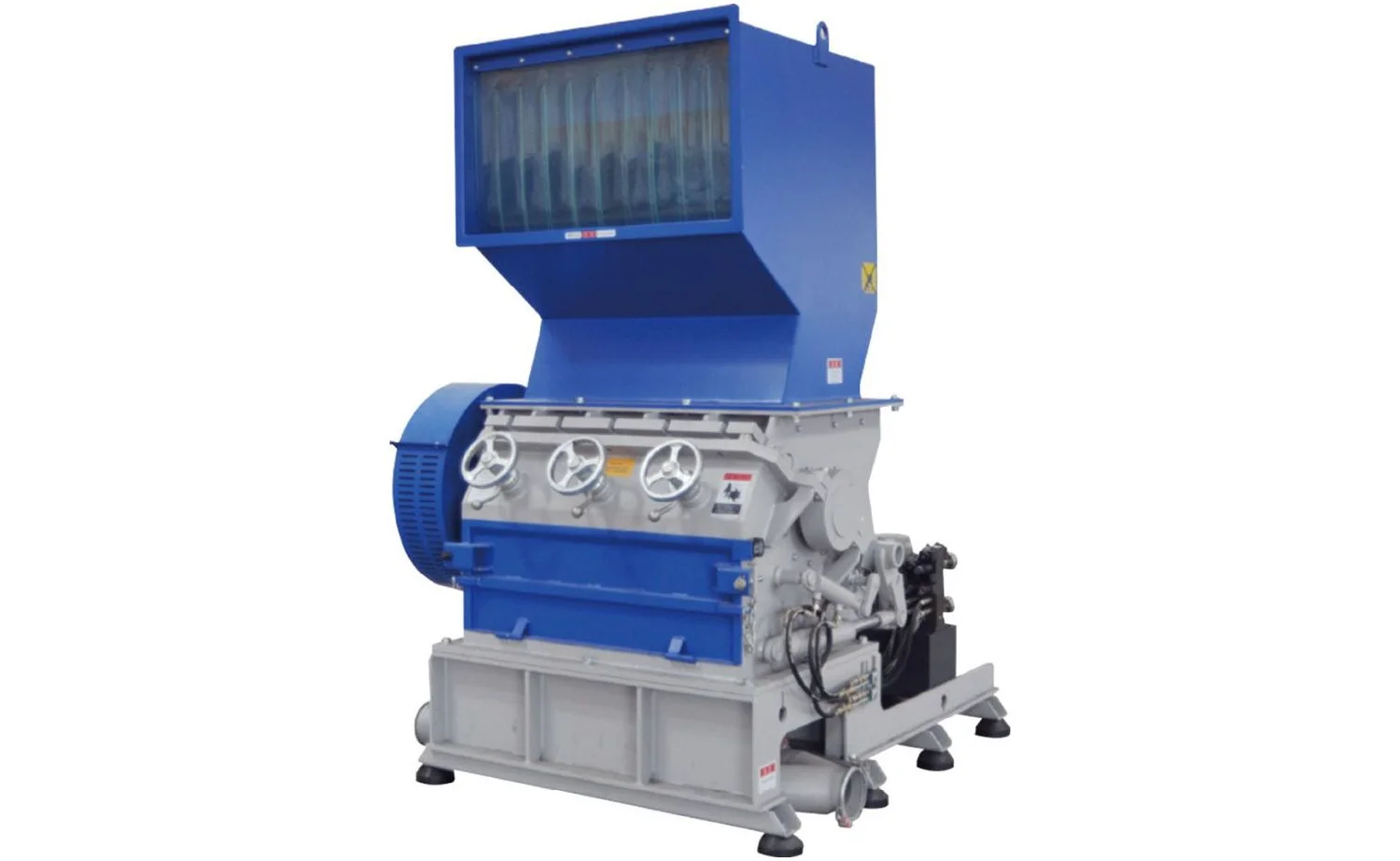
| Granulator stage | A 3-blade rotor based on the GSC series, using a sturdy F-type rotor with V-cut technology. It takes the material flow coming down from the shredder while still handling thicker, heavier particles. |
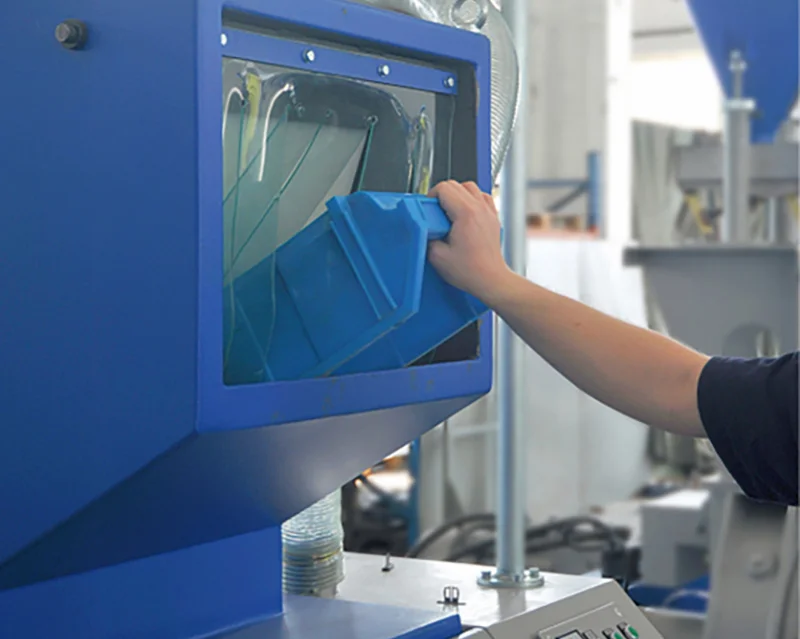
| Feed | A large material hopper with a powerful horizontal pusher, using a roller-guided drawer-type ram, so voluminous and heavier parts feed reliably. |
| Control | Both stages tie into a single advanced control system, so the unit runs as one process rather than two machines you have to coordinate. |
The matching between stages is not incidental. A shredder producing output the granulator underneath cannot ingest efficiently would simply relocate the bottleneck. The two are specified to work together, which is the practical difference between a combination machine and two machines stacked in the same frame.
What it was built for
The ZCS was designed mainly for in-house use in plastics blow and injection molding applications, and that is where it earns its cost. Flash, purging, large-volume parts, and thicker material all go in bulky and come out as usable regrind without leaving the enclosure. It can be adopted in other fields as well, but the closed-loop molding application is the one the machine was shaped around.
Where it is not the right answer: very large or specialised scrap. Big diameter pipe belongs on a ZRS. Bulky containers like IBCs and wheelie bins belong on a ZIS. And if your scrap is already granulator-ready, you do not need the shredder stage at all, which makes a standalone granulator the more economical choice.
See it process real material
Our YouTube channel includes ZCS demonstrations processing a range of plastics, including purge material, which is the application people most often ask about.
Better still, send us the material that is giving you trouble. Ship a sample of your actual flash, purging, or reject parts to our Fort Myers facility. Tell us your volume and what the regrind needs to become. We run it, film it, and send you the footage with a confidential technical analysis, so you can see your own material go from bulky part to finished regrind before you commit to anything.
Two stages, two sets of wear parts
Both stages consume knives and screens. Replacements are stocked at Virtus Equipment Direct, our online parts store, so a worn part is an order rather than a quote and a week of waiting. Our service team handles installation, commissioning, operator training, and maintenance scheduling, and our service line is bilingual in Spanish.
Frequently asked questions
Is contamination really a serious risk on an open conveyor?
It depends entirely on what you do with the regrind. If you sell it by the ton, minor contamination is an economic discount. If you are blending it back into your own molded product, it is a quality problem, and one that frequently surfaces downstream in a finished part rather than at the machine. A closed system removes the exposure rather than managing it.
Why not just buy a shredder and a granulator separately?
If you have the floor space, want to scale each stage independently, and your regrind is not going back into your own product, that is a perfectly reasonable choice. The ZCS wins specifically where floor space is tight and regrind cleanliness matters, which describes most in-house molding recycling.
What does the granulator stage actually produce?
Clean regrind. The lower stage uses a GSC-based F-type rotor with V-cut technology, so the finished output is granulator-quality material ready to be reintroduced into production.
Can it handle purge as well as parts?
Yes. Flash, purging, thicker material, and large-volume parts are all within its design intent, which is precisely the mix an injection or blow molding operation generates.
Terms worth knowing
Closed system. A design where material passes from the shredder stage to the granulator stage without leaving the enclosure, which eliminates the open-conveyor exposure that lets contamination in.
F-type rotor. The sturdy granulator-stage rotor with V-cut technology, chosen because it ingests the material flow coming down from the shredder while still handling thicker, heavier particles.
Drawer-type ram. The roller-guided pusher that feeds the shredder stage, designed to move voluminous and heavier parts reliably.
Stage matching. Specifying the shredder and granulator so the output of one is the ideal input of the other. Without it, a combination machine simply relocates the bottleneck.
Closed-loop recycling. Returning production scrap directly into the process that made it, which is the application this machine was designed around.
Related ZERMA machines
- ZSS general purpose shredder as a standalone first stage when you have the floor space
- GSC granulators, the platform the ZCS granulator stage is based on
- ZBS lump and purge shredder when purge blocks are the whole problem
- GSH heavy duty granulators for larger central-granulator requirements