Every shredder on the market is described as heavy duty by somebody. The phrase has been used until it means very little, which is unfortunate, because the thing it is supposed to describe is real and it is measurable.
Heavy duty is not a build quality adjective. It is a drivetrain specification. And the useful question to ask any vendor, including us, is not whether a machine is heavy duty but what is actually delivering the torque.
Torque comes from gearing, not from horsepower
This is the part that gets muddled in sales conversations. A motor produces power. What arrives at the rotor as usable cutting force is a function of how that power is geared down, and the trade is always the same: the slower you turn the rotor, the more torque you can apply to it.
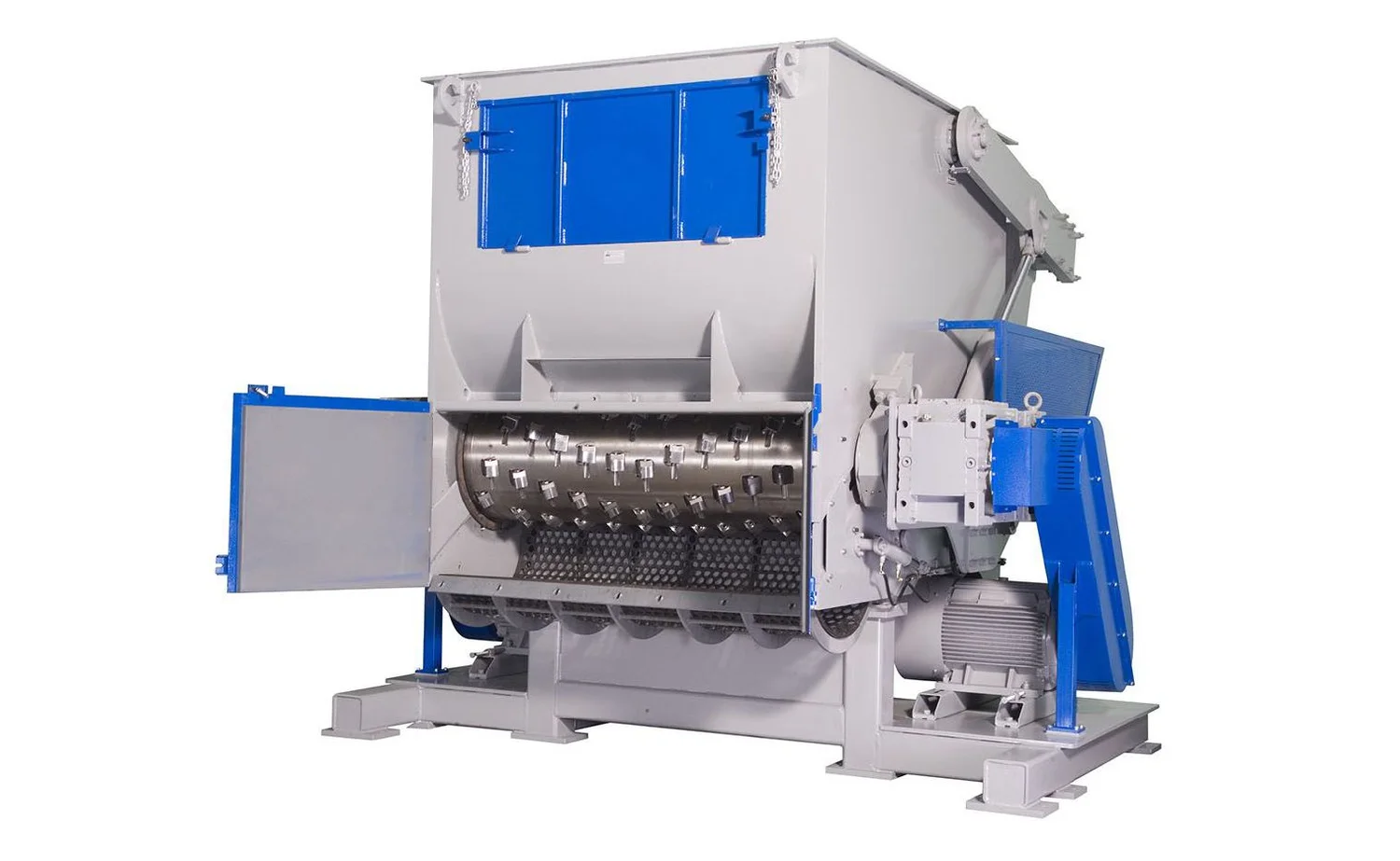
The ZXS is built around that trade taken to its useful extreme. It runs a 750 mm rotor in widths from 1500 mm to 3000 mm, driven not by one gearbox but by two oversized gearboxes, and it turns at a deliberately low 45 rpm. That low speed is not a limitation to be apologised for. It is the mechanism by which the machine develops the torque to power through material that would stall a faster, lighter drivetrain, and it also produces smoother running under shock loads.
This is why you cannot arrive at a heavy duty machine by buying a bigger version of a lighter one. A larger chamber gives you room. A larger motor gives you power. Neither gives you torque at the rotor, and torque is what the hard material requires.
The ram, taken seriously
A drivetrain that can cut anything is worth nothing if the material never reaches it, and at this scale feeding is a genuine engineering problem rather than an afterthought.
The ZXS uses a powerful two-speed swing ram. The swing design matters for a reason that anyone who has run a sliding-ram shredder will recognise: sliding rams run on internal guide rails, material works its way into those rails and causes blocking, and the rails themselves wear out and degrade the feed over time. A swing ram has no such rails, which removes both failure modes at the design level rather than managing them with maintenance.
Two speeds serve two different jobs. The high-powered twin-speed hydraulic system ensures maximum pressure when driving material into the rotor, which is where you need force, and high speed on the backstroke, which is where you need cycle time rather than force. The hydraulic power pack itself is integrated into the shredder housing, saving floor space and protecting it from the knocks a busy plant delivers, while remaining accessible for maintenance.
Specification
| Rotor | 750 mm diameter, in widths from 1500 mm to 3000 mm, using the proven ZERMA E-type rotor, knife holder, and knife designs taken to larger dimensions |
| Drive | Two oversized gearboxes, running at 45 rpm to deliver high torque and smooth operation |
| Feed | Two-speed swing ram with high-powered twin-speed hydraulics, and an integrated hydraulic power pack |
| Knives | Concave ground square knives that rotate to a fresh edge as one side wears, held in machined rotor pockets, with optional weld-on hard facing |
| Output | Set by the installed screen, and typically processed further downstream except in some refuse-derived fuel and wood applications |
What it will actually eat
The input list is genuinely broad, which is what makes the ZXS a versatile machine rather than merely a large one: all types of plastics, wood, paper, cardboard, electronic waste, post-consumer waste, and rubber, arriving in a wide range of shapes and sizes.
In practice that means fridges, purge blocks, tires, pallets, bales, drums, barrels, pipes, and film. For recycling complete truck and tractor tires specifically, the ZXS-T configuration adds special wear protection and knives suited to that material.
Buy this much machine when the work demands it
The honest guidance, and it is the same across our whole range: the ZXS is the most capable shredder we build, and it is priced accordingly. If your material is everyday mixed scrap at moderate volume, a ZSS will serve you better and cost you less. If the problem is bulky containers rather than tough material, that is the ZIS. And if tires are your primary business rather than one stream among several, the dedicated tire machine is the focused choice.
Where the ZXS earns its cost is when the material is genuinely hard, abrasive, or relentless, and when a lighter machine would spend its life being repaired rather than running.
Send us your worst material
A machine at this scale is a significant investment, and the honest way to specify one is to watch it work on the material that is actually causing you trouble. Ship us a sample of your hardest, bulkiest, or most abrasive scrap. Tell us your throughput target and what the output needs to become. We run it at our Fort Myers facility, film the test, and send you the footage with a confidential technical analysis.
Our YouTube channel carries ZERMA shredder demonstrations under demanding operating conditions.
Wear is a schedule, not an event
On a machine doing this kind of work, knives, wear plates, and screens are consumed predictably. The reversible knives stretch their own life by rotating to a fresh edge, but replacements are eventually needed and they are stocked at Virtus Equipment Direct, our online parts store. Our service team handles installation, commissioning, operator training, and maintenance scheduling, and our service line is bilingual in Spanish.
Frequently asked questions
What actually makes a shredder heavy duty rather than just large?
The drivetrain. The ZXS uses two oversized gearboxes turning a 750 mm rotor at a deliberately low 45 rpm, and that gearing is what converts motor power into the torque required at the rotor. A bigger chamber gives you room and a bigger motor gives you power, but neither produces torque at the cutting edge, which is what hard material demands.
Why is a low rotor speed an advantage?
Because torque and speed trade against each other. Turning the rotor slowly is how the machine develops the force to power through material that would stall a faster drivetrain, and it also runs more smoothly under shock loads.
What is the advantage of a swing ram over a sliding ram?
Sliding rams run on internal guide rails. Material gets into those rails and causes blocking, and the rails wear over time, degrading the feed. A swing ram has no such rails, so both failure modes are removed by design rather than managed by maintenance.
Should I choose the ZXS-T or the dedicated tire machine for tires?
If tires are one of several tough materials you process, the ZXS-T configuration covers them within a versatile heavy duty platform. If tires are your primary business, a dedicated tire shredder is the focused, optimised choice, and it is worth discussing your actual material mix before deciding.
Terms worth knowing
Torque. The rotational force actually delivered at the rotor. It is what cuts hard material, and it comes from gearing rather than from raw motor power.
Twin gearbox drive. Two oversized gearboxes driving one rotor, which is how the ZXS develops high torque at a low 45 rpm.
Two-speed swing ram. A pivoting hydraulic pusher with maximum pressure on the forward stroke and high speed on the backstroke, and with no internal guide rails to block or wear.
Reversible knives. Concave ground square knives that can be rotated to a fresh cutting edge as one side wears, extending service life.
Refuse-derived fuel (RDF). Shredded waste processed into a fuel stream, one of the applications where shredder output may be the final product rather than an intermediate stage.
Related ZERMA machines
- ZSS general purpose shredder for lighter, mixed everyday scrap
- ZIS big volume shredder when the problem is bulk rather than toughness
- ZXS-T tire recycling shredder for tire-focused operations
- GSH heavy duty granulators as the second stage that turns shredded output into regrind