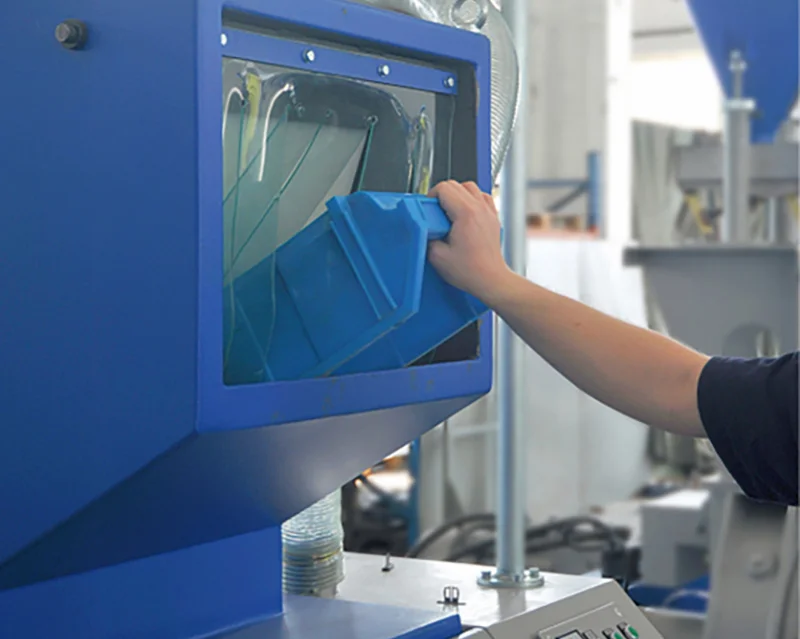
Anyone running a pipe extrusion line knows the problem firsthand. You have lengths of PVC, HDPE, or other rigid material coming off the line as trim, startup scrap, or out-of-spec production. Getting that material into a granulator typically means cutting it manually into shorter pieces first, which takes labor, creates safety risks, and adds a handling step that was never planned into the workflow.
The construction sector is one of the heaviest users of rigid plastic pipe, and U.S. housing starts are forecast to continue recovering through 2026, which means pipe extrusion output stays high and pipe scrap volumes follow. Recycling that scrap efficiently has become more critical as recycled content regulations tighten and virgin PVC and HDPE prices remain volatile.
Projected U.S. housing starts in 2025, driving demand for pipe and construction plastics
Pipe lengths the ZRS can accept without manual pre-cutting in applicable configurations
Shred, granulate, and optionally pulverize: the full PVC pipe-to-powder processing path ZERMA supports
Why Standard Granulators Struggle With Pipe
This is not a criticism of granulators. They are excellent machines for what they are designed to handle. Rigid pipe, particularly large-diameter or thick-wall pipe, pushes outside the design parameters of most granulators in ways that cause real operational problems.
| Challenge | What Happens Without Pre-Shredding | How the ZRS Addresses It |
|---|---|---|
| Pipe length | Pipe longer than the hopper opening cannot feed at all | Horizontal feed trough accepts full-length pipe input |
| Thick wall sections | Heavy walls overload the granulator motor or stall the rotor | Hydraulic ram controls feed rate and protects the cutting zone |
| Hollow geometry | Hollow pipe is light but awkward, bounces and jams in standard hoppers | Ram feeding keeps material controlled through the cutting pass |
| Knife wear acceleration | Forcing thick pipe directly through a granulator accelerates edge wear significantly | Shredder handles primary reduction, granulator finishes from manageable pieces |
The ZRS: How It Works
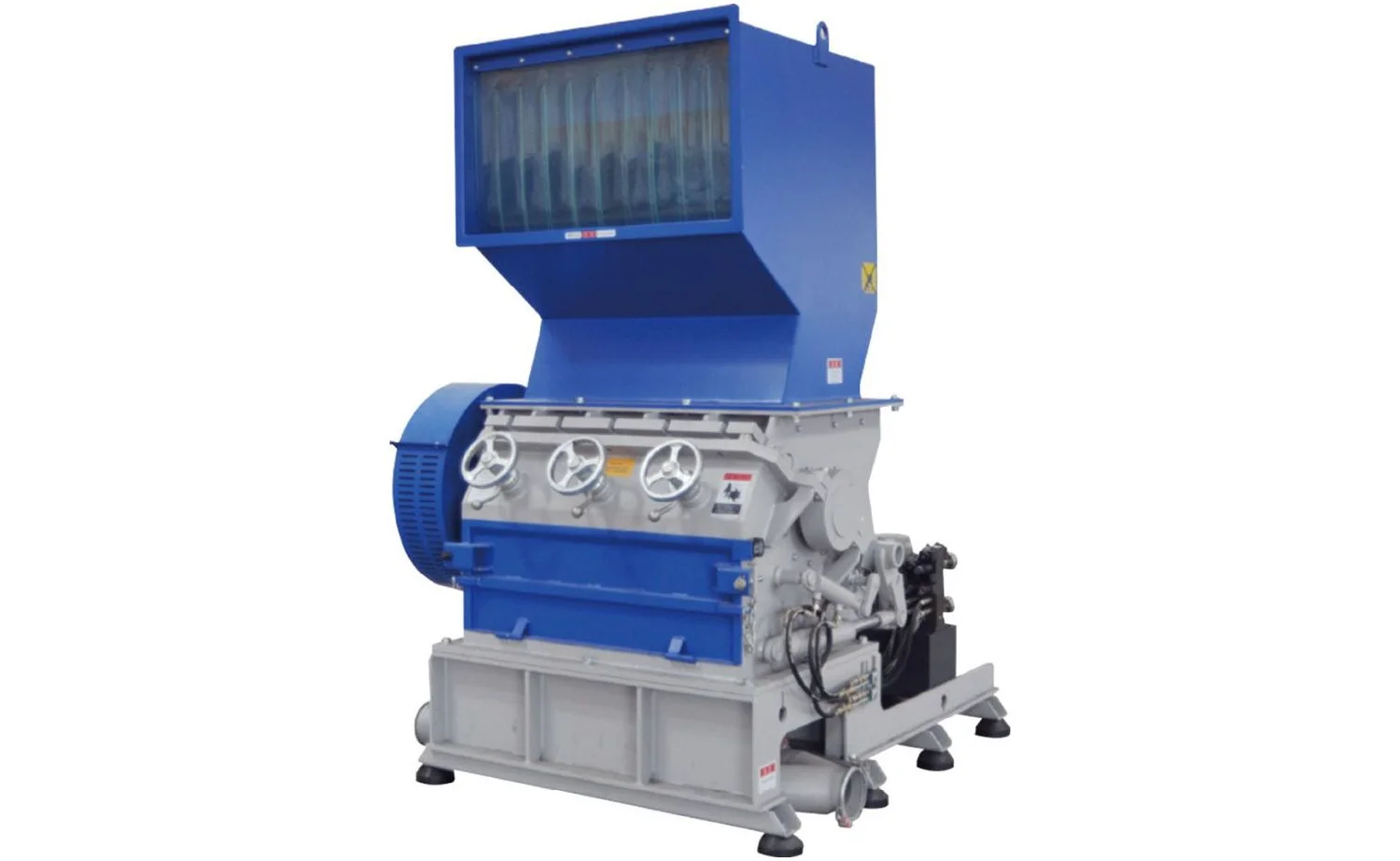
The ZRS Pipe and Profile Shredder uses a horizontal feeding trough that accepts pipe at full length. A hydraulic piston pushes material into the rotor at a controlled, consistent rate. That hydraulic ram is what makes the machine reliable in production: it does not allow the operator or the physics of the material to dictate the feed rate. The machine controls its own cutting zone throughout the process.
After the ZRS shreds pipe to a manageable intermediate size, the material moves to a downstream granulator, which finishes it to the target regrind particle size. The result is a two-step process that runs consistently, puts less stress on both machines, and delivers cleaner output than forcing the full task through a single granulator.
Applications Where the ZRS Is the Right Call
Pipe Extrusion Trim and Startup Scrap
Trim lengths and startup scrap from pipe extrusion lines are some of the most common ZRS applications. The machine accepts full-length pipe directly from the line area, eliminating a manual pre-cut step.
Window Profiles and Structural Extrusions
Rigid window frames, door profiles, and structural extrusions often have complex cross-sections that make them particularly difficult to feed into standard granulators. The ZRS handles them reliably.
Agricultural and Irrigation Pipe
Large-diameter irrigation pipe often runs in long field lengths. The ZRS horizontal trough makes this processable without a manual cutting crew, significantly reducing scrap handling labor.
Post-Consumer Rigid Pipe Recycling
Operations handling end-of-life pipe products, including construction and demolition recovery, use the ZRS to start the size reduction process for material that arrives in bulk, bundles, or long cuts.
The Bottom Line
The ZRS does not replace a granulator. It enables the granulator to do its job properly. For any operation producing meaningful volumes of rigid pipe or profile scrap, the combination of a ZRS pre-shredder and a downstream granulator is the reliable, production-grade solution that reduces jams, extends knife life, and delivers consistent regrind output.