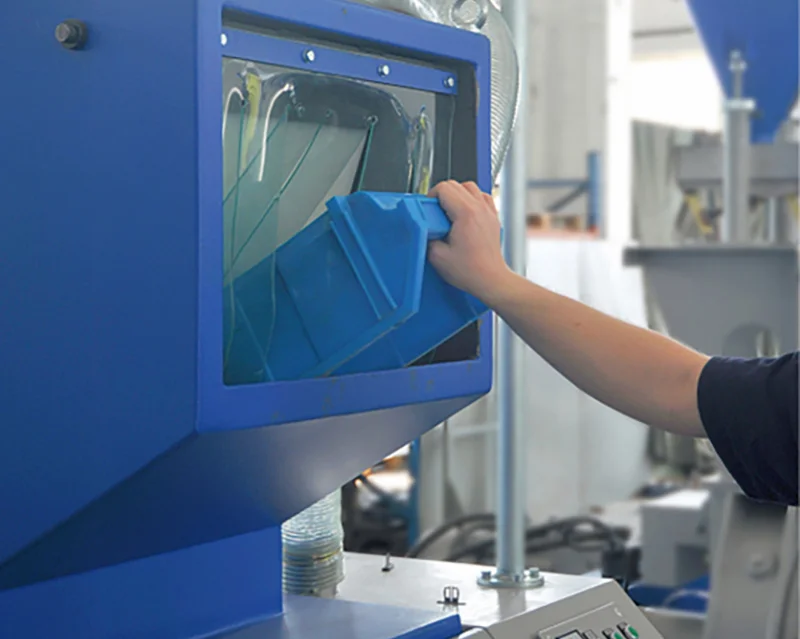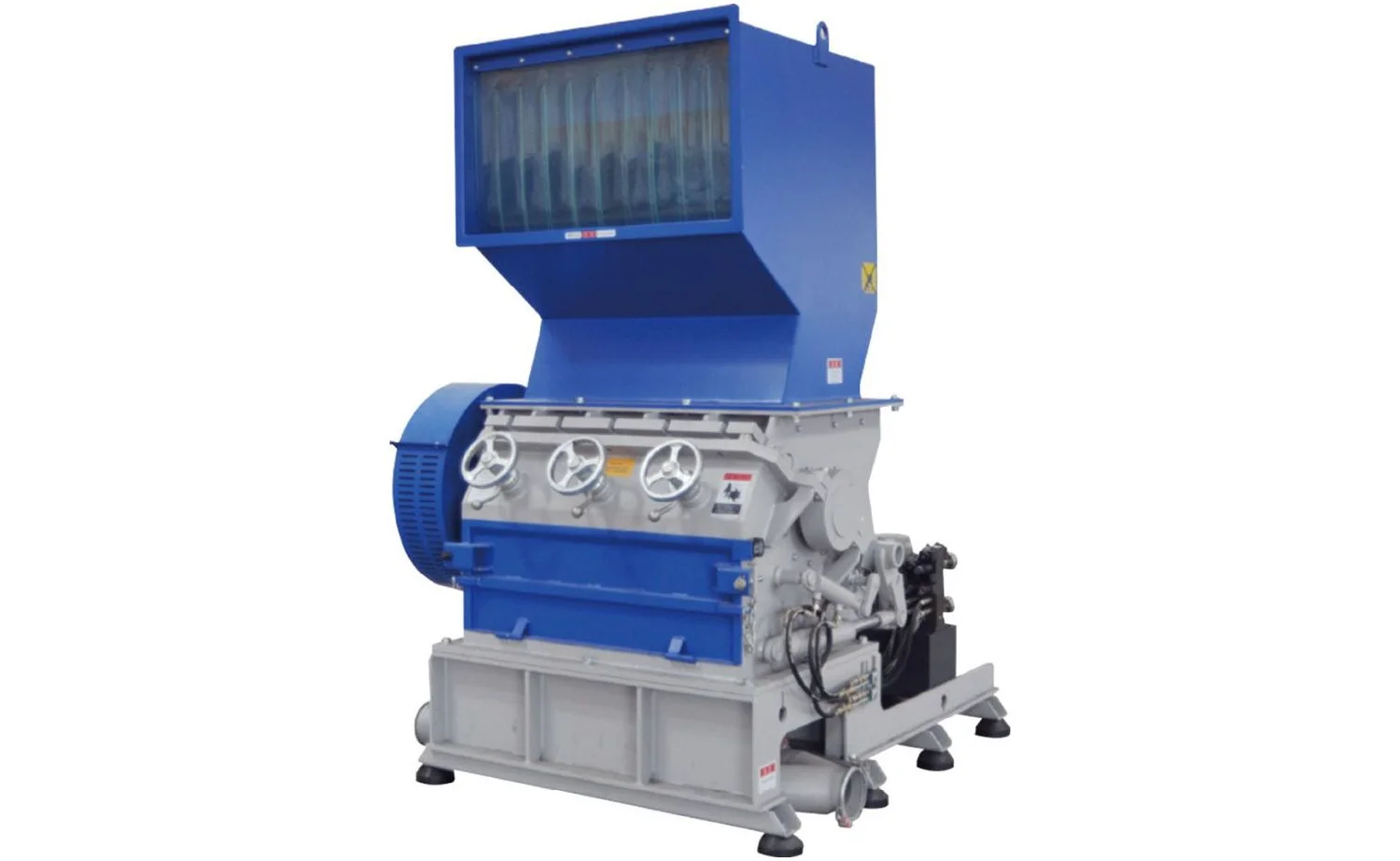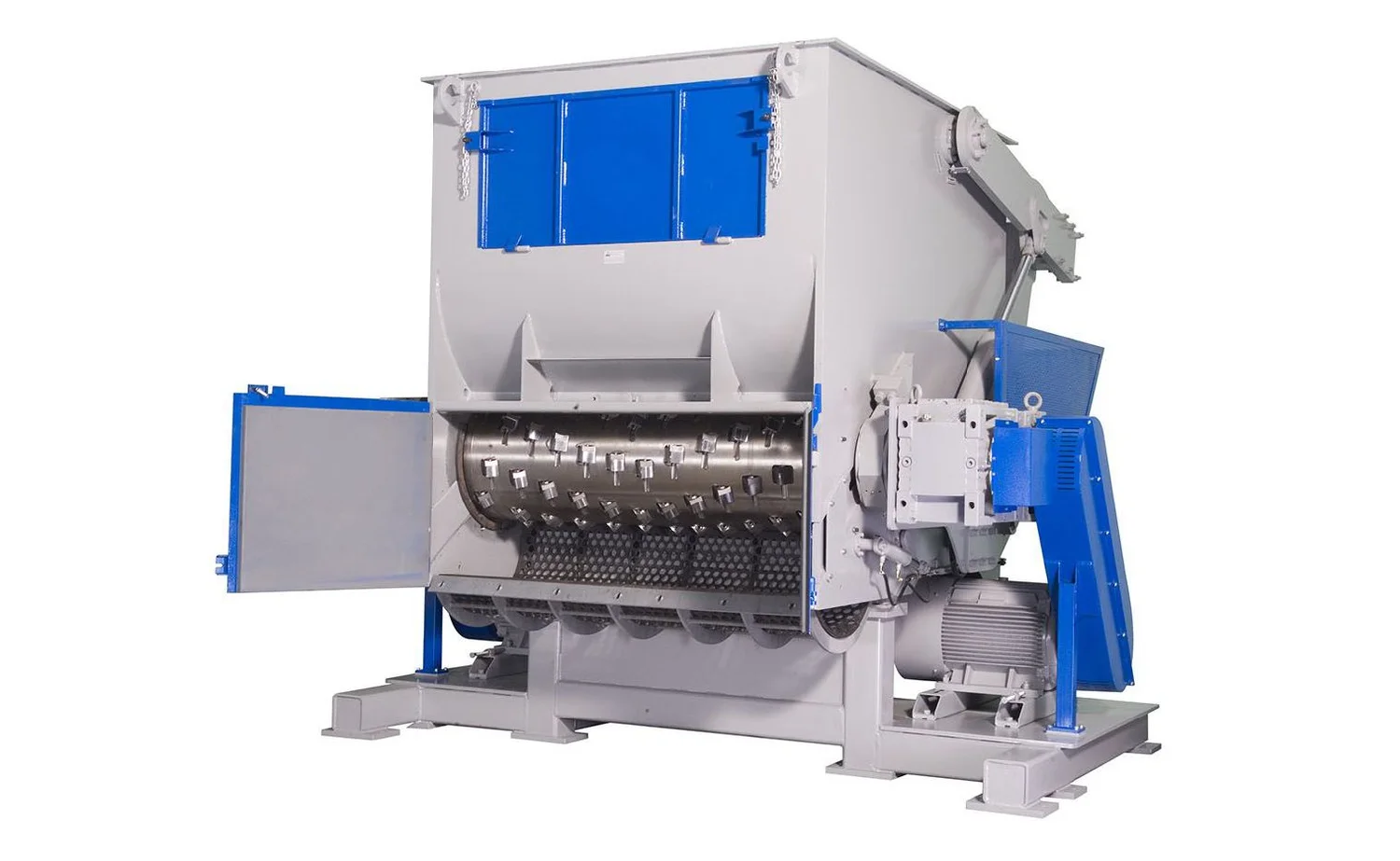
Electronic waste, which covers everything from smartphones and circuit boards to monitors, printers, and industrial control panels, is not like processing a bin of injection molding runners. It is a composite material stream. A single device contains plastics, metals (including copper, aluminum, steel, and sometimes gold and rare earth elements), glass, ceramics, and a range of chemical compounds. Getting value out of that stream requires liberation, which means breaking the device down small enough that the different material types can be separated from each other.
That liberation process starts with shredding. Without it, the recovery systems downstream, magnetic separators for ferrous metals, eddy current separators for non-ferrous, and optical and gravity systems for plastic fractions, cannot do their jobs because the different materials are still bound together. Size reduction is not a preliminary step. It is what makes the rest of the process possible.
Tonnes of e-waste generated globally each year, making it the world’s fastest-growing solid waste stream
Share of global e-waste that is formally collected and recycled through documented channels
E-waste volume is expected to reach 82 million tonnes by 2030 as electronics consumption accelerates globally
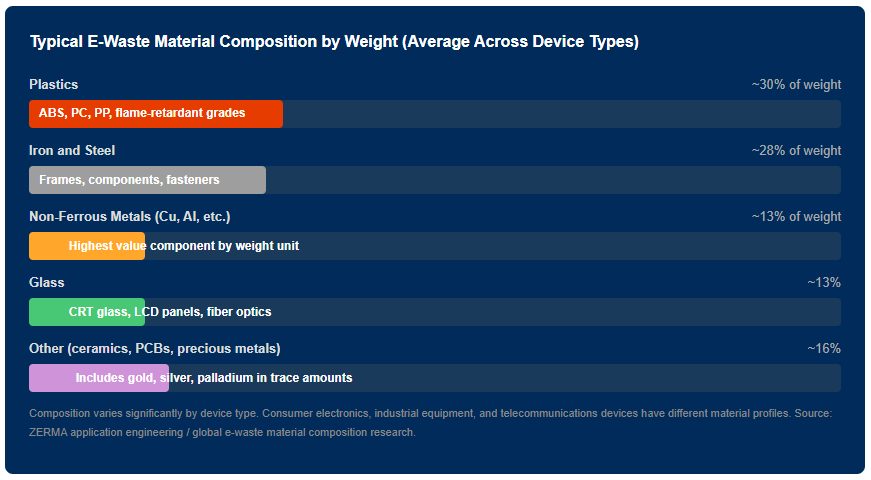
What Electronic Waste Is Made Of
Why E-Waste Is More Demanding Than Standard Plastic Shredding
Metal Content Creates Cutting Stress
Steel frames, copper wiring, aluminum housings, and circuit board components all pass through the shredder’s cutting zone. Metal causes much higher wear on cutting edges than plastic-only applications and can cause sudden overload if dense metal assemblies enter the machine at high rate.
Flame-Retardant Plastics Require Care
Many electronics contain brominated flame-retardant plastic housings. These release chemical compounds during processing that require proper ventilation and dust extraction. The material also cuts differently than standard ABS or PP.
Hydraulic Ram Feeding Manages Variable Density
Controlled ram feeding prevents sudden overloads when dense metal components enter the cutting zone. This is why single-shaft shredders with hydraulic ram systems are the standard platform for e-waste primary reduction rather than open-hopper machines.
Rotor Design and Knife Alloys Matter More Here
E-waste applications call for more robust rotor designs and harder, tougher knife alloys than plastic-only shredders. ZERMA America can specify the right cutting geometry for your specific e-waste feedstock composition.
The E-Waste Processing Line: Stage by Stage
| Stage | Equipment | Output |
|---|---|---|
| Primary shredding | ZSS General Purpose Shredder or ZXS Heavy Duty Shredder | Liberated mixed material pieces, typically 50 to 100mm |
| Magnetic separation | Magnetic drum or belt separator (inline) | Ferrous metals removed from the stream |
| Secondary size reduction | Granulator or secondary shredder | Smaller, more liberated pieces for finer separation |
| Non-ferrous separation | Eddy current separator | Aluminum, copper, and other non-ferrous metals recovered |
| Plastic fraction separation | Air classification, gravity separation, or optical sorting | Plastic fractions separated from glass, ceramics, and residue |
The Market Opportunity Behind E-Waste Recycling
The economic case for properly processed e-waste is significant. The recoverable value in global e-waste, including gold, silver, copper, palladium, and other recoverable materials, was estimated at over $91 billion in 2023 according to the Global E-Waste Monitor. Most of that value is not recovered because collection and proper processing infrastructure is insufficient relative to the volume of material being generated.
For equipment operators entering the e-waste market, the critical decision is sizing and configuring the shredding system correctly for the specific device mix. Consumer electronics shredding lines handle different compositions and volumes than enterprise IT equipment or industrial electronic component recycling. ZERMA America can assist with equipment configuration for your specific e-waste feedstock.
Watch ZERMA Shredders Handle Demanding Materials
The ZERMA YouTube channel includes equipment demonstrations on a range of challenging materials. See how ZERMA single-shaft shredders perform under demanding operating conditions.
- ZERMA America ZCS 600 Demo
ZCS combination shredder granulator system demonstration - ZERMA GSH Heavy Duty Granulator
Heavy duty granulator processing rigid materials - ZERMA ZCS 600 Shredder Granulator
ZCS 600 combination system material processing demo - Browse All ZERMA Videos
Full YouTube channel with shredder and granulator demonstrations