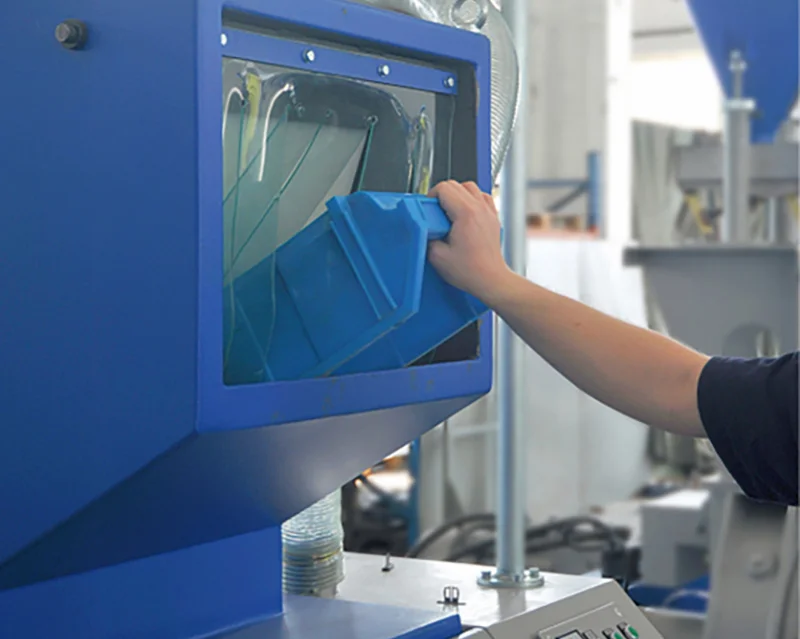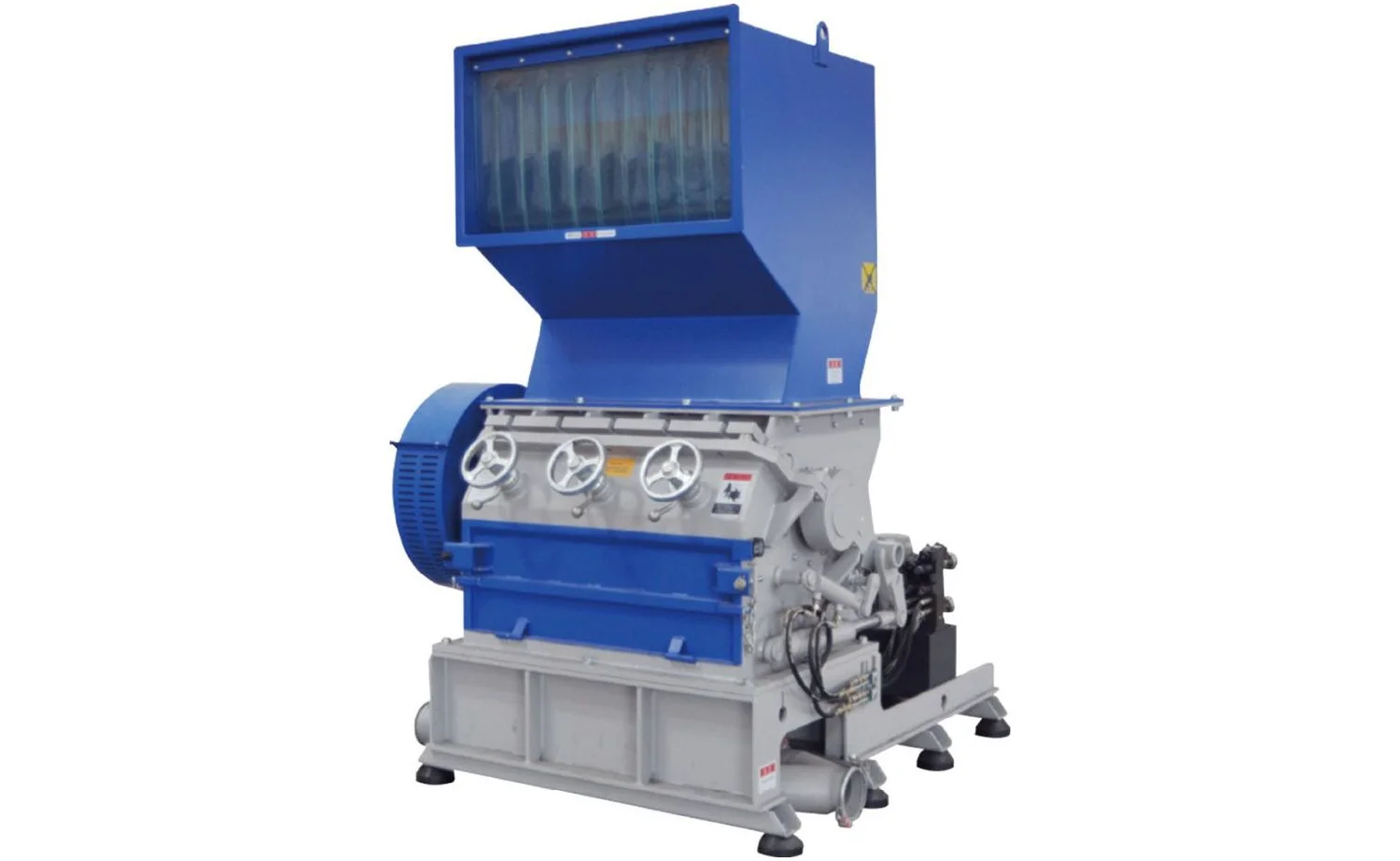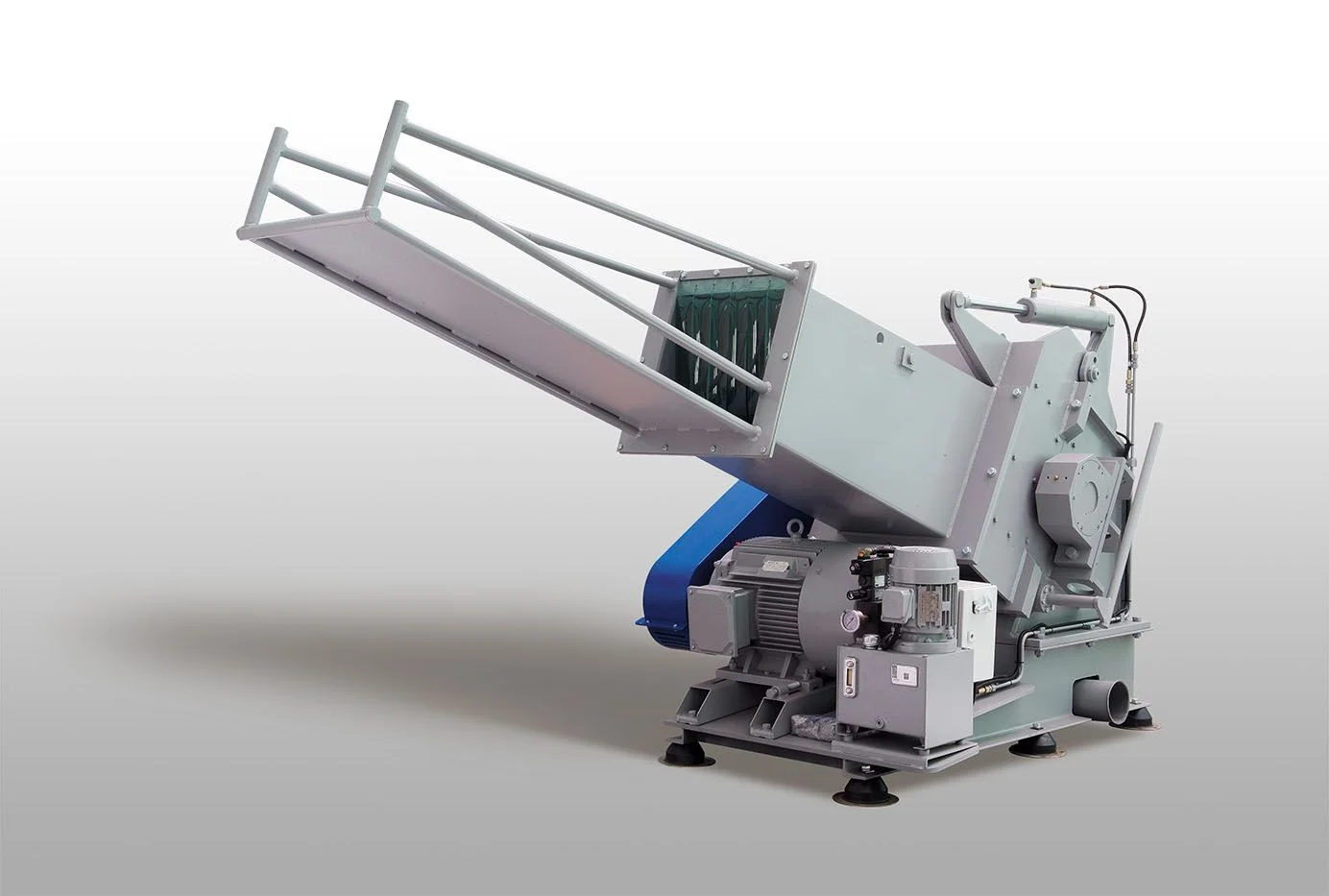
Profile extrusion is one of the largest segments of the plastic extrusion industry, producing everything from window frames and door profiles to cable ducting, agricultural drainage channels, and decorative trim. Like pipe extrusion, it generates production scrap continuously: startup lengths, end-of-run cuts, dimensional rejects, and off-spec production that needs to be recaptured and recycled.
And like large diameter pipe, many of these profiles are too long, too large in cross-section, or too structurally rigid to feed through a standard granulator directly. The solution is the same: a dedicated pre-shredder with horizontal feed and hydraulic ram, followed by a downstream granulator. The ZRS was designed with both applications in mind.
Global plastic pipe and profile market in 2025, generating continuous post-industrial scrap streams that need processing
Primary resins used in both pipe and profile extrusion, all processable on the ZRS with appropriate configuration
The ZRS handles both round pipe and non-circular profiles in the same machine, making it a versatile platform for extrusion operations running mixed scrap streams
Profile Types the ZRS Processes
Window and Door Profiles
Primary resin: PVC (uPVC), some PP
Window frames and door profiles are among the highest-volume non-circular extrusions globally. They arrive as long, rigid sections with complex cross-sections that include multiple chambers and varying wall thicknesses. The ZRS horizontal trough accepts full production lengths. Startup scrap and off-spec profiles from window fabrication are a primary application.
Electrical Conduit and Cable Duct
Primary resin: PVC, HDPE, sometimes PP
Electrical conduit and cable ducting ranges from small-diameter round conduit to large rectangular cable management profiles. Both round and rectangular formats feed through the ZRS. Bundles of smaller conduit, often too many pieces to handle individually, can feed as a bundled unit into the horizontal trough for effective batch processing.
Agricultural Drainage Profiles
Primary resin: HDPE, PP
Open-channel drainage profiles used in agricultural and construction applications arrive in long sections. Their open geometry means they are even more difficult to feed into standard granulators than round pipe. The ZRS ram feeding handles open-channel profile geometry reliably.
Fencing and Structural Profiles
Primary resin: PVC, ASA, composite
PVC and ASA fencing profiles, deck boards, and structural outdoor profiles are produced in long runs and generate startup and reject scrap that needs to be recycled back into production. The rigidity of these profiles makes them a good match for the ZRS before downstream granulation.
Automotive Weatherstrip and Trim
Primary resin: EPDM, TPE, PVC
Automotive sealing and trim extrusions are processed in long continuous runs and generate end-of-roll and startup scrap. Flexible profiles like weatherstrip require careful shredder configuration for consistent output, but the ZRS can handle this material type.
Decorative and Construction Trim
Primary resin: PVC, ASA
Decorative trim, fascia, soffits, and construction finishing profiles all follow the same pattern: long runs, continuous production scrap, rigid material. Post-industrial scrap from these operations is clean and single-resin, making it among the most valuable recyclate from profile extrusion.
Why Profile Scrap Is Harder to Process Than It Looks
Profile extrusion scrap has a deceptive appearance. Individual pieces may not look particularly large or heavy. But the challenges that make it difficult to process are the same ones that affect large diameter pipe, just in different form.
| Challenge | Why It Occurs With Profile Scrap | How the ZRS Addresses It |
|---|---|---|
| Length | Production lengths of 3 to 6 meters are standard for most profile extrusion. These will not fit standard granulator hoppers without cutting. | Horizontal trough accepts full production lengths up to 6 meters. |
| Complex cross-section | Multi-chamber window profiles, hollow sections, and complex geometries resist controlled feeding into cutting zones. | Hydraulic ram feeding provides controlled, consistent rate through the rotor regardless of cross-section geometry. |
| Rigidity | Rigid uPVC and HDPE profiles do not compress or deflect when pushed into a standard shredder hopper. They resist and jam. | The ZRS is designed for rigid material. The ram provides the force required for consistent feeding without relying on gravity or material compliance. |
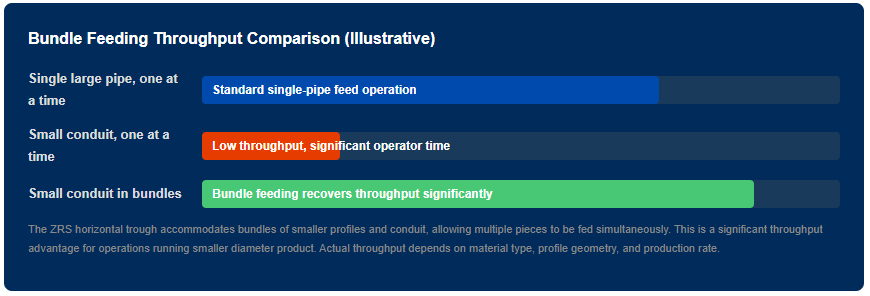
| Bundles of small profiles | Conduit bundles and small-profile batches arrive tangled or stacked. Feeding them one at a time is time-consuming and impractical at production rates. | Bundle feeding into the horizontal trough allows multiple small profiles to process simultaneously, improving throughput efficiency. |
Bundle Feeding: A Key Advantage for Small Profile Operations
The ZRS and GSP Together: The Right System for Profile Extrusion
For profile extrusion operations, the standard downstream pairing is the ZRS pre-shredder followed by the GSP Pipe and Profile Granulator. The GSP is specifically designed for the angular, irregular pieces that come from shredded pipe and profile material. Its cutting geometry handles the irregular shapes that come out of the ZRS more effectively than a general-purpose granulator configured for round or uniform parts.
For PVC window profile and conduit applications where powder output is needed for re-extrusion, the PM Plastics Pulverizer adds the third stage and produces the powder specification required to return the material to new profile production.
Watch Pipe and Profile Equipment in Action
See the ZRS pipe shredder and GSP granulator in real production conditions. The P-Series overview videos below show the same horizontal trough and hydraulic ram design used in the ZERMA ZRS.
- P-Series / ZRS Pipe Shredder Overview
See the horizontal trough and hydraulic ram design in the official pipe profile shredder overview. - Pipe Shredder in Production Operation
Watch the pipe profile shredder processing pipe material with hydraulic ram feed control in real conditions. - Full ZERMA YouTube Channel
All ZERMA equipment demonstrations including ZRS, ZCS, GSP, and PM Plastics Pulverizer systems. - Send Us Your Pipe Material for Testing
Ship your pipe or profile material to our Fort Myers facility. We run it live and send you the video results.