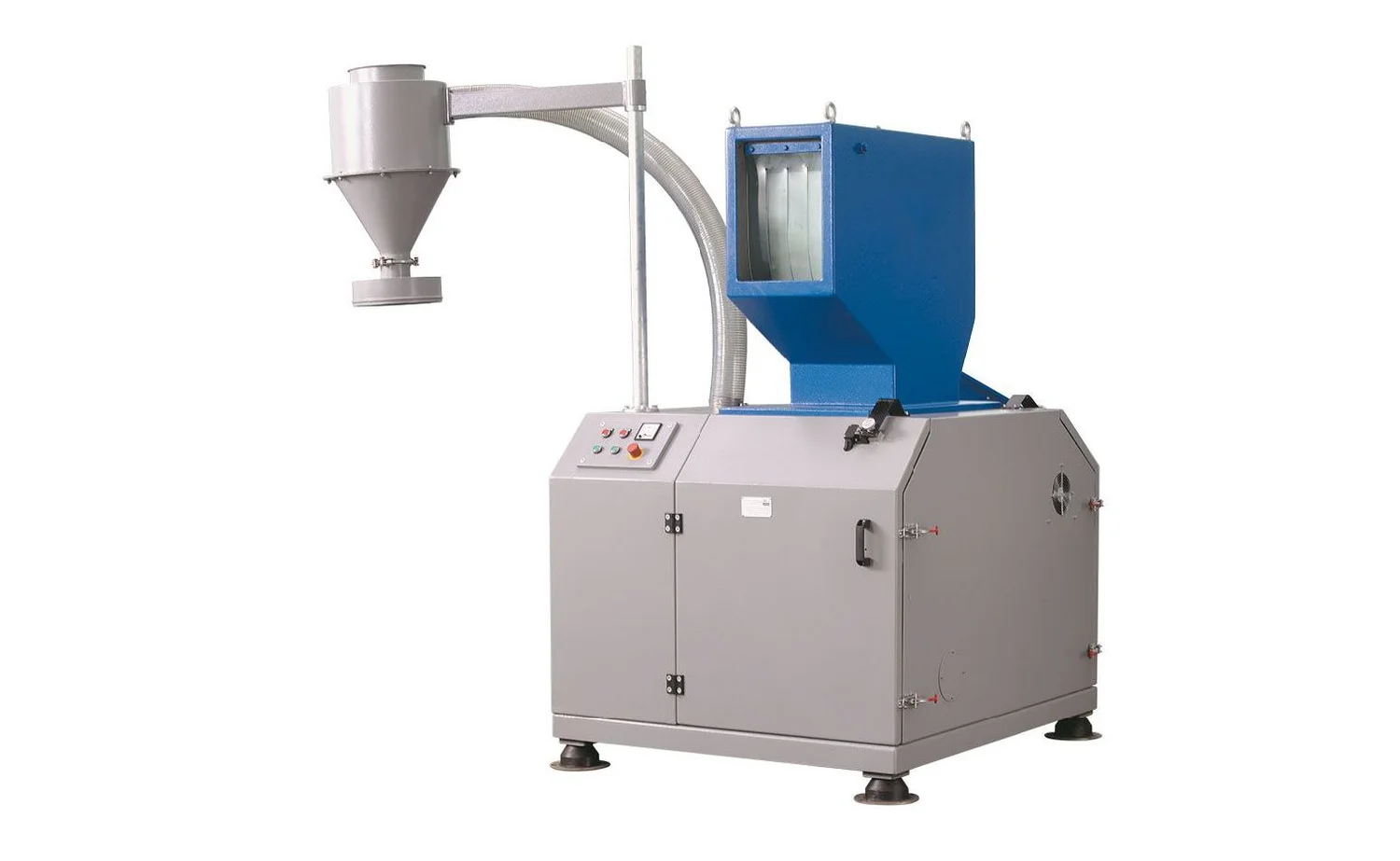
Ask a plant manager where the granulator lives and you will often get a slightly sheepish answer. Down at the end of the building. In the back room. Behind the wall we put up. The machine got moved, not because that location made any sense for material flow, but because nobody could stand to work near it.
That decision looks free. It is not. Every foot of distance between where scrap is generated and where it gets ground adds a handling step: someone bins it, someone moves it, someone tracks it, and somewhere in that journey it picks up contamination or gets mixed with another resin. A loud granulator does not just hurt your ears. It quietly dismantles the closed loop you were trying to build.
Noise is a measurable liability, not a preference
Occupational noise exposure is regulated, and the reasoning behind it is not controversial: noise-induced hearing loss is permanent and it accumulates over a working life. Exposure limits are generally governed by both level and duration, which means a machine that is merely loud can still matter if people work near it for a full shift. Your specific obligations depend on your jurisdiction and your measured levels, and those are worth confirming against current OSHA guidance rather than taking from an equipment supplier.
The usual mitigations all carry costs of their own. Hearing protection is the cheapest, and also the least reliable, because it depends on consistent use. An enclosure or a dedicated grinding room is capital plus floor space. Distance is free until you count the material handling it forces. Engineering the noise out of the machine itself is the only option that solves the problem without creating a new one.
What the GSC actually does about it
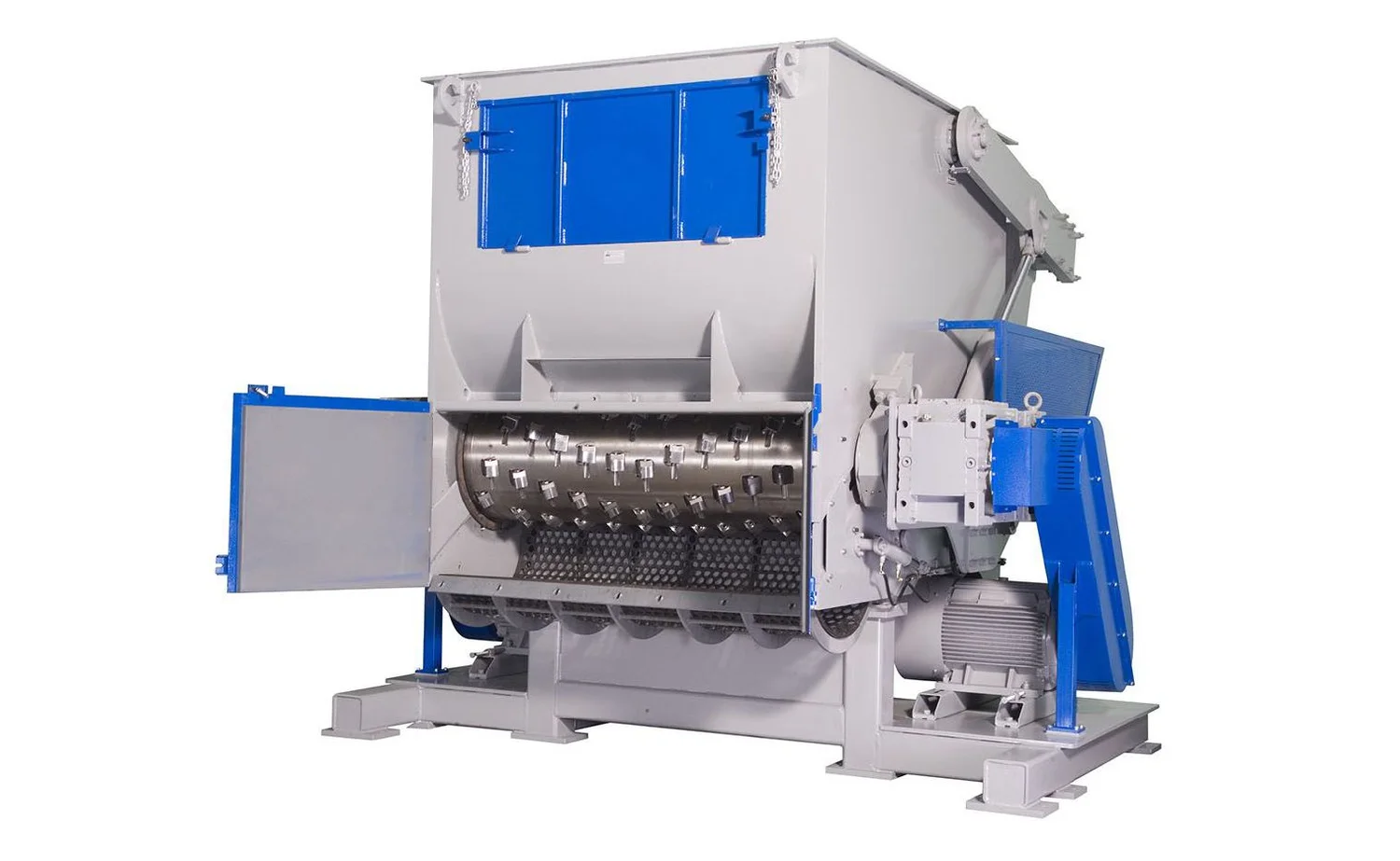
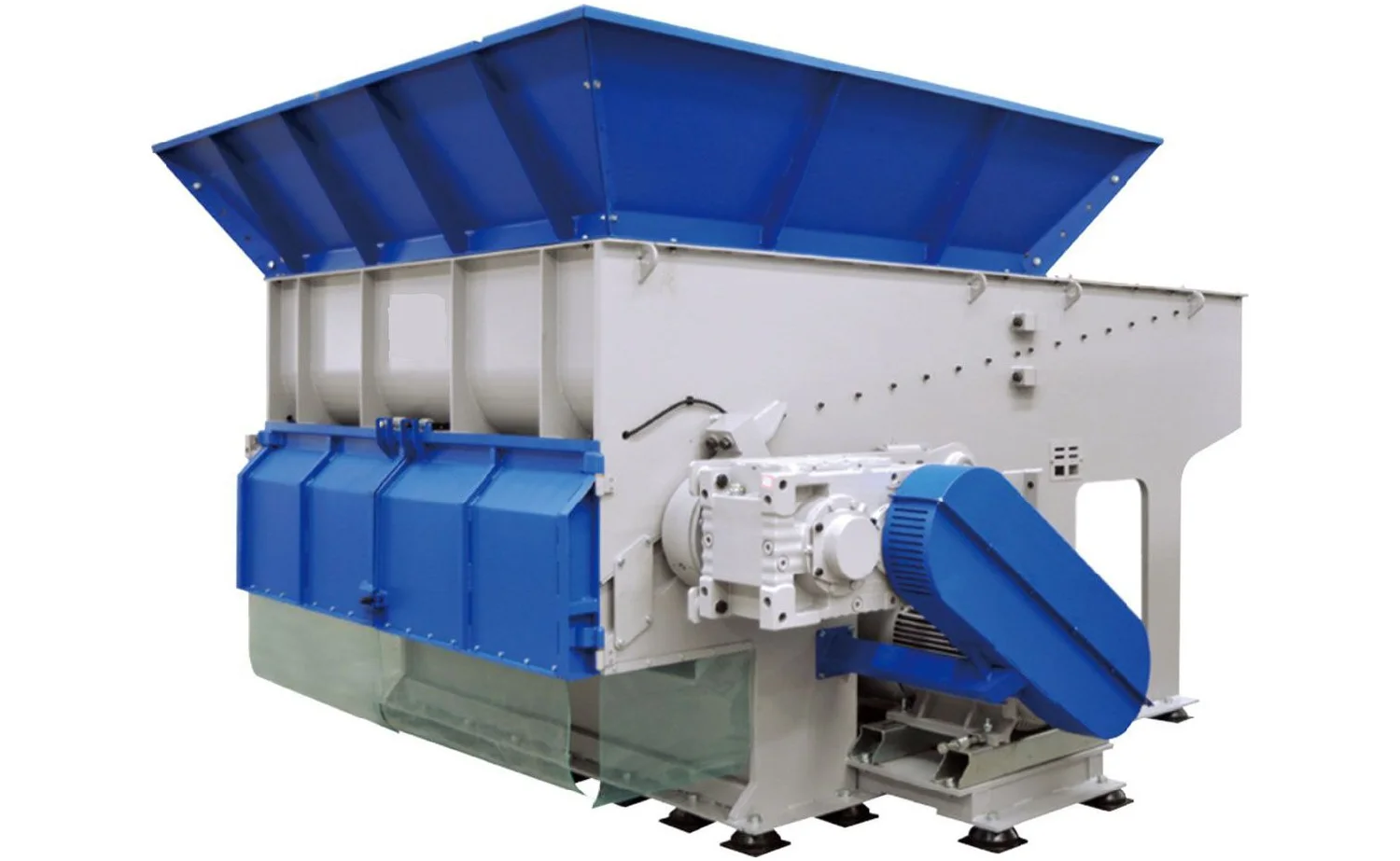
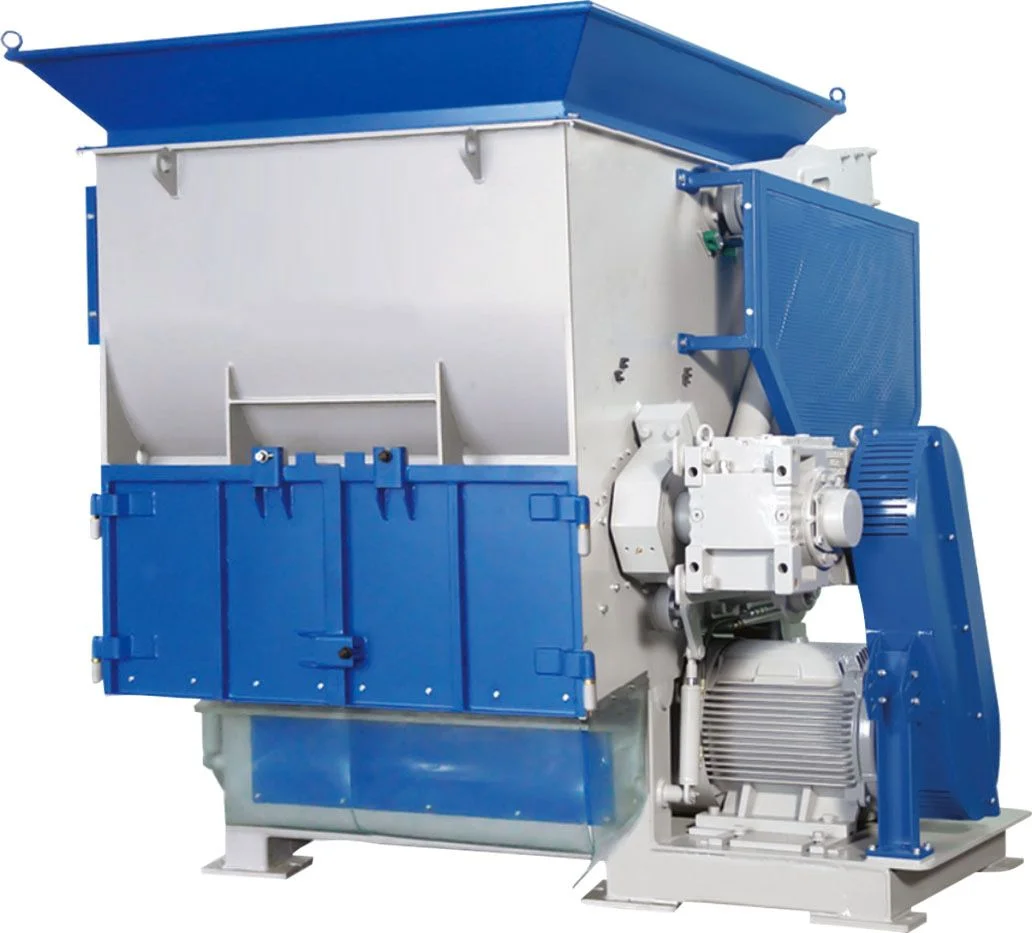
The soundproofing on a GSC is not a panel bolted onto a standard granulator. The machine is built around containment: a full soundproof enclosure, sound-dampening hoppers, and a cutting geometry chosen to generate less noise in the first place. The result is a granulator that can sit on an occupied production floor without dominating it.
Crucially, none of that comes at the expense of serviceability. The housing opens quickly for knife changes, screen swaps, and cleaning, and the rotor and stator knives are pre-set outside the machine on a fixture, so nobody is making fine adjustments while half inside a cutting chamber. Quiet operation that costs you an hour every changeover is a bad trade, and this is not that.
Three models, three jobs
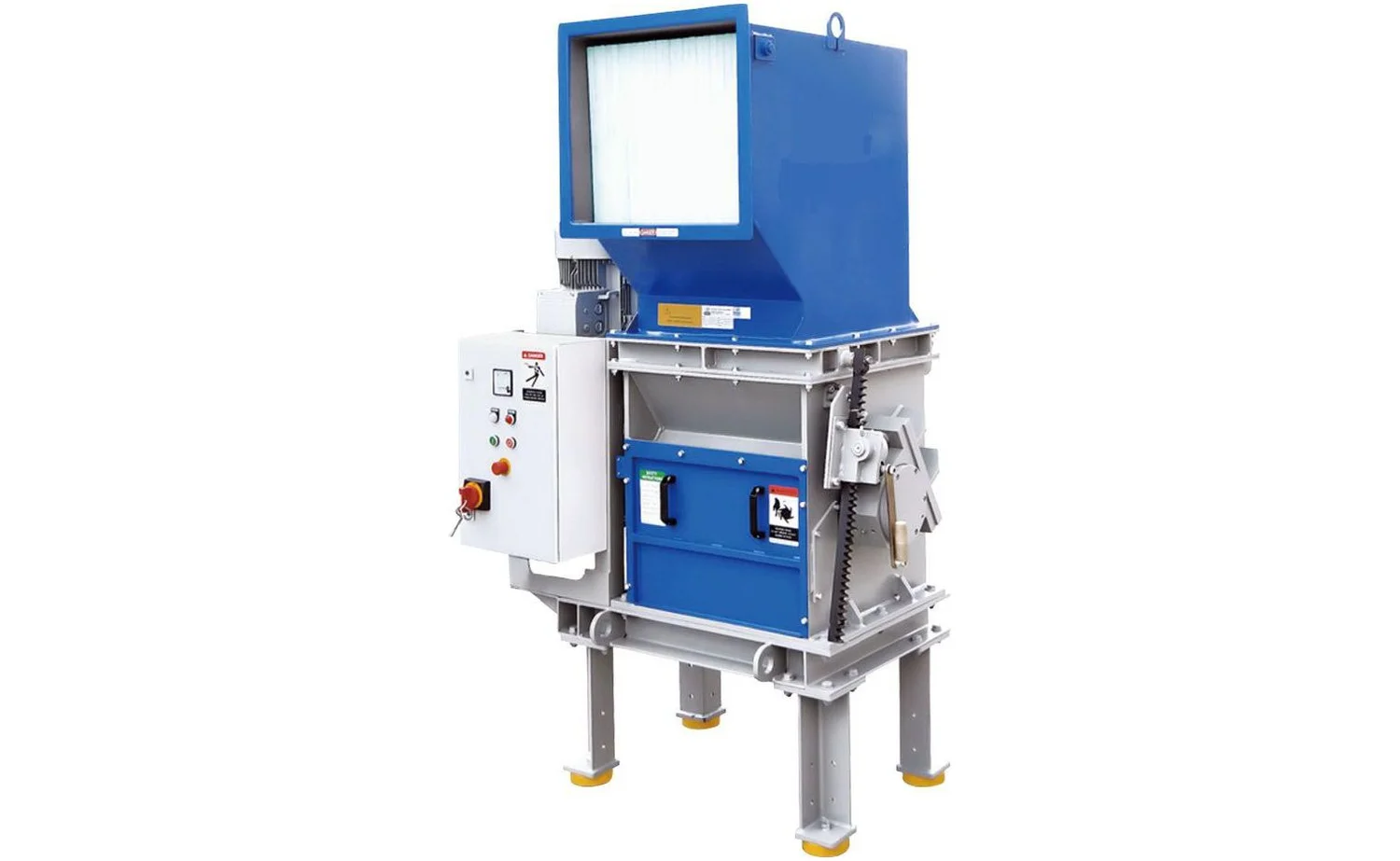
| GSC 300 | 300 mm rotor. The beside-the-press machine: rejects, runners, sprues, and bottle caps ground quietly right where they are made. |
| GSC 500 | 500 mm rotor. Steps up to a small central granulator, built for medium hollow, thin-walled parts alongside runners and sprues. |
| GSC 700 | 700 mm rotor. A central granulator for large injection-molded parts and more voluminous material. |
Across the series, rotor widths run from 300 mm to 1400 mm. Every model uses a fully welded cutting chamber and V-cut rotor technology, which is what keeps regrind uniform and fines low regardless of whether you are feeding injection-molded parts, blow-molded parts, profiles, sheet, or film.
Where the GSC is the wrong answer
Worth being direct about this. If your problem is not noise but ingestion, if you are feeding bulky hollow items like bottles and crates that bounce on a straight-drop rotor, the GST tangential granulator is the machine you actually want, and it comes with the same soundproofing. And purge lumps, thick pipe, film bales, denim and textiles, or tires are not granulator material at all. Those need a shredder first.
Hear it for yourself
Noise claims are easy to make and hard to verify on paper, which is why we would rather show you. Our YouTube channel carries equipment demonstrations across the ZERMA range, so you can watch a GSC run and judge for yourself.
Or send us the material and see the output
Ship a sample of your actual parts and scrap to our Fort Myers facility. Tell us your volume per shift and what the regrind needs to become. We run it, film it, and send you the footage with a confidential technical analysis. For an exact sound reading in your building, though, nothing beats a plant visit, because room acoustics vary more than any spec sheet can capture.
Keeping it running
Knives dull and screens wear. Replacement knives, screens, and wear parts are stocked at Virtus Equipment Direct, our online parts store, so a worn part is an order rather than a quote and a week of waiting. Our service team handles installation, commissioning, and operator training, and our service line is bilingual in Spanish.
Frequently asked questions
How quiet is a soundproofed granulator, in real numbers?
The honest answer is that it depends on your room. The enclosure and sound-dampening hoppers are engineered to contain cutting noise rather than radiate it, and the practical result is a machine you can place in an occupied area instead of exiling it. For a number you can put in a report, a demonstration or plant visit is the only reliable way to get one, because room acoustics change everything.
Does the soundproofing make maintenance harder?
No, and that is deliberate. The housing opens for fast access to knives and screens, and knives are pre-set outside the machine on a fixture. If quiet operation cost you an hour on every changeover it would not be worth having.
Can one GSC handle several different plastics?
Yes. The V-cut rotor produces good regrind across injection-molded parts, blow-molded parts, profiles, sheet, and film, in common thermoplastics like PP, PE, ABS, PET, and PC. If you run multiple resins that must stay separated, plan your cleanout routine, which the fast-access housing makes easier.
Is the GSC 500 a beside-the-press machine or a central granulator?
Both, depending on how you deploy it. It is capable enough to serve as a small central granulator, yet compact and quiet enough to sit closer to production than a full central system would. That flexibility is why it is a common middle choice.
Terms worth knowing
Soundproof enclosure. The acoustic housing and sound-dampening hoppers that keep cutting noise inside the machine, which is what allows a granulator to live on an occupied floor rather than in a separate room.
V-cut rotor. A rotor knife geometry that shears material progressively rather than all at once, producing uniform granules with a low percentage of fines, and generating less noise while doing it.
Fines. Dust-sized particles in the regrind. Too many of them cause feeding problems and cosmetic defects when the material is blended back into production.
Counter knife. The stationary knife that the rotor knives shear against. That scissoring action, not impact, is what cuts the plastic.
Central granulator. A larger machine serving a whole cell or plant from one location, which is the role the GSC 500 and GSC 700 can fill.
Related ZERMA machines
- GSL slow speed granulators for press-side sprue and runner grinding
- GST tangential granulators when bulky hollow parts will not feed
- GSH heavy duty granulators for thick-walled parts and higher throughput
- ZBS lump and purge shredder for purge blocks and dense lumps