A rated throughput number is an answer to a question about ideal material. Feed the machine something bulkier, harder, or finer, and the real number moves. Here is how to read a throughput figure so you size a machine that actually keeps up.
Every throughput figure on a spec sheet carries an unstated assumption: that the machine is being fed one material, consistently, under favorable conditions. That is a fair way to publish a number, but it is not your plant floor. It is also worth noting that published ratings are often generated on 50 Hz power, while North American plants run on 60 Hz, which shifts rotor speed and the numbers that follow from it. Your material varies through the day, arrives in awkward shapes, and is not always the resin the rating assumed. The gap between the sheet and the floor is not the machine underperforming. It is the material asking a different question.
What actually determines throughput
Throughput depends on the machine’s rotor diameter and width, its drive power, the screen size, and the knife setup, combined with the material’s own hardness, shape, and bulk density. That is a lot of variables, but they group into two buckets: what the machine can do, and what the material lets it do.
Bulk density: the variable people forget
Bulk density is how much your material weighs per unit of volume, and it quietly governs throughput in weight terms. A machine’s cutting chamber and feed system move a certain volume of material per hour. If that volume is full of light, low-density material, the weight-per-hour number is low even though the machine is working hard. Fill the same volume with dense material and the weight-per-hour rises.
Illustrative: how bulk density shifts the pounds-per-hour you actually see
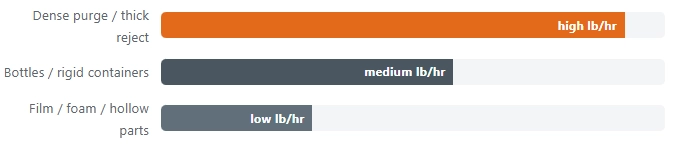
Illustrative relationship. The machine may be equally busy in all three cases; the weight throughput differs because the material’s bulk density differs.
This is why an intermediate bulk container, which holds hundreds of gallons but weighs a fraction of what it can carry, occupies a huge volume for relatively little weight. Bulky, low-density parts fill the chamber fast and produce a modest weight-per-hour, and they are exactly why big-volume shredders exist: large chamber, high-capacity feed, built to move volume rather than to chase a weight rating.
Part shape and how it feeds
Shape decides whether material drops into the cut or fights the machine. Rigid, hollow parts like bottles and containers can bounce and bridge over the rotor instead of feeding, which is why some applications need a tangential infeed or a hydraulic ram to positively drive material into the knives. A part that will not feed steadily cannot hit its throughput, no matter how much power is behind the rotor.
Resin hardness and the screen
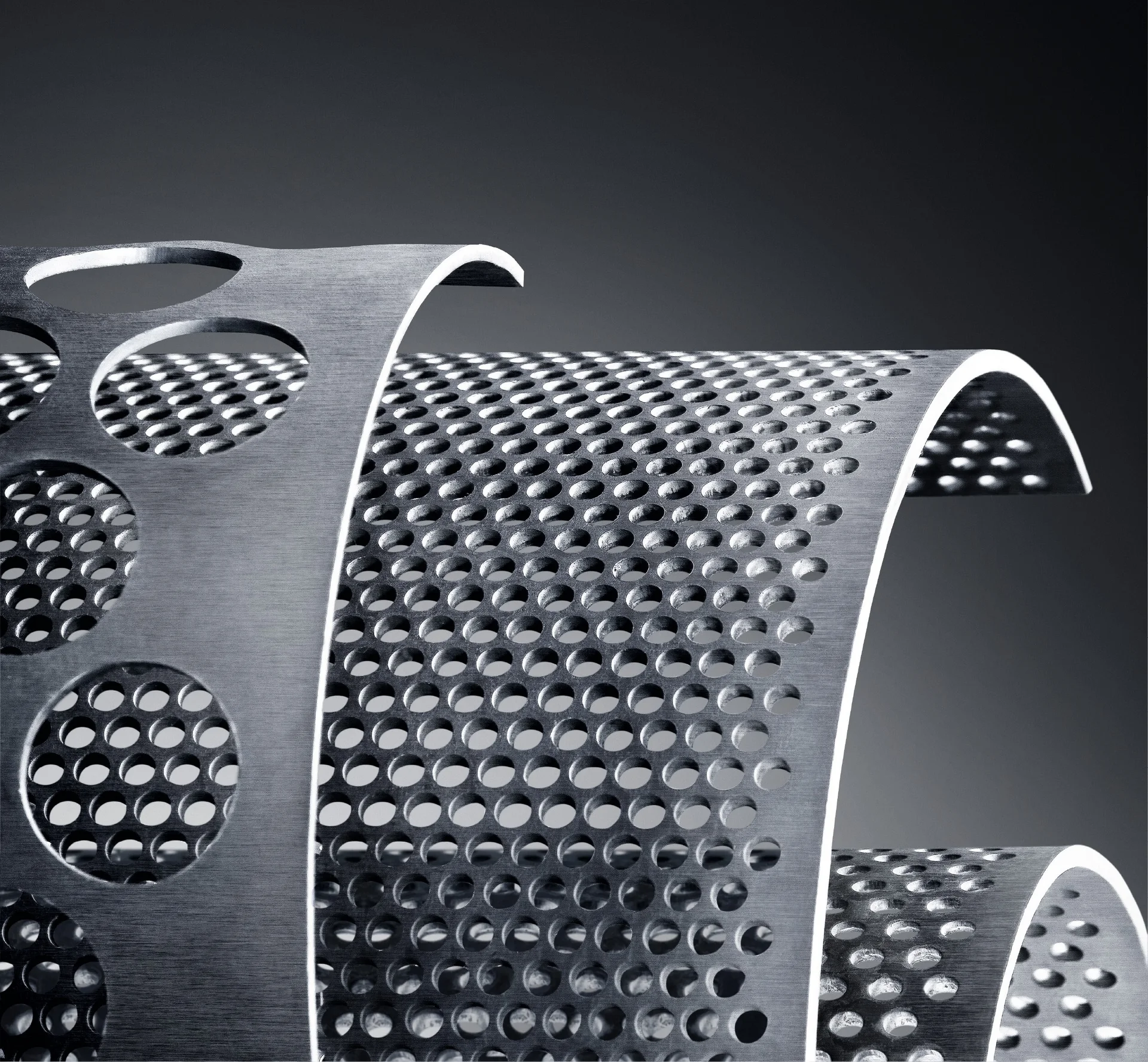
Harder, tougher resins cut more slowly and draw more power for the same output. And the discharge screen is a direct throughput lever: smaller perforations give finer, more uniform regrind but lower throughput, while larger perforations raise throughput with coarser flake. A throughput number quoted with a large screen and a soft resin will not survive being asked for fine flake from a tough one.
| Factor | Raises throughput | Lowers throughput |
|---|---|---|
| Bulk density | Dense material | Light, bulky, hollow material |
| Part shape | Feeds easily into the rotor | Bounces or bridges; needs assisted feed |
| Resin hardness | Softer resins | Hard, tough, reinforced resins |
| Screen size | Larger perforation, coarser flake | Smaller perforation, finer flake |
How to size a machine honestly
The reliable path is to work from your real numbers, not a rating. Share the material type, the part size and shape, the target output size, and your actual hourly volume, and the machine can be matched to that. Better still, test it. Running your own material through the machine is the only way to see the throughput and regrind you will actually get, because it settles every one of these variables at once.
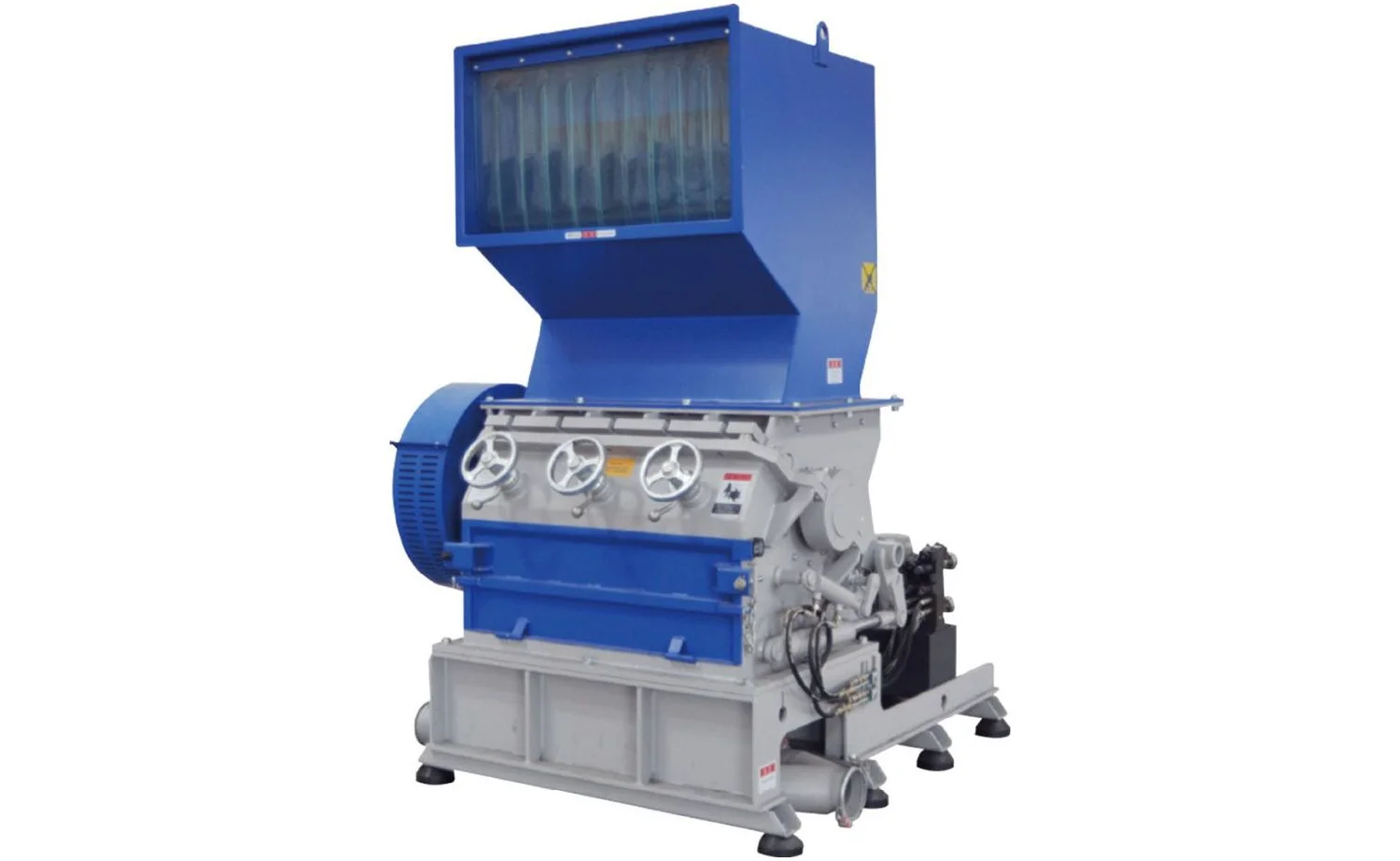
ZIS Big Volume Shredder
Large chamber and high-capacity feed built to move bulky, low-density material by volume.
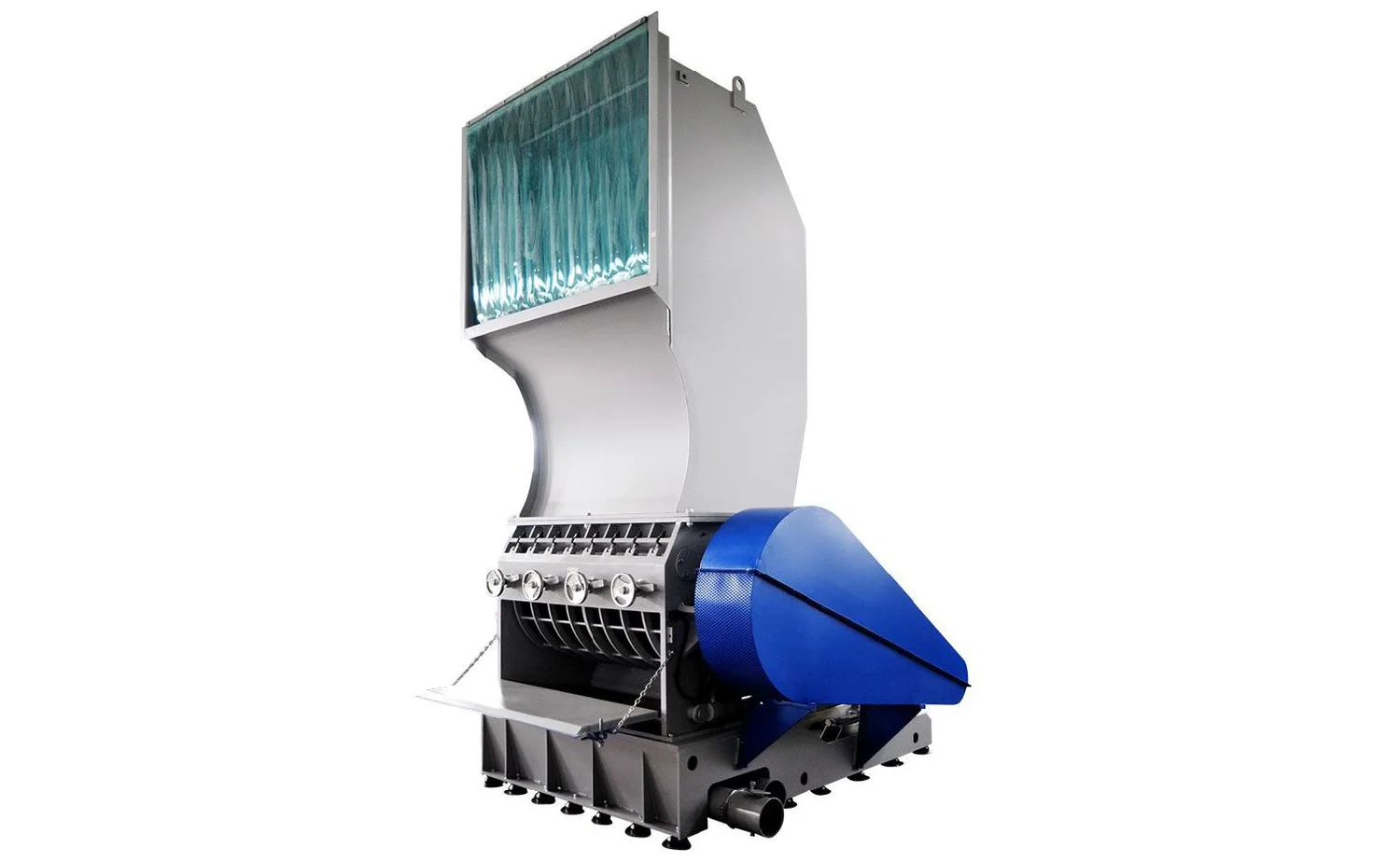
GST Tangential Granulator
Tangential feed for bulky, hollow parts that bounce and bridge in a standard throat.
GSH Heavy-Duty Granulator
Rotor and hopper options to hold throughput on tough, thick-walled, or reinforced resins.
Material Testing
Run your own feedstock to see real throughput and regrind before committing to a size.
A recycling application worksheet captures the inputs a proper sizing needs, and the imperial–metric conversion reference helps when spec sheets mix units.
Size it around your material, not a headline number
Order the right machine and parts through Virtus Equipment Direct, our online store serving ZERMA America customers.
Frequently asked questions
Why is my real throughput below the rated figure?
Almost always the material. Rated throughput assumes ideal, consistent feedstock. If your material is lighter, bulkier, harder, or you are asking for finer flake through a smaller screen than the rating assumed, the real weight-per-hour will be lower. The machine is not underperforming; it is answering a harder question.
What is bulk density and why does it matter so much?
Bulk density is the weight of your material per unit of volume. Machines move a certain volume per hour, so light, bulky material produces a low weight-per-hour even when the machine is fully occupied. It is the single most overlooked reason real throughput differs from a rating.
Can I raise throughput by changing the screen?
Yes, within limits. A larger screen perforation raises throughput at the cost of coarser flake; a smaller one gives finer, more uniform regrind but lowers throughput. Choose the screen to match the flake size your process or buyer needs, then size the machine to hit your volume at that screen.
How do I get an accurate throughput estimate before buying?
Provide your material type, part size and shape, target output size, and real hourly volume, and run a material test if you can. Testing your own feedstock settles bulk density, feed behavior, resin hardness, and screen choice all at once, which is why it is the most reliable way to predict real-world throughput.