The global plastic granulator machine market, valued at approximately $1.2 billion in 2024 and growing toward $1.8 billion by 2033, is increasingly shaped by one trend: hybrid and combination systems. Market researchers tracking the sector specifically call out the growth of shredder-granulator combinations as a key development, particularly as processors deal with more difficult feedstocks including bulky industrial scrap, end-of-life parts, and materials that arrive in inconsistent sizes.
For a plastics processor dealing with purge material, large lumps, blow-molded containers, or thick-wall scrap, the problem shows up clearly at the granulator. Jams, overloaded motors, excessive knife wear, and inconsistent output are not signs of a bad granulator. They are usually signs that the wrong machine is being asked to do too much.
How a Two-Stage Process Solves the Problem
Bulky Plastic Input
Stage 1: Shredder
Stage 2: Granulator
Screen-Controlled Output
The shredder does not need to produce finished granules. It just needs to get the material down to a size the granulator can accept cleanly. Because each stage is doing a job it was designed for, both machines run efficiently and experience far less wear than pushing a single granulator to handle the full task from oversized input to finished regrind.
The ZCS: ZERMA America’s Combination System
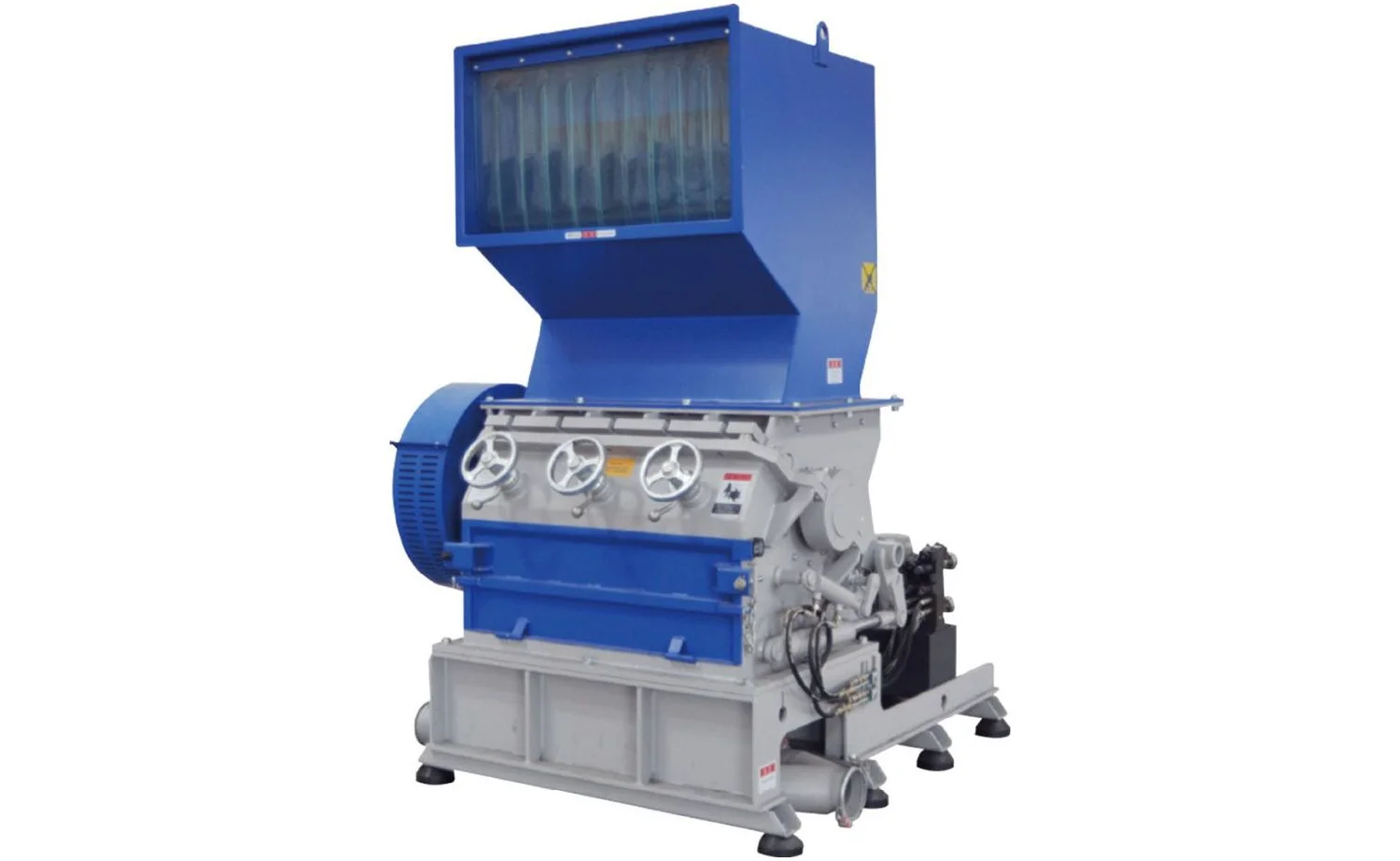
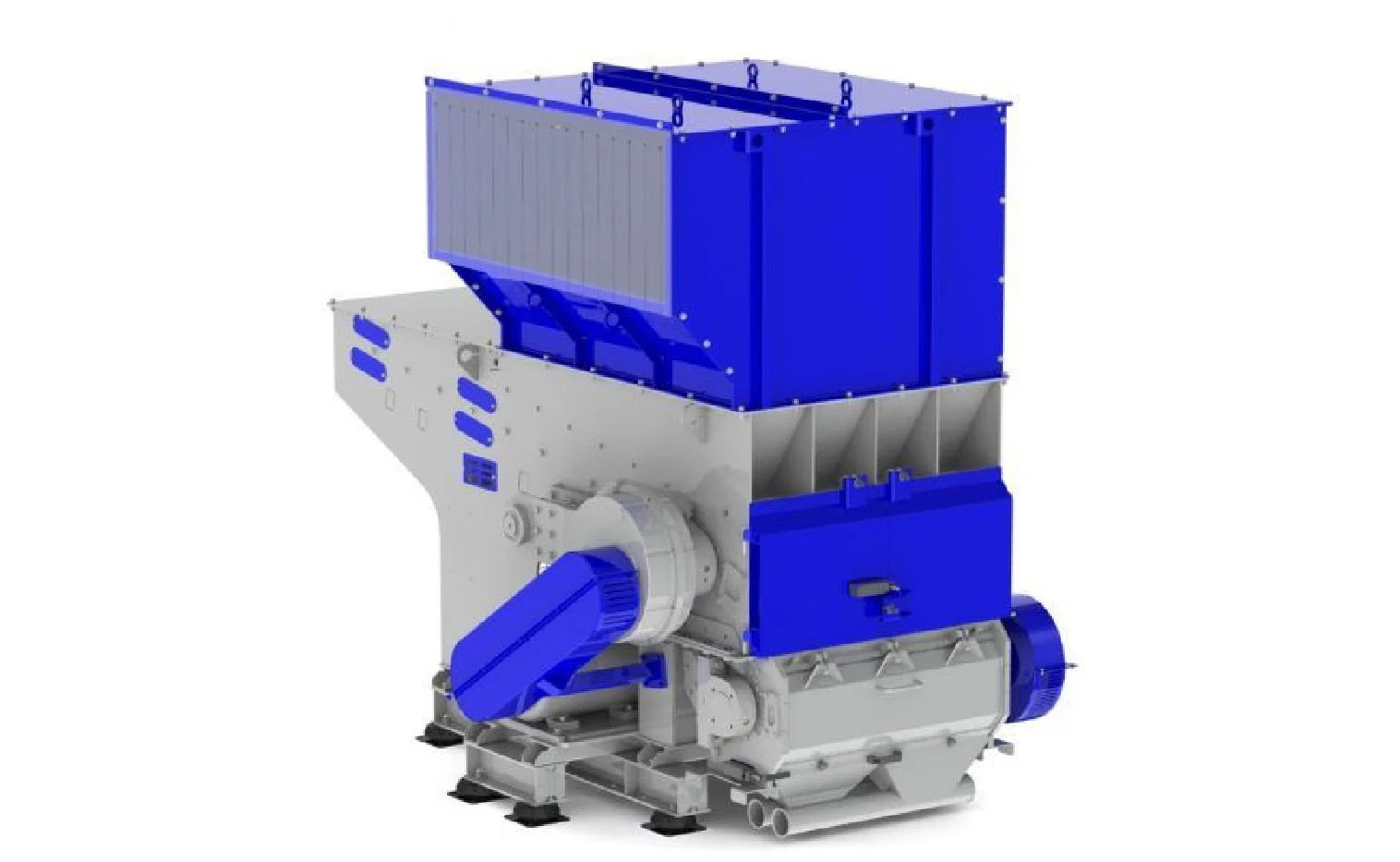
The ZCS is ZERMA America’s purpose-built shredder-granulator combination. The shredder section uses a single-shaft configuration with a hydraulic ram feeding system. That ram controls how material enters the cutting zone at a consistent rate, which prevents jams and protects the rotor from overload. The granulator finishes the material to the particle size set by the screen selection, so regrind output is consistent and ready for downstream use.
Global plastic granulator machine market value in 2024, growing at ~5% annually
Market trend specifically toward combination and hybrid shredder-granulator systems in 2025-2026
Each stage doing the job it is built for means lower wear and more consistent output than a single-stage attempt
Applications Where the ZCS Makes the Most Sense
Plastic Lumps and Purge
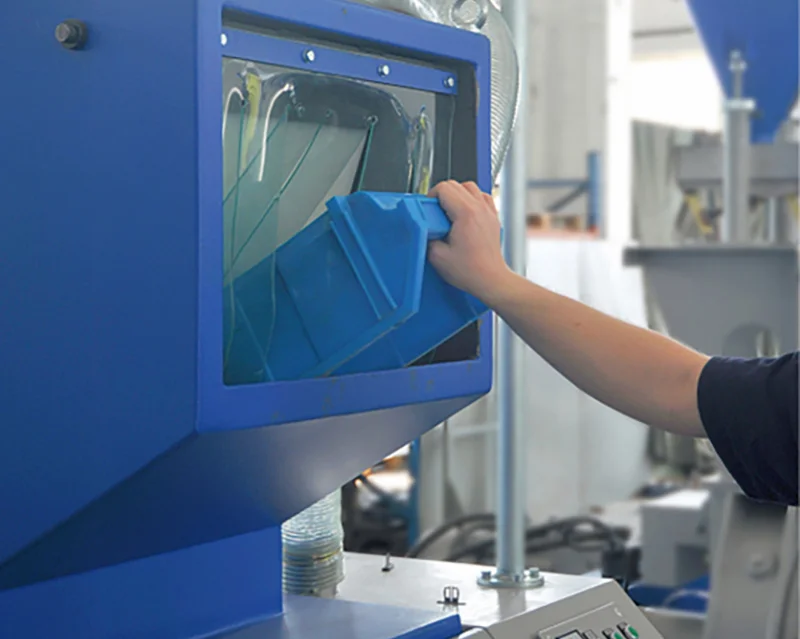
Startup purge material and solidified barrel lumps are among the most awkward scrap types in injection molding. The ZCS processes them without manual pre-cutting, which reduces labor and eliminates a safety hazard.
Large Runner Systems
Heavy runner systems from large-tonnage presses benefit from the pre-shred step before granulation. Trying to feed them directly into a standard granulator risks overloading the motor.
Blow Molded Containers
Hollow blow-molded products that are too large for a granulator hopper at full size feed cleanly through the shredder first. The combination handles containers from bottles to large industrial packaging.
End-of-Life Industrial Parts
EPR (Extended Producer Responsibility) legislation now covering more U.S. states is pushing manufacturers to process take-back material. Combination systems are specifically called out in industry guidance for handling difficult EPR feedstocks.
What the Regulatory Landscape Is Driving
The trend toward combination systems is not just about processing efficiency. Extended Producer Responsibility laws, which require manufacturers to fund or manage recycling of their own products, are expanding across the U.S. and align with existing EU requirements. Industry research notes that these laws are pushing processors toward specialized shredder-granulator combinations that can handle more difficult materials, including automotive battery cases, agricultural drums, and other bulky or contaminated parts that standard granulators cannot process cleanly. The ZCS is positioned directly in that market.