Cutting plastic at industrial scale is loud and it makes dust. Both are manageable, and both are governed by rules worth knowing before an inspector, or an incident, raises the question for you.
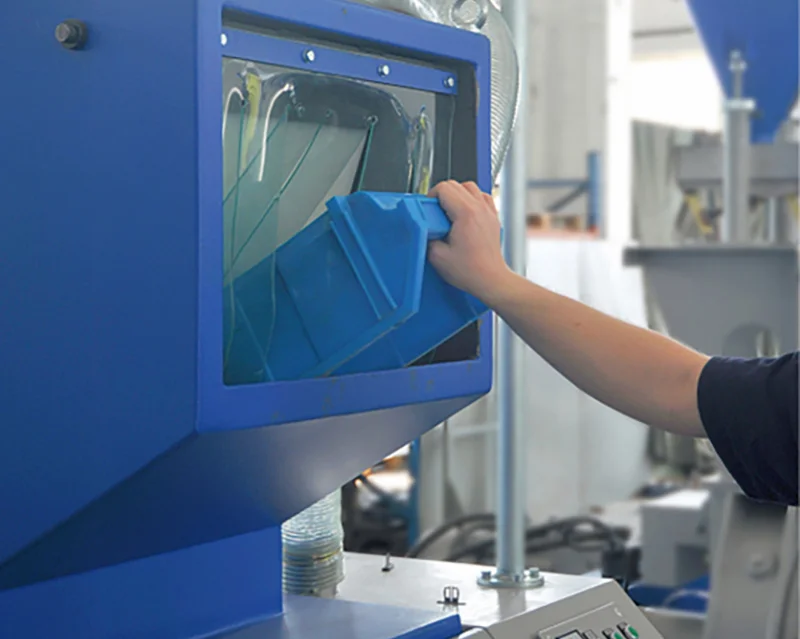
A granulator or shredder is a rotating mass of steel knives turning at speed against tough material. It is one of the most productive machines in a plant and, treated carelessly, one of the most hazardous. The good news is that the three main risks, noise, dust, and contact with moving parts, are all well understood and well regulated. This article is a plain-language orientation for the people who work around these machines every day. It is general information, not a substitute for your own compliance program or a qualified safety professional.
Noise: the exposure that sneaks up on people
Noise damage is cumulative and painless until it is permanent, which is exactly why it gets ignored. OSHA’s occupational noise standard sets a permissible exposure limit of 90 dBA as an 8-hour time-weighted average, and requires a hearing conservation program once exposures reach an action level of 85 dBA over 8 hours.[1] The standard also uses a 5-dB exchange rate, meaning the allowed exposure time is cut in half for each 5 dB increase in level.[1]
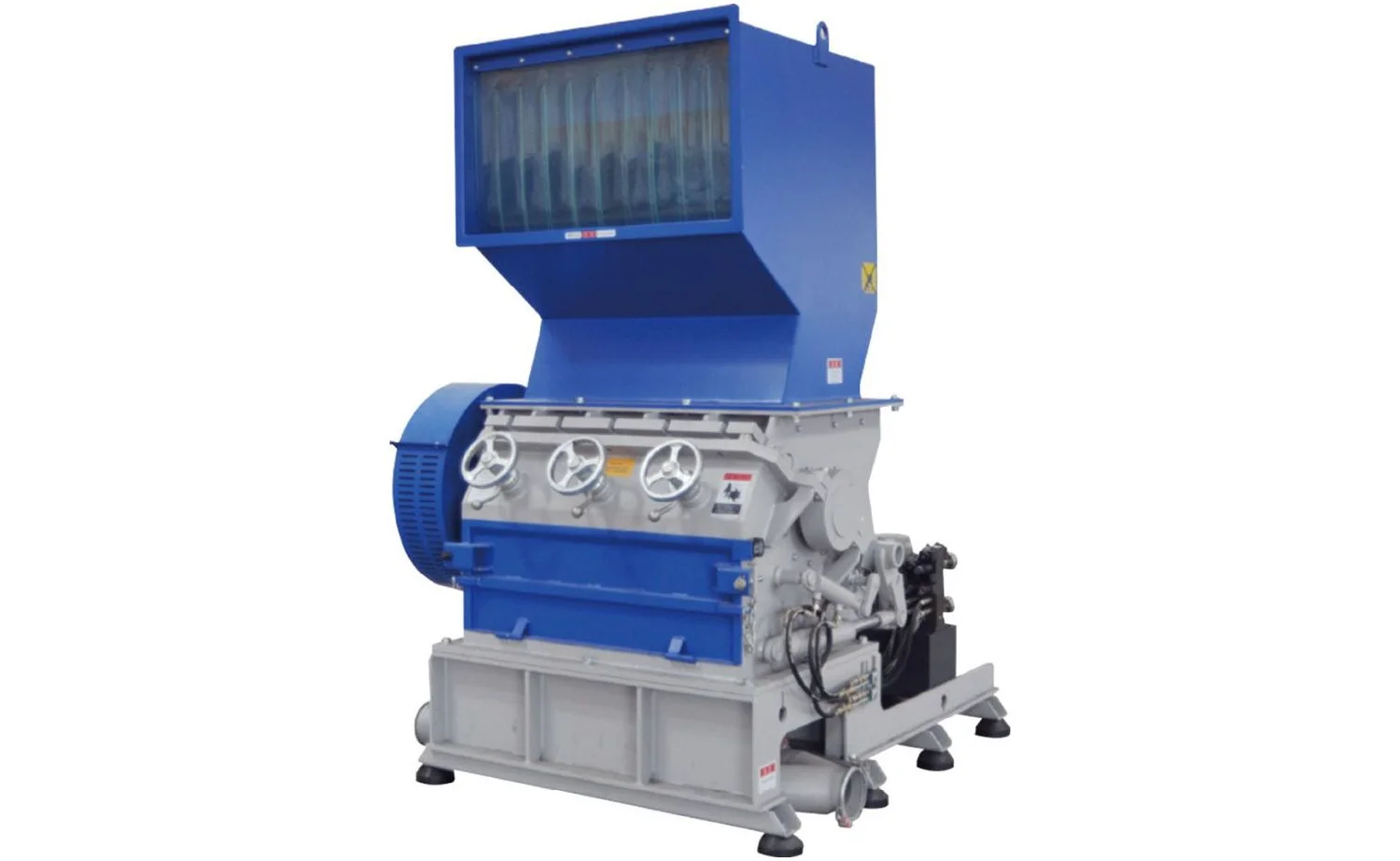
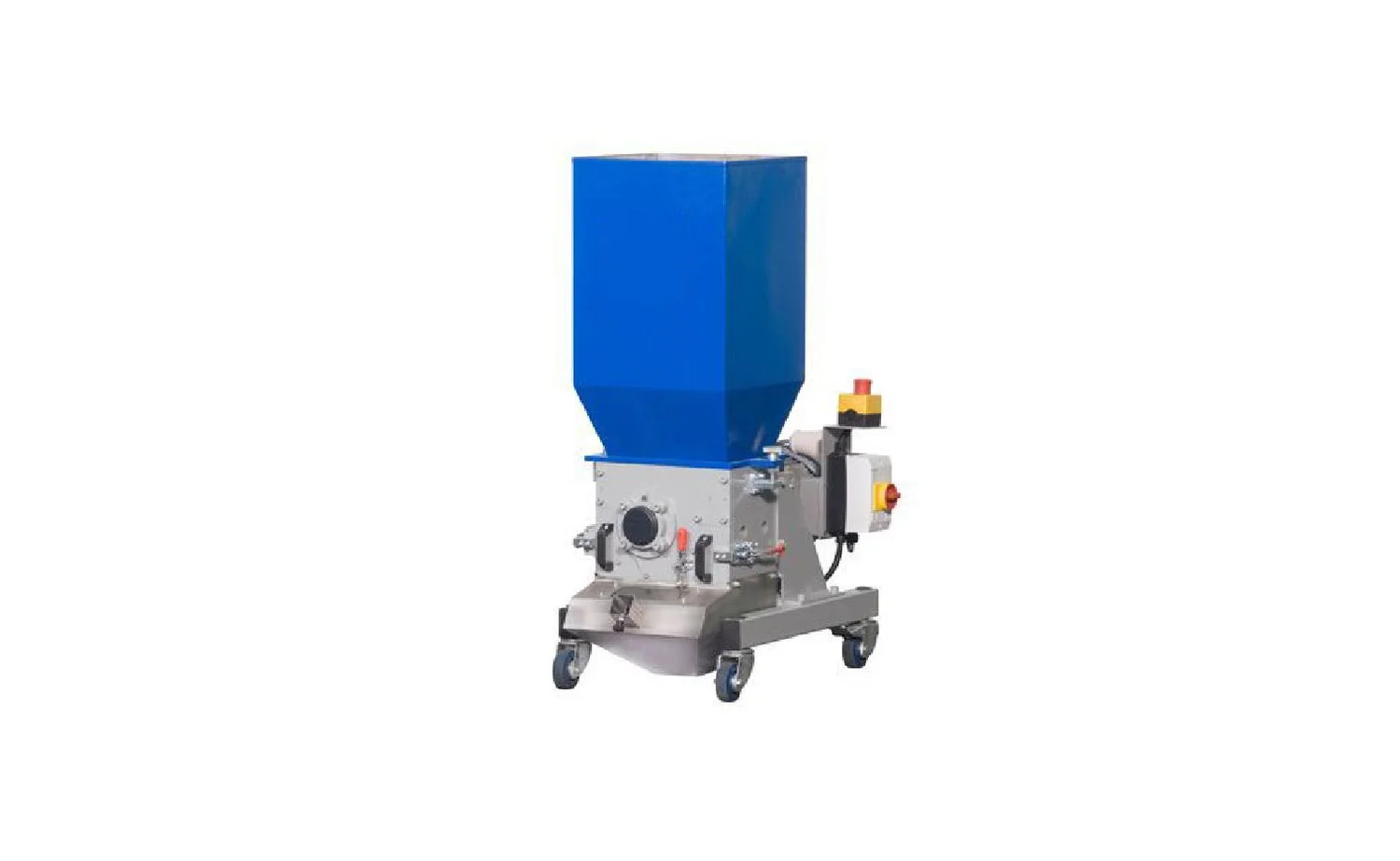
Size-reduction equipment can sit right in that range depending on machine, material, and room. That is why engineering controls come first in the hierarchy: reduce the noise at the source before relying on ear protection. Soundproofed and compact granulator designs exist precisely for this reason, enclosing the cutting chamber and damping the structure so the ambient level in the room drops. Where the source cannot be quieted enough, hearing protection and a conservation program fill the gap.
OSHA noise: allowed exposure time by level (8-hour basis)
As level rises, permitted duration falls sharply. Bars show relative allowed time; the 90 dBA / 8-hour point is the permissible exposure limit.
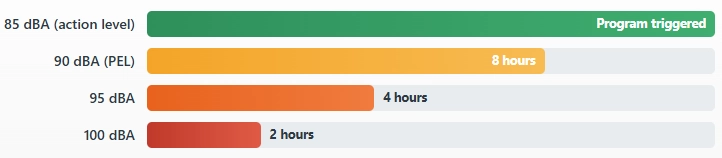
Values from OSHA 29 CFR 1910.95 permissible exposure limits and 5-dB exchange rate.[1] Bar widths are illustrative of the shrinking allowed duration.
Dust: housekeeping is a fire-safety issue
Size reduction produces fines. Depending on the polymer, that dust can be combustible, and accumulated combustible dust is a documented explosion hazard, not a theoretical one. OSHA has a National Emphasis Program for combustible dust, and the widely referenced consensus standards from NFPA address how to prevent and manage dust fires and explosions in industrial settings.[2][3]
The practical controls are unglamorous and effective: capture dust at the source with proper dust collection, keep horizontal surfaces clean so dust cannot accumulate into a hazard, control ignition sources, and follow the housekeeping and equipment guidance in the applicable NFPA standards. A well-designed size-reduction cell treats dust extraction as part of the system, not an add-on. Cleaner air is also better for regrind quality and for the people breathing it.
Machine guarding and lockout/tagout
The rotor does not care what enters the chamber. OSHA’s machine-guarding requirements exist to keep hands and tools away from the cutting zone, and the control of hazardous energy (lockout/tagout) standard governs how the machine is de-energized and secured before anyone reaches inside for a jam, a blade change, or a screen swap.[4][5] Every blade rotation and gap check described in a maintenance schedule assumes the machine is properly locked out first. No exceptions, no “just this once.”
| Hazard | First line of defense | Backup control |
|---|---|---|
| Noise | Quieter machine / enclosure (engineering) | Hearing protection + conservation program |
| Combustible dust | Source capture + housekeeping | NFPA-compliant collection, ignition control |
| Moving parts | Guards + interlocks | Lockout/tagout before access |
| Foreign objects | Feed screening, magnets | Overload protection |
Where machine choice helps
Some of these controls start with the machine you buy. Soundproofed and compact granulators lower the noise you have to manage in the first place, and a system designed with proper dust extraction keeps housekeeping ahead of the hazard. That is a design decision, not just an operating one.
Designing a quieter, cleaner size-reduction cell?
Talk to ZERMA about soundproofed granulators and dust-extraction accessories that lower the risks before they reach your people.
Frequently asked questions
At what noise level do I need a hearing conservation program?
OSHA requires a hearing conservation program when noise exposure reaches an action level of 85 dBA averaged over 8 hours. The permissible exposure limit is 90 dBA over 8 hours, and allowed time halves for each 5 dB increase. Measure your actual levels to know where you stand.
Is plastic dust really an explosion risk?
Many plastic dusts are combustible, and accumulated combustible dust is a recognized fire and explosion hazard that OSHA and NFPA address directly. Have your specific dust characterized, capture it at the source, and keep surfaces clean. Accumulation is what turns dust into danger.
Can I clear a jam without locking out the machine?
No. Reaching into a cutting chamber on a machine that is only switched off, not locked out, is exactly the scenario the control-of-hazardous-energy standard exists to prevent. Follow your lockout/tagout procedure every time.