Rotational molding and blow molding together produce some of the most useful plastic products in manufacturing, from agricultural tanks and kayaks to bottles, automotive fuel tanks, and industrial containers. They also generate scrap that the rest of the plastics industry does not deal with in quite the same way: large, hollow, thick-walled parts that hold their shape under compression, resist feeding into standard equipment, and arrive in sizes that often exceed standard granulator hopper dimensions entirely.
Getting that scrap into a closed recycling loop is exactly the kind of challenge ZERMA America’s equipment is built to handle, but the configuration matters. Choosing the right combination of pre-shredder and downstream granulator for hollow part recycling saves operators significant time, labor, and maintenance cost compared to trying to force the material through equipment that was not sized for it.
Global injection molded plastics market in 2025 – blow molding and rotomolding are parallel major markets sharing the same recycling infrastructure need
Geometry is the defining challenge: hollow parts resist compression-feeding and cannot be processed the same way as solid scrap
Pre-shredding followed by granulation is the standard recommended configuration for large hollow part recycling in both blow and rotomolding
Understanding the Hollow Part Problem
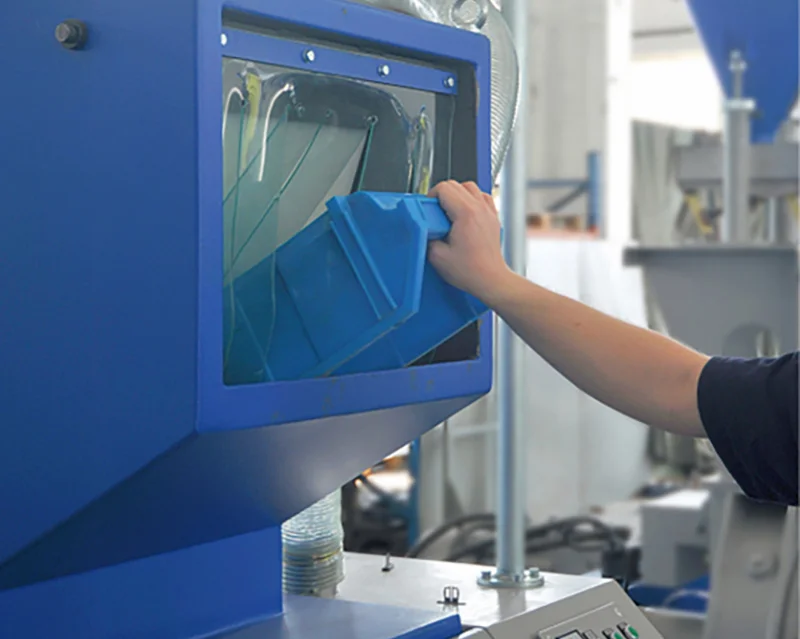
When you place a hollow blow-molded container or a rotomolded tank against a granulator hopper, a few things happen. First, the part is often too large to enter the hopper at all. Second, if it can be fed in, the hollow geometry means it tends to bounce and shift rather than feeding consistently into the cutting zone. Third, the wall thickness is often substantial enough that a standard beside-the-press low speed granulator is not sized for it. Fourth, the part springs back under the pressure of the cutting action in ways that solid parts do not.
The result is a granulator that jams frequently, produces inconsistent regrind when it does run, and wears knife edges faster than the same machine would on equivalent solid plastic weight. None of this is a machine failure. It is a mismatch between the part geometry and the equipment configuration.
Rotomolding vs. Blow Molding: Similar Challenge, Slightly Different Details
Rotational Molding Scrap
Rotomolded parts are typically large, thick-walled, and produced in relatively low volumes compared to blow molding. Scrap includes off-spec tanks, startup rejects, and trim from large industrial containers. Parts can be extremely large and rigid. HDPE and LLDPE are the most common resins. The key challenge is sheer size: many rotomolded parts will not fit any standard granulator hopper without pre-size reduction.
Blow Molding Scrap
Blow molded parts range from small bottles to large industrial containers. Parting line flash, off-spec bottles, and container rejects are the typical scrap stream. Higher production rates mean higher scrap volumes. Parts are generally thinner-walled than rotomolded products but still hollow. HDPE, PP, and PET are common resins. Flash scrap may be processable in a standard granulator, but whole containers usually require pre-shredding.
The Right Processing Sequence for Hollow Parts
Hollow Part Input
Screen-Controlled Regrind
The pre-shredder does the work that allows the granulator to do its job properly. By reducing the hollow part to irregular pieces in a manageable size range, the shredder eliminates the geometry problem. The granulator then receives material that feeds consistently, cuts efficiently, and produces the uniform regrind particle size that the downstream process needs.
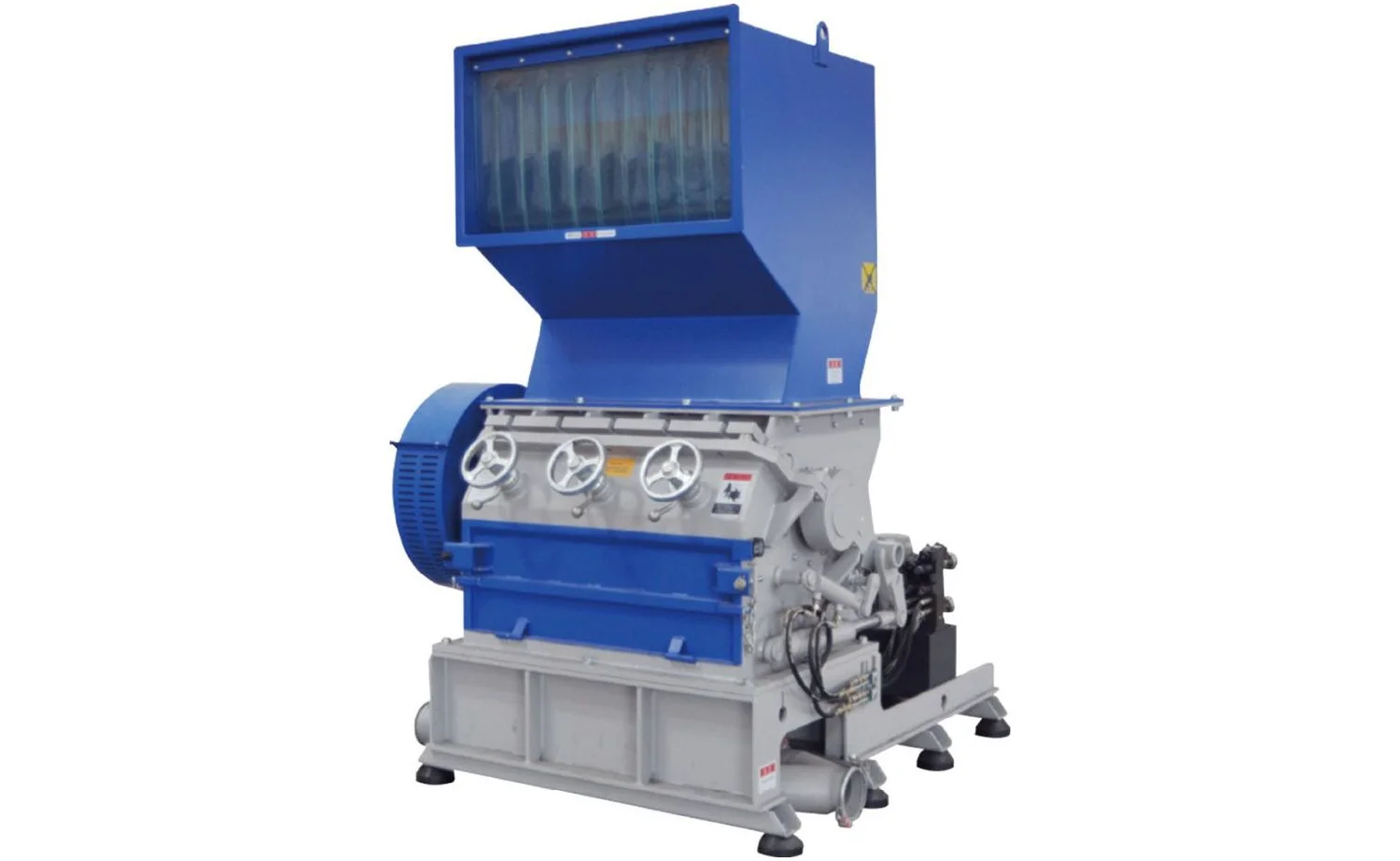
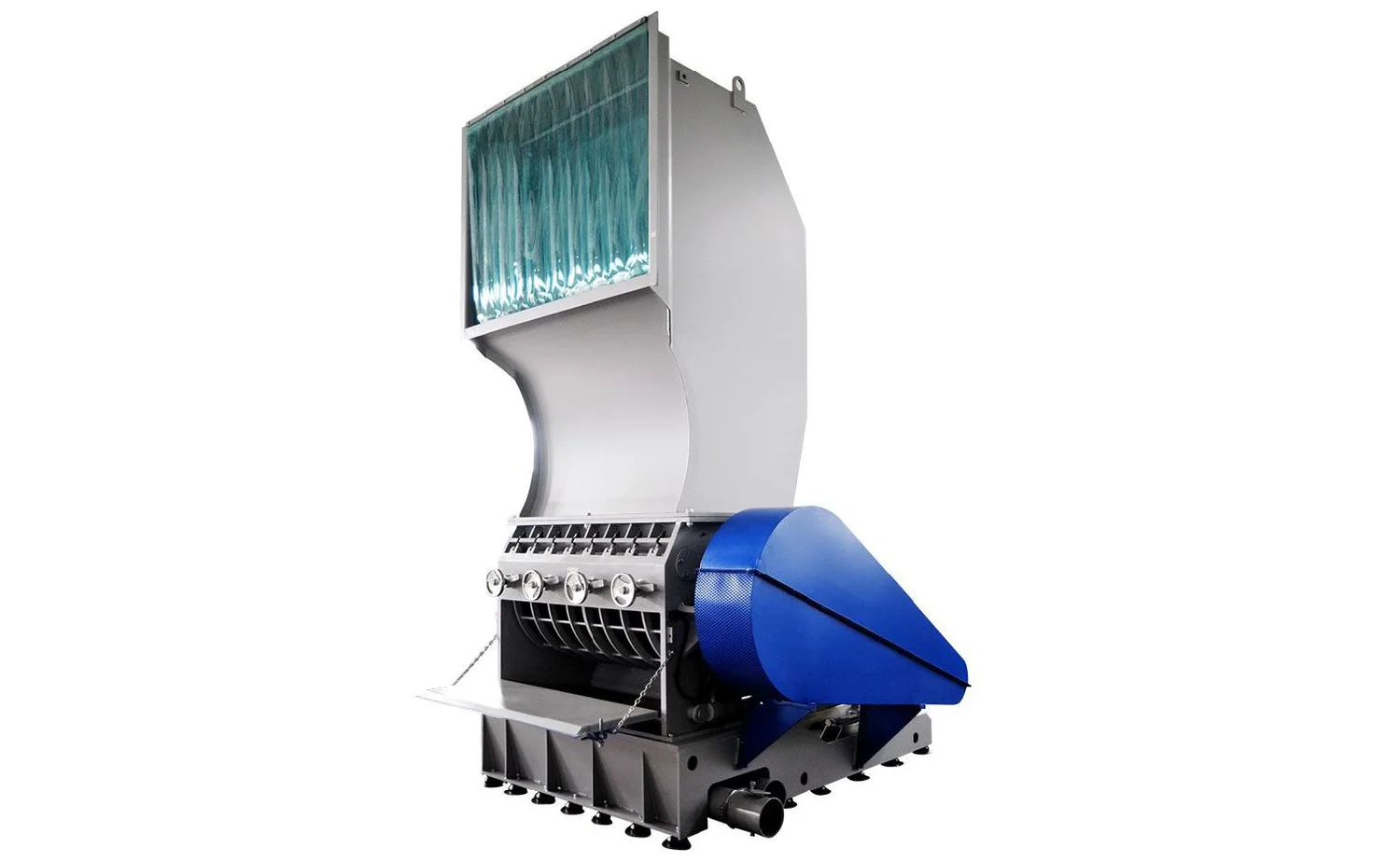
For rotomolded tank scrap and other very large hollow parts, ZERMA America’s ZBS Lump and Purge Shredder and the ZCS Shredder Granulator Combination are directly relevant configurations. For blow molded containers where the parts are smaller, the GSH Heavy Duty Granulator with an appropriate hopper configuration can often handle the material without a separate pre-shredder for smaller container formats.
| Part Type | Typical Size Range | Recommended Configuration |
|---|---|---|
| Rotomolded tanks (large, industrial) | Very large; often exceeds any standard hopper | ZBS or heavy duty single-shaft shredder as pre-stage, then GSH granulator |
| Rotomolded small parts (toys, kayaks) | Large but may fit in ZCS or oversized hopper | ZCS combination system handles this range in one integrated unit |
| Blow molded industrial containers (20L+) | Large; hollow with thick walls | Pre-shredder recommended; ZCS or ZBS followed by granulator |
| Blow molded bottles and small containers | Fits standard hopper with appropriate configuration | GSH Heavy Duty Granulator with appropriate hopper; evaluate pre-shred for high volume |
| Parting line flash from blow molding | Flat, thin strips; may tangle | GSC Compact Soundproofed or GSE Economical Granulator; avoid wrapping configurations |
Material Considerations: HDPE and LLDPE Regrind
Both rotomolding and most blow molding operations run primarily in HDPE, LLDPE, or PP. These are well-understood resins from a regrind perspective. They tolerate regrind blending well, and quality regrind from these sources has genuine market value, not just as an in-house cost reduction but as a saleable recycled material given current demand for clean post-industrial HDPE and PP.
The key requirement is that the regrind arrives at the blending stage with consistent particle size, low fines content, and no contamination. That is exactly what a properly configured pre-shredder and granulator combination delivers when it is operating correctly. The difference between regrind produced on the right equipment and regrind produced by forcing hollow parts through an undersized granulator is visible in the output and measurable in the downstream process.