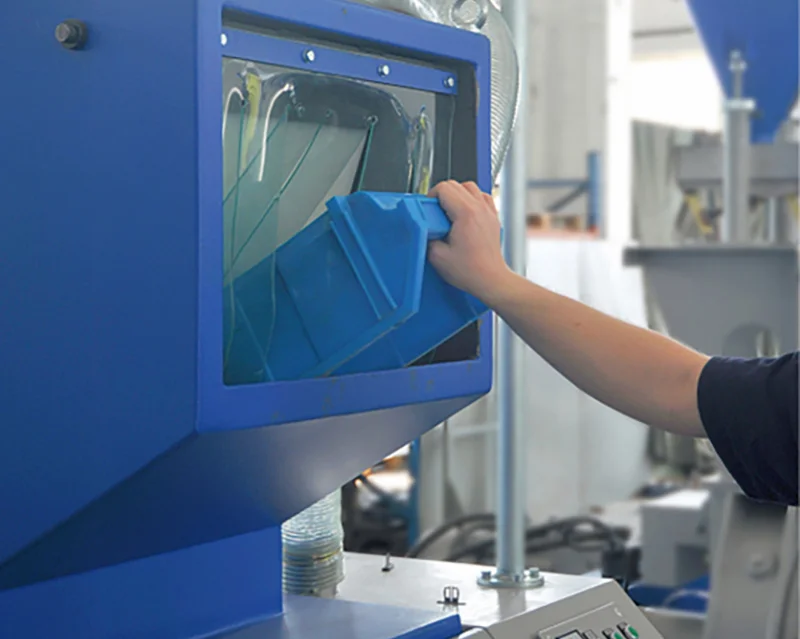
Thermoforming is one of the packaging industry’s most productive processes. It also produces a significant scrap stream. In a typical thermoforming line, the skeleton trim left after parts are punched out represents anywhere from 20 to 50 percent of the total sheet input depending on the part geometry and nesting efficiency. That material has value, it is clean, it is already the right resin, and it can be regrind-blended back into new sheet or sold as a recycled material input. Getting it there is the challenge.
Film scrap from blown film and cast film extrusion lines has a similar profile: high-value clean material, awkward to process. Films wrap, bird-nest, tangle, and jam in standard granulators. Sheets from thermoforming are springy, large, and often arrive hot. Neither is as straightforward as a runner or sprue from an injection mold.
Why Standard Granulators Struggle With Film and Thin Sheet
The Wrapping Problem
Film and flexible thin sheet wrap around the granulator rotor rather than feeding through the cutting zone. Once wrapping starts, the machine jams, throughput stops, and clearing the rotor is a time-consuming process. This is the single most common complaint from processors who try to run film on an improperly configured granulator.
The Bird-Nesting Problem
Rolls or loose bales of film material compress into a tangled mass rather than feeding in a controlled stream. The material does not fall through to the rotor; it stacks above the cutting zone and starves the machine. Output drops, and the operator has to manually break up the feed constantly.
The Heat Problem
Thermoforming trim arriving warm from the line generates additional heat during granulation. Film processed at high throughput rates can create frictional heat that softens the material and causes it to stick to screens or rotor components. Screen selection and rotor speed management both matter here.
The Size Problem
Thermoforming skeleton trim can arrive as large, irregular pieces that are too big for many granulator hoppers. Pre-shredding to a manageable size before granulation often produces better results and extends the life of the granulator’s cutting components.
Equipment Configuration: What Actually Works
There is no single answer for every thermoforming or film application, but there are well-established configurations that address these challenges reliably. The right approach depends on material type, sheet or film thickness, throughput requirements, and whether the scrap is arriving online or in batches.
| Scrap Type | Common Challenge | Recommended Configuration |
|---|---|---|
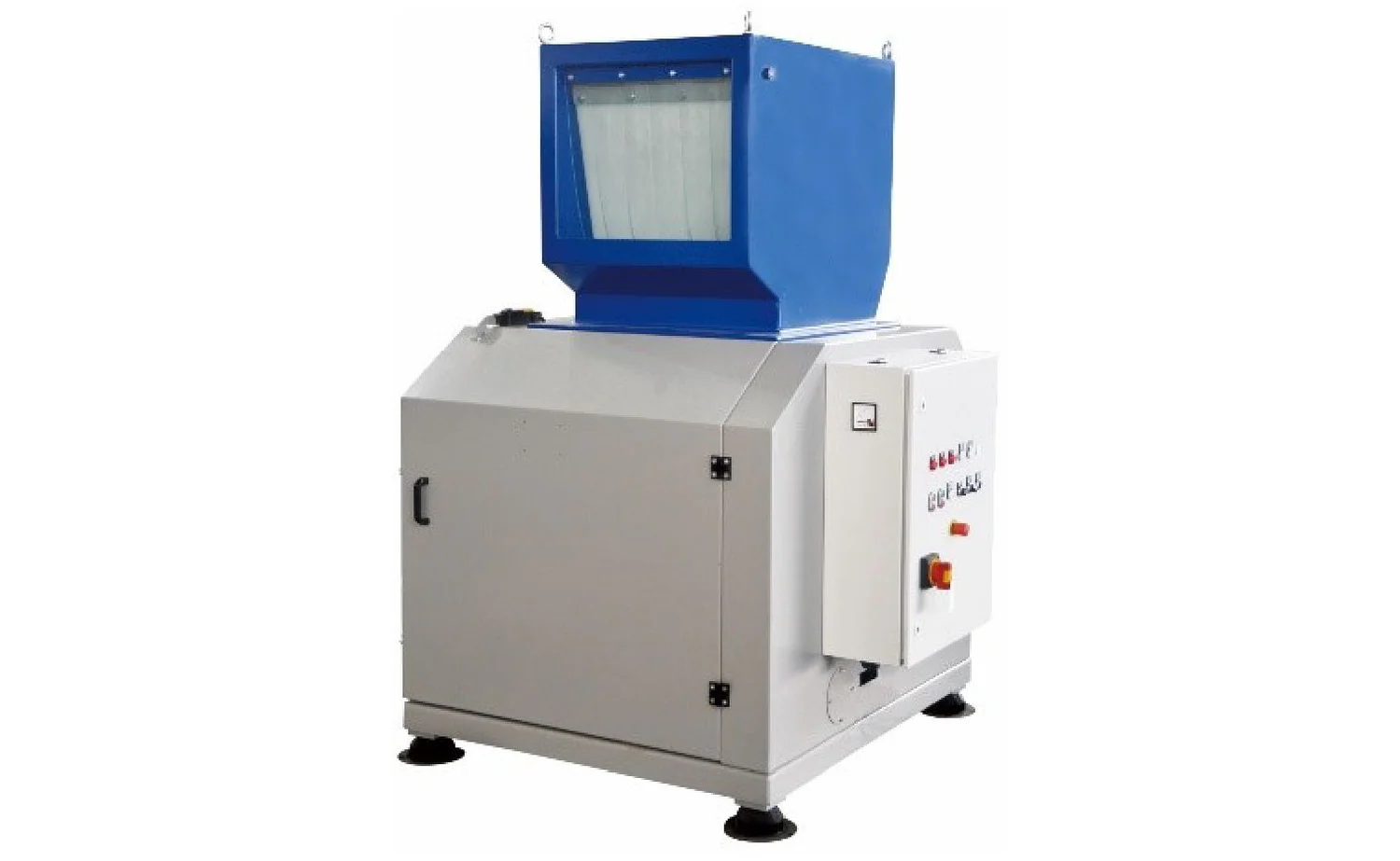
| Thermoforming skeleton trim (online, moderate size) | Large irregular pieces, potentially warm material | Tangential or central-fed granulator with appropriate hopper; GST Tangential Granulator suited to this application |
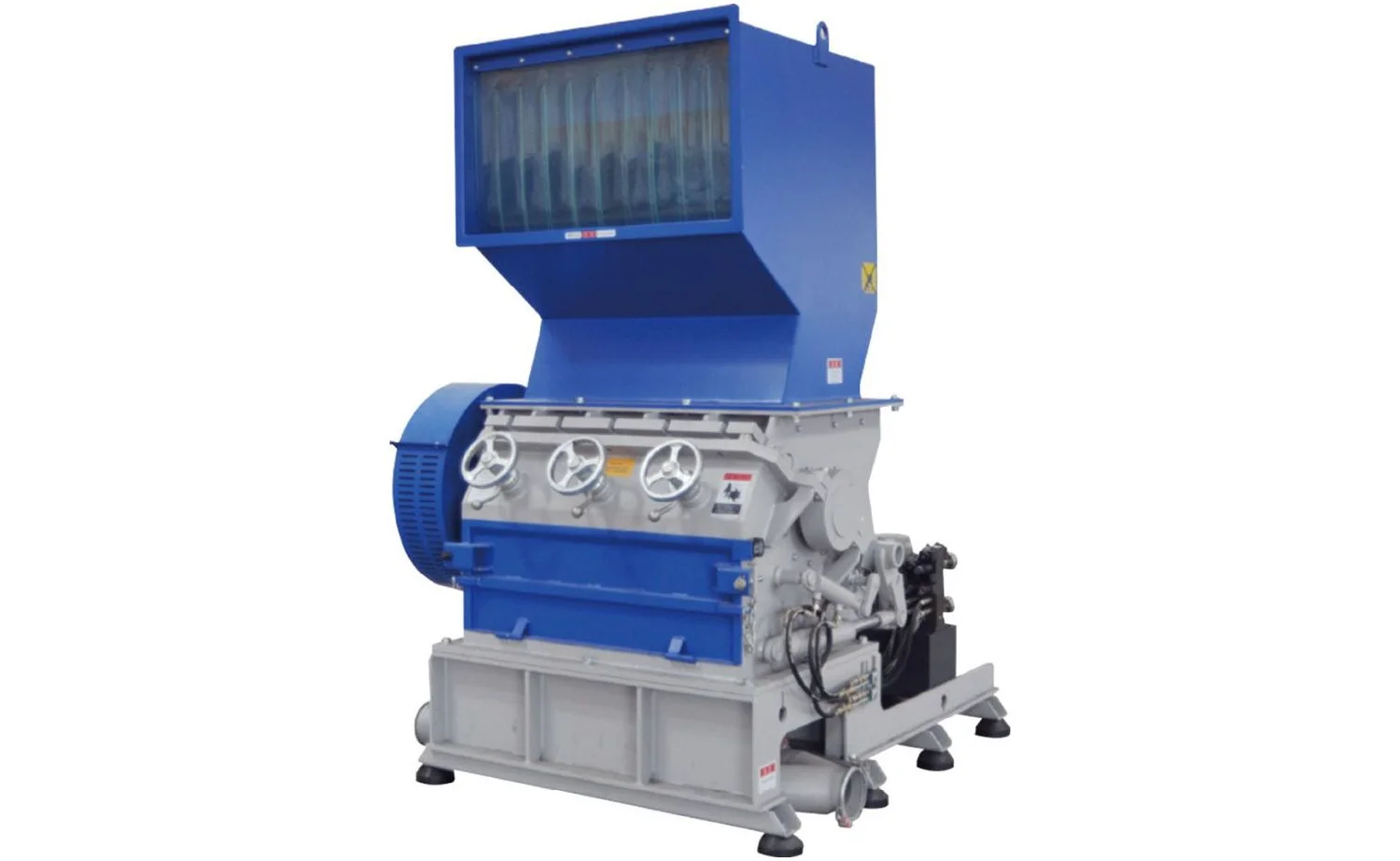
| Thermoforming skeleton trim (large sheets, stiff material) | Oversized for granulator hopper, risk of jamming | Pre-shredder followed by granulator; the ZCS combination system is purpose-built for this two-stage approach |
| Blown or cast film rolls and trim | Wrapping, bird-nesting, tangling around rotor | Dedicated film granulator with anti-wrap rotor design; slower rotor speed, specific knife geometry to prevent wrapping |
| Mixed film and rigid trim | Each material type has different processing requirements | Separate processing streams or a shredder pre-stage to normalize size before granulation |
The Inline vs. Offline Decision
One of the most important decisions for thermoforming operations is whether to process scrap inline, meaning the granulator is integrated directly into the thermoforming line and receives trim as it is generated, or offline in a batch operation at the end of a run. Both work, but they have different equipment implications.
Inline processing maximizes material recapture speed and fits well with operations that run long production runs of the same resin. The granulator or shredder needs to be able to keep pace with the trim generation rate without accumulating material. Offline batch processing gives more flexibility in equipment sizing but requires a way to store and manage trim between production and processing, which introduces contamination risk if the storage area is shared with multiple resin types.
Typical skeleton trim loss rate as a share of total sheet input in thermoforming, depending on part nesting efficiency
Thermoforming and film scrap is typically single-resin and uncontaminated, making it among the highest-value post-industrial recyclate
Granulator market growth rate through 2033, driven partly by expanding closed-loop recycling in packaging applications