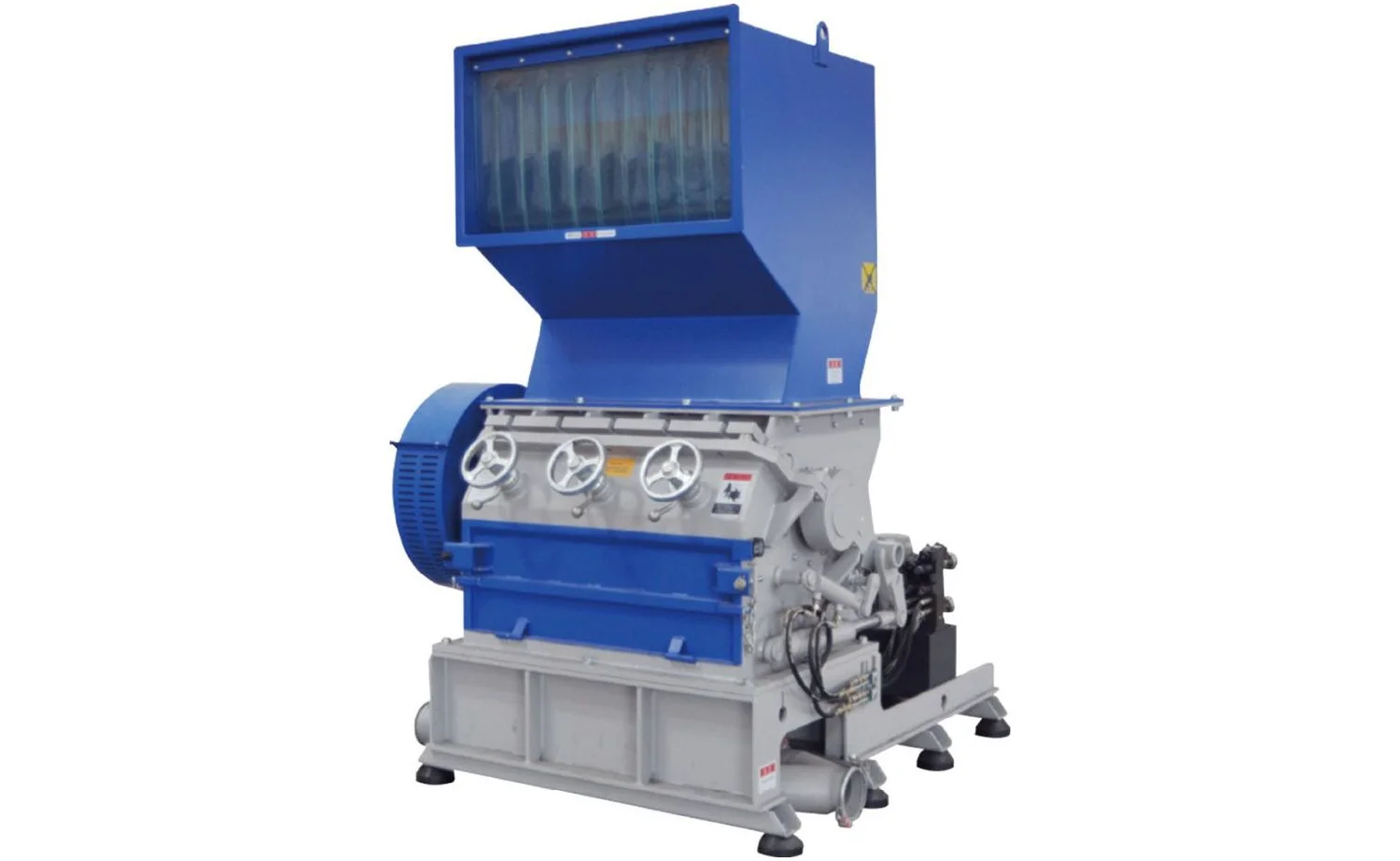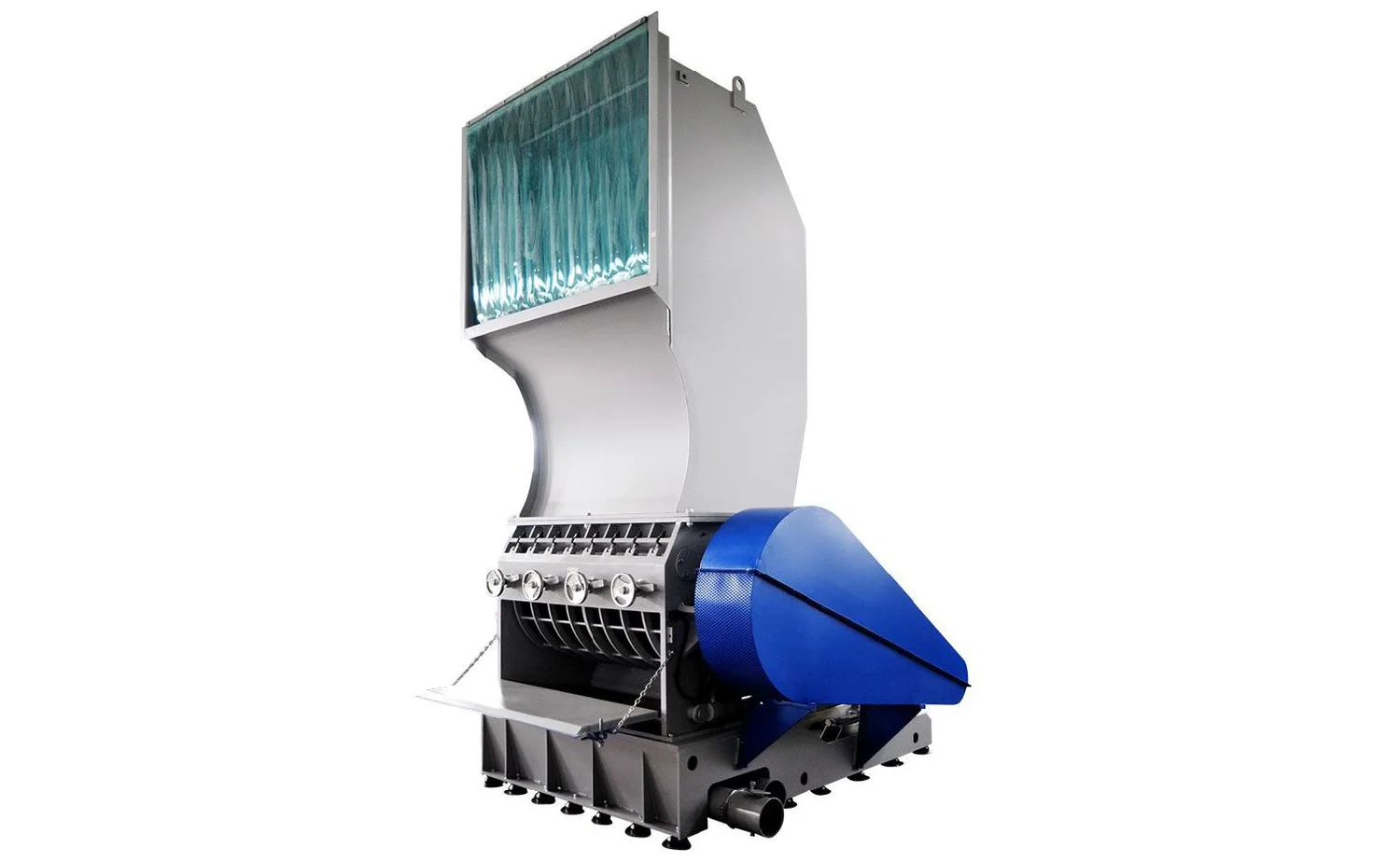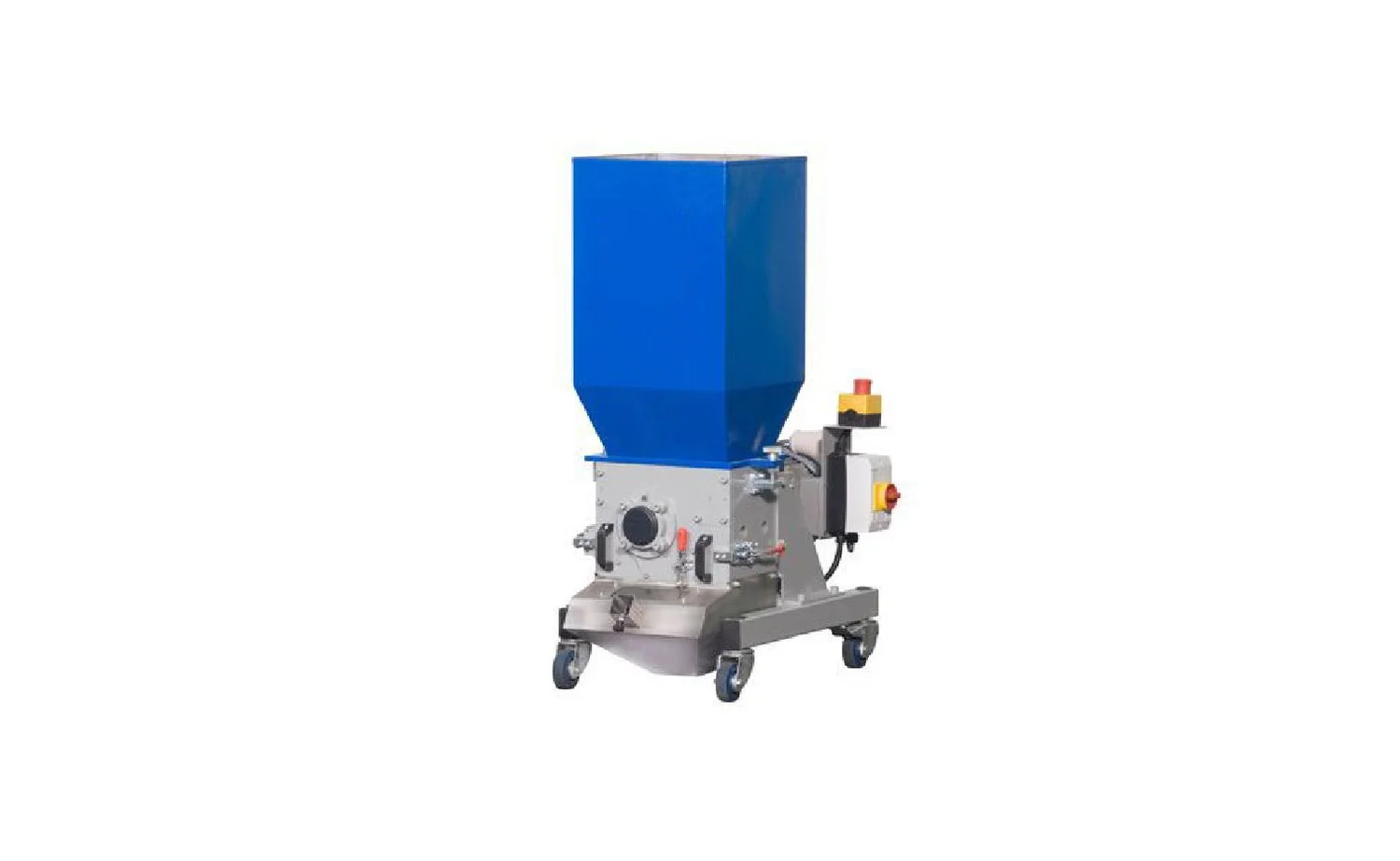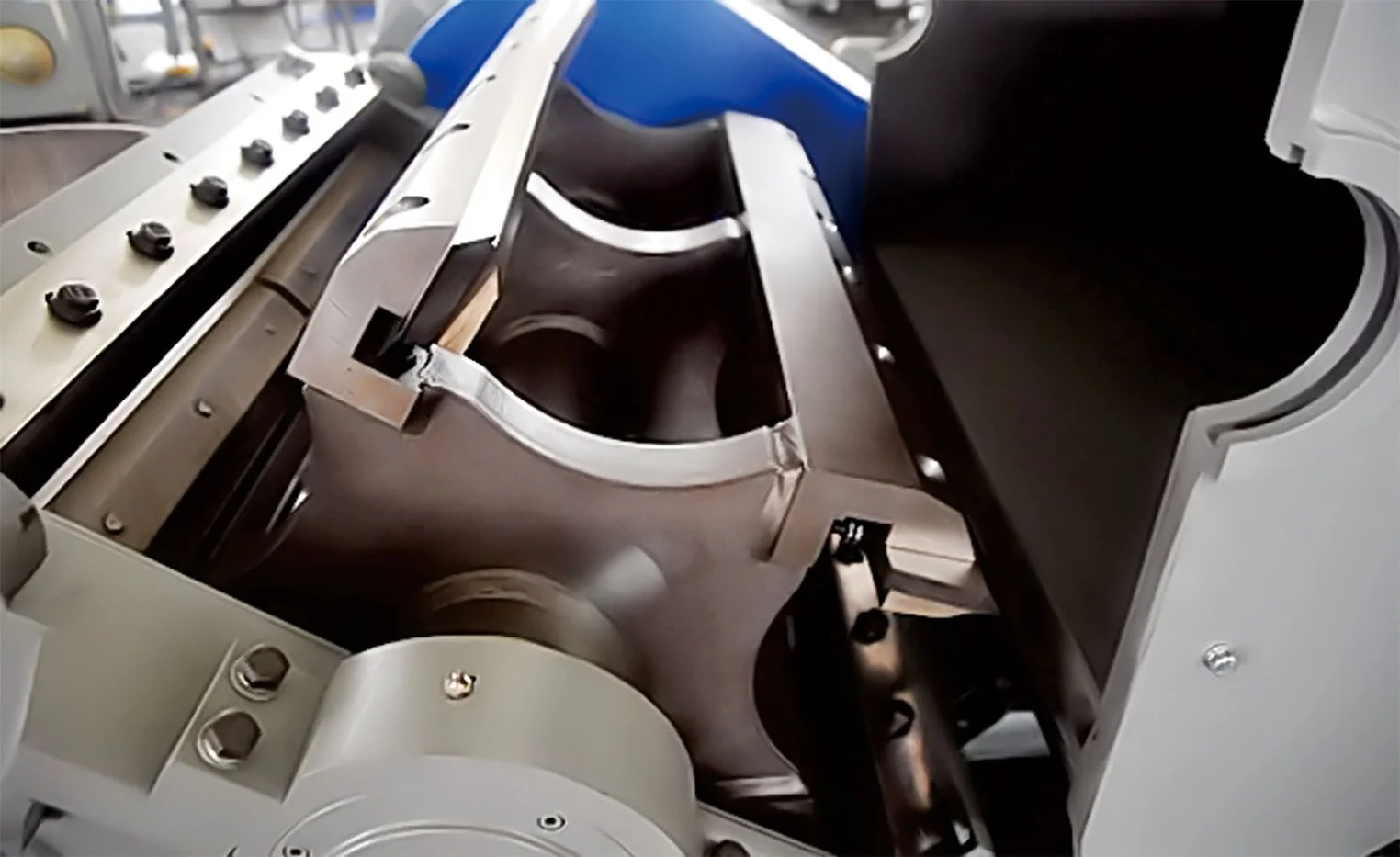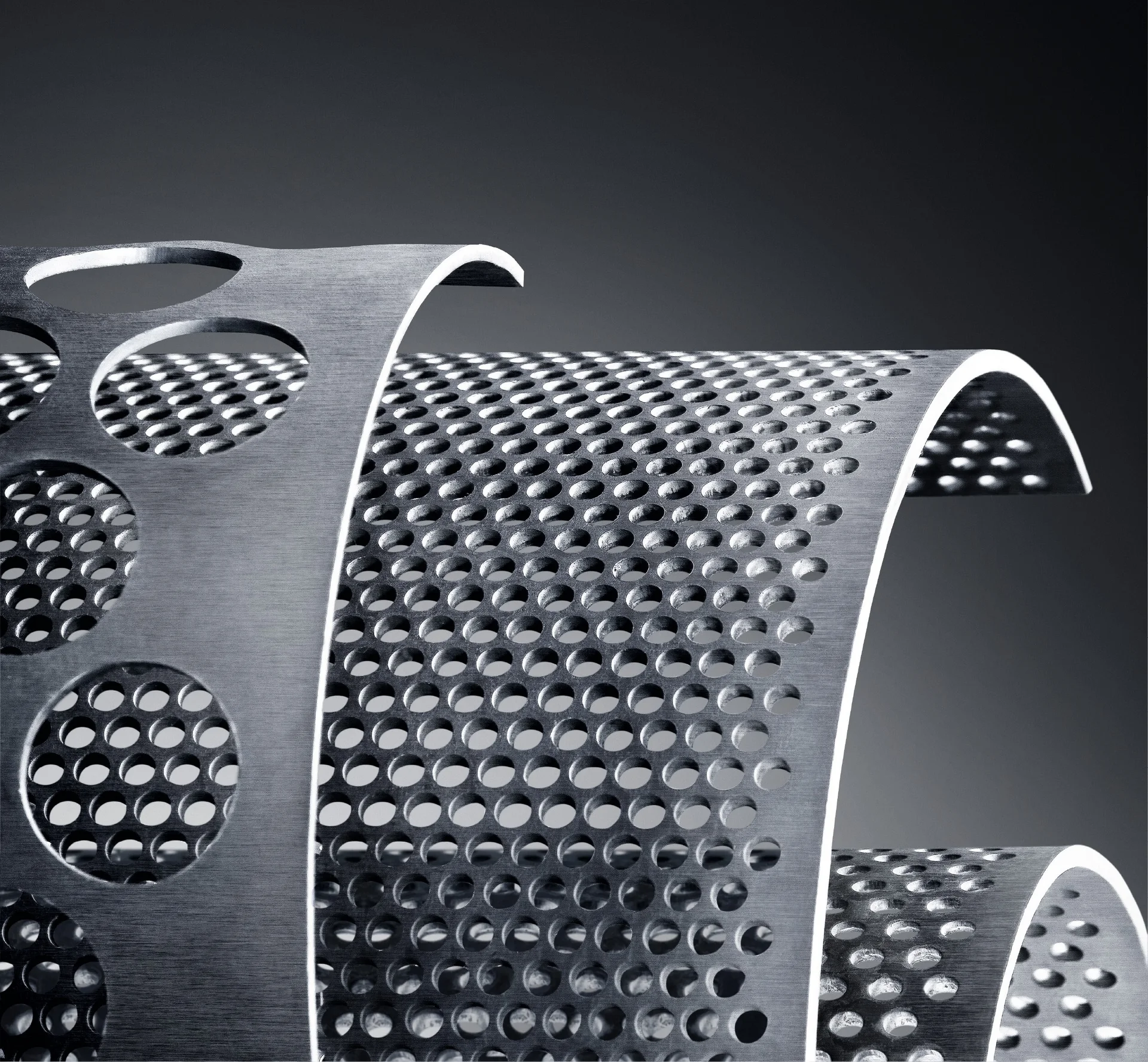
The screen is a perforated steel half-cylinder that costs a fraction of the machine around it. It may also be the single spec that most determines whether your regrind is usable.
In a granulator, material stays in the cutting chamber until it is small enough to fall through the holes in the screen. That one sentence explains almost everything about how screen size behaves. The hole diameter sets the largest particle that can leave, which sets your particle size, which then ripples out into throughput, dust, energy use, and blade wear. Choose it well and the rest of the machine gets easier. Choose it poorly and no amount of horsepower fixes the result.
A smaller screen makes finer, more uniform regrind, but material recirculates longer before it can escape. That lowers throughput, raises energy per pound, generates more fines, and wears blades faster. A larger screen does the opposite. The right screen is the largest hole that still meets your downstream size requirement.
What the hole size actually does
Picture a piece of scrap in the chamber. Each pass of the rotor knife shears a bit off. The piece keeps getting cut until it is small enough to pass a hole and drop out. If the holes are large, most particles reach exit size quickly, so material spends little time recirculating and throughput is high. If the holes are small, particles must be cut many more times before they can leave, so the chamber stays fuller, the motor works harder per pound, and more fine dust is produced along the way.
Published granulator guidance illustrates the pattern with typical ranges: roughly 6 to 10 mm screens for material going straight to extrusion, 8 to 14 mm for pellet lines, and 10 to 18 mm where the flake will be sold on. The same guidance notes that going to a smaller screen can cut throughput by 20 to 40 percent while increasing blade wear.[1] Those are directional numbers, not promises, but the direction is always the same.
Relative throughput vs. screen hole size
The same machine and material, only the screen changes. Larger holes let particles exit sooner, so throughput climbs. Values are indexed to an 18 mm screen at 100%.
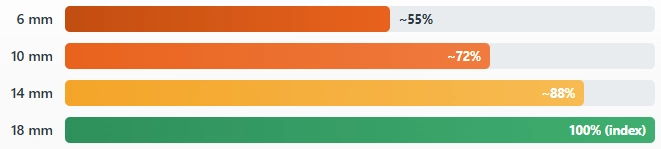
Illustrative curve based on published guidance that smaller screens reduce throughput by roughly 20–40% versus larger ones on the same feed.[1] Actual figures vary with resin, wall thickness, and rotor design.
The hidden cost: fines and dust
Every extra pass of the knife that a small screen forces also produces more fines, the very small particles and dust that no one wants. Fines cause problems downstream: they can degrade in the extruder, disrupt feeding, create dust-handling and housekeeping issues, and lower the value of flake sold by weight. So a screen chosen only for “fine as possible” often produces regrind that is harder to use, not easier. The goal is the right size with the fewest fines, which usually means the largest screen your process can accept.
A practical selection framework
| Downstream use | Typical screen range | Priority |
|---|---|---|
| Direct extrusion / back into press | ~6–10 mm | Uniform size, feed consistency |
| Pellet / compounding line | ~8–14 mm | Balance of size and throughput |
| Flake sold as recovered material | ~10–18 mm | Throughput, low fines |
| Heavy / bulky rigid scrap | Larger, staged | Avoid recirculation overload |
Ranges after published granulator screen-size guidance.[1] Confirm against your own resin and downstream spec.
Two rules that save the most grief
Start one size up. If your downstream process can tolerate a slightly larger particle, take it. You gain throughput, lose fines, and extend blade life, all at once. Replace stretched screens. Worn holes elongate over time; once perforations open past roughly 110 percent of their original size, oversize particles slip through and your size control quietly disappears.[1] A worn screen is one of the most common reasons regrind drifts out of spec.
Matching the screen to the machine
Screen strategy also depends on the granulator platform. Beside-the-press and slow-speed units are built for feed-and-forget consistency; central and heavy-duty machines are built to hold size at higher volume. ZERMA configures screens as part of the overall size-reduction design rather than as an afterthought.
Dial in the right screen for your regrind spec
Tell us your resin and what happens to the flake next. We will recommend a screen and rotor combination and can test it on your material before you commit.
Frequently asked questions
Does a smaller screen give me finer regrind for free?
No. You pay for it in throughput, energy per pound, dust, and blade wear. A smaller screen forces material to be cut more times before it can exit. Only go smaller than your downstream process needs if there is a real reason to.
How do I know when a screen needs replacing?
Watch for oversize particles appearing in otherwise on-spec regrind, and inspect the holes. Once perforations stretch past roughly 110 percent of their original diameter, they let oversize material through and your size control is gone.
Can I run one screen for several products?
Often yes, if their size requirements are close. When they differ a lot, keeping two screens and swapping is usually cheaper than running everything at the smallest common size, which sacrifices throughput on every job.