Both designs reduce bulky material. They do it in different ways, produce different output, and fit different places in a recycling line.
“Single shaft or dual shaft?” is one of the first questions a buyer runs into when shopping for an industrial shredder. It sounds like a feature comparison, but it is really a question about what you need to come out of the machine and what happens to the material next.
A review of plastic shredder research published through IOP Conference Series put it simply: the geometry and orientation of the blades fitted to single or double shafts directly determine shredding performance. Here is how the two designs differ in practice, and how to decide which one belongs in your operation.
How a single-shaft shredder works
A single-shaft shredder has one rotor fitted with knives that turns at low speed against one or more rows of stationary (stator) knives. A hydraulic ram pushes material into the rotor, and the material stays in the cutting zone until it is small enough to pass through a screen beneath the rotor.
That screen is the defining feature. Because nothing leaves until it fits through the holes, a single-shaft shredder produces a controlled, relatively uniform output size. Change the screen and you change the output.
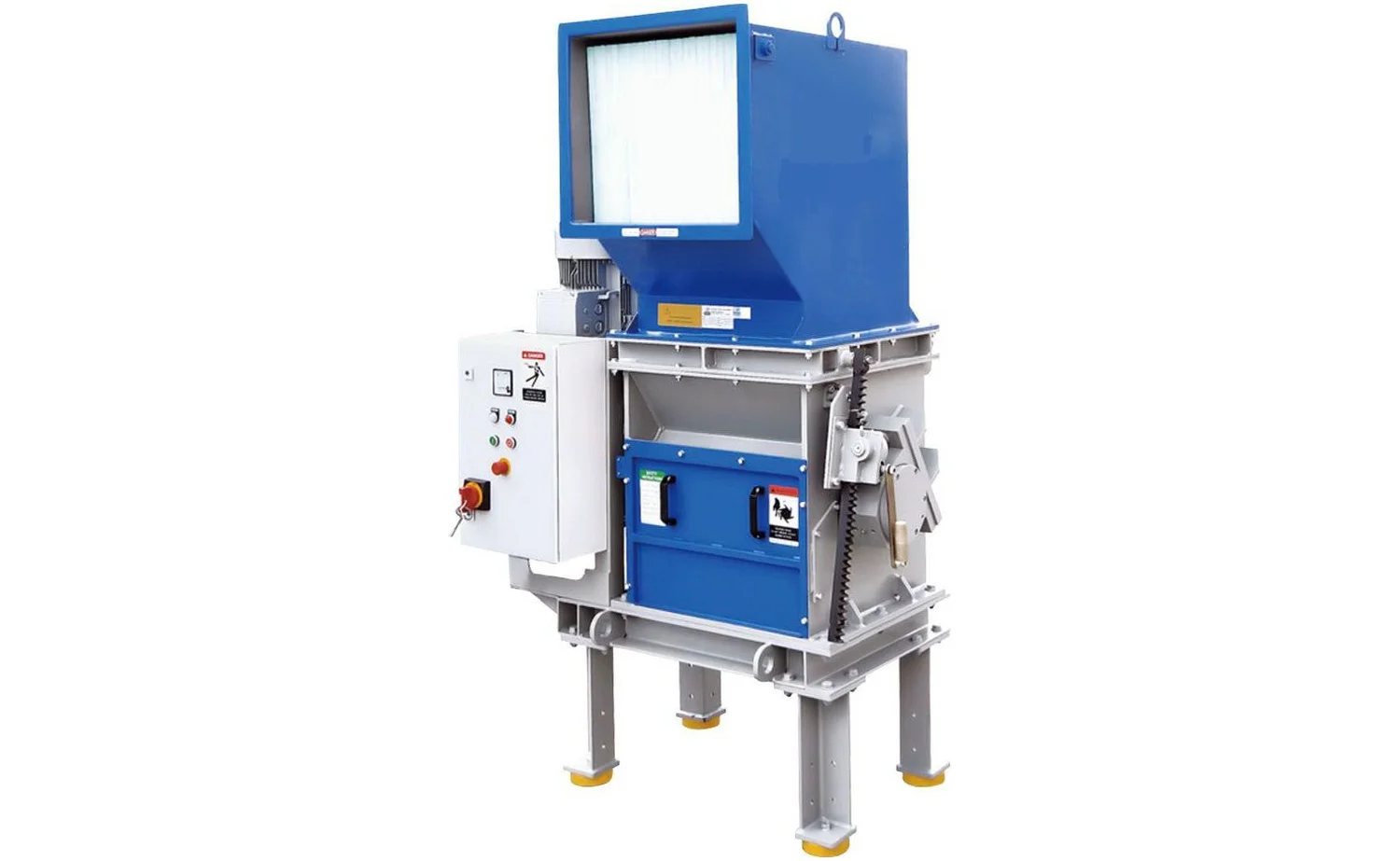
ZERMA America shredders are built on this design. The ZSS General Purpose Shredder, for example, uses a large diameter flat rotor with specially machined pockets that hold concave ground square knives, which can be rotated to a fresh edge once one side wears. A two-speed hydraulic swing-type ram feeds the rotor, and the screen sits in a hydraulically operated screen cradle.
How a dual-shaft shredder works
A dual-shaft (twin-shaft) shredder uses two counter-rotating shafts fitted with interlocking cutter discs. Material is pulled down between the shafts and sheared or torn into strips and chunks. These machines also run at low speed and high torque, and they are often used without a screen, so the output size is set mainly by the width of the cutters rather than by a screen.
The result is usually coarser and less uniform than a screened single-shaft output. That is not a flaw; it is the point. Dual-shaft machines are commonly used for primary, volume-reduction shredding where the next machine in the line will do the precise sizing.
Side-by-side comparison
| Single-shaft shredder | Dual-shaft shredder | |
|---|---|---|
| Cutting action | Rotor knives cut against stator knives | Two shafts shear and tear between interlocking cutters |
| Feeding | Usually a hydraulic ram pushes material into the rotor | Material is drawn in between the shafts |
| Output size control | Set by the screen, so output is controlled and consistent | Set mainly by cutter width, often with no screen |
| Output shape | More uniform pieces | Strips and irregular chunks |
| Typical role | Producing a sized material for a granulator, pelletizer or direct reuse | Primary volume reduction ahead of further processing |
| Wear parts | Indexable knives, stator knives, screen | Cutter discs and spacers |
When a single-shaft shredder is the right choice
For most plastics recycling and in-plant scrap, the controlled output of a single-shaft shredder is what makes the rest of the line work. Consider single-shaft when:
- The shredder feeds a granulator. A consistent, screened output feeds a granulator evenly, which protects the granulator and improves regrind quality. ZERMA America’s ZCS combination puts a shredder and granulator into one closed system, which reduces contamination risk compared with a conveyor-based two-stage setup.
- You are processing plastic lumps, purgings, pipe, film, bales or woven bags. The ZSS is designed for in-house and general plastics recycling across these inputs, as well as e-waste and post-consumer waste.
- You need a specific output size. ZERMA America shredder screens range from more than 16 mm on the ZBS lump and purge shredder to more than 40 mm on the ZSS and more than 60 mm on the ZXS heavy duty shredder.
- The material is long or oversized. The ZRS pipe and profile shredder uses a hydraulic ram to force pipes up to 6 meters long into the rotor.
When a dual-shaft shredder makes sense
Dual-shaft designs are typically chosen when the goal is coarse volume reduction rather than a sized product, for example when bulky, mixed material simply needs to be broken down before sorting or a second shredding stage. If a coarse, unsized output is all you need and a second machine will handle sizing, a dual-shaft machine can be a reasonable first step.
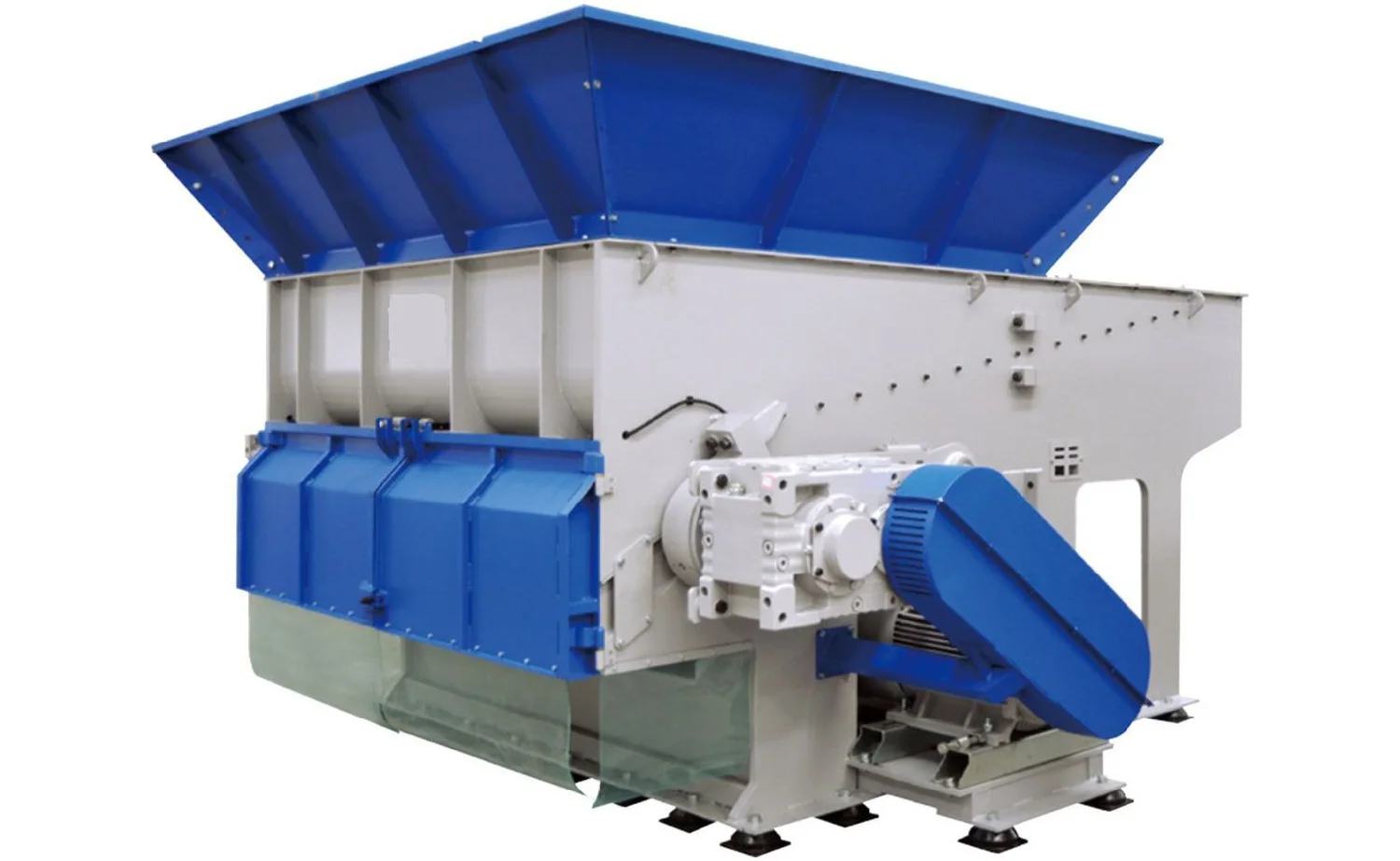
That said, many operations that start out asking about dual-shaft machines for bulky material find that a large-chamber single-shaft shredder gives them the volume reduction and a usable output in one pass. ZERMA America’s ZIS Big Volume Shredder, for example, is designed for IBCs, wheelie bins, pallets and large drums. The ZXS heavy duty shredder handles inputs such as fridges, purges, tires, pallets, bales, drums, barrels, pipes and film.
Five questions to answer before you choose
What happens to the material next? A granulator, a pelletizer, a sorting line, or a bale for sale each needs something different.
What output size do you need, and how consistent must it be?
What is the largest, toughest piece the machine will ever see? Size for the worst case, not the average.
How clean is the feed? Tramp metal, grit and other contaminants affect knife life and machine choice. Our article on contamination covers this in depth.
How many different materials will you run? Our guide to evaluating a multi-purpose shredder helps if the answer is “several.”
The most reliable answer comes from running your own material. Send ZERMA America a sample and we will show you what the output looks like.
Machines mentioned in this article
Single-shaft workhorse for plastics, e-waste and post-consumer material
View machine →
Not sure which shredder fits your material?
Tell ZERMA America what you are shredding and what needs to come out. We will help you match the machine to the job.
Frequently asked questions
What is the main difference between single-shaft and dual-shaft shredders?
A single-shaft shredder cuts material between a rotor and stationary knives and uses a screen to control output size. A dual-shaft shredder shears material between two counter-rotating shafts, usually producing coarser, less uniform output.
Which shredder is better for plastic recycling?
When the shredded material feeds a granulator or needs a consistent size, a single-shaft shredder with a screen is usually the better fit. Dual-shaft machines are more often used for coarse primary reduction.
Does ZERMA America make dual-shaft shredders?
ZERMA America’s shredder range is built on single-shaft designs, including general purpose, big volume, horizontal, heavy duty, pipe and profile, lump and purge, and tire models. Contact ZERMA America to discuss applications that call for very coarse primary reduction.
Can a single-shaft shredder handle bulky items like IBCs and drums?
Yes, when it is designed for them. The ZERMA America ZIS Big Volume Shredder is built for IBCs, wheelie bins, pallets and large drums.
How do I change the output size of a single-shaft shredder?
Change the screen. Because material cannot leave the cutting zone until it passes through the screen, screen hole size sets the output size.