Jams are rarely random. Most trace back to how the shredder is fed, the condition of its cutting tools, or a mismatch between the material and the machine.
Every shredder will stall at some point. A dense purge lump, a tangle of strapping or an unexpected piece of steel can stop any machine. But when a shredder jams repeatedly, the problem is not bad luck. Something in the feeding, the cutting tools or the application is out of balance, and finding it is usually faster than clearing the next ten jams.
The eight most common causes of shredder jams
1. Overfeeding and bridging
Loading more material than the rotor can process packs the cutting zone. Large or awkward pieces can also bridge across the hopper so the ram pushes against a wedge of material instead of feeding the rotor. Look at how the machine is loaded during a typical shift. Steady, controlled feeding almost always jams less than batch dumping.
2. Ram settings or hydraulic problems
The ram is what presents material to the rotor. If ram pressure, speed or timing is wrong for the material, the rotor either starves or gets overloaded. ZERMA America’s ZSS, for example, uses a two-speed hydraulic system as standard on its swing-type ram. Low hydraulic oil, worn seals or a failing sensor can change how the ram behaves, so check the hydraulic system when jams start happening without an obvious material cause.
3. Dull or worn knives
Worn knives do not grab and cut material efficiently. Instead, material rides on the rotor, builds heat, and eventually stalls the machine. Check both the rotor knives and the stator knives. On ZERMA America shredders that use concave ground square knives, a worn knife can be rotated to a fresh edge before it needs replacement, which makes it easy to restore cutting performance during planned maintenance.
4. A blocked or wrong-size screen
If material cannot leave through the screen fast enough, it accumulates in the cutting chamber until the rotor stalls. Plugged holes, heat-softened plastic packed into the screen, or a screen that is too small for the throughput you are asking for can all cause this. ZERMA America shredders such as the ZSS and ZIS use a hydraulic screen cradle, which makes screen inspection and changes more practical.
5. Material wrapping around the rotor
Film, fibers, strapping, rope and textiles can wrap around the rotor instead of being cut. Once a wrap starts, it builds quickly. Sharp knives, a correct knife-to-stator gap and controlled feeding all help, as does choosing a machine designed for that material.
6. Tramp metal and foreign objects
Bolts, steel inserts, tools and stones can stop a rotor instantly and damage knives in the process. If jams come with chipped knives or loud impacts, look upstream at how material is inspected before it reaches the shredder.
7. Material too large, dense or tough for the machine
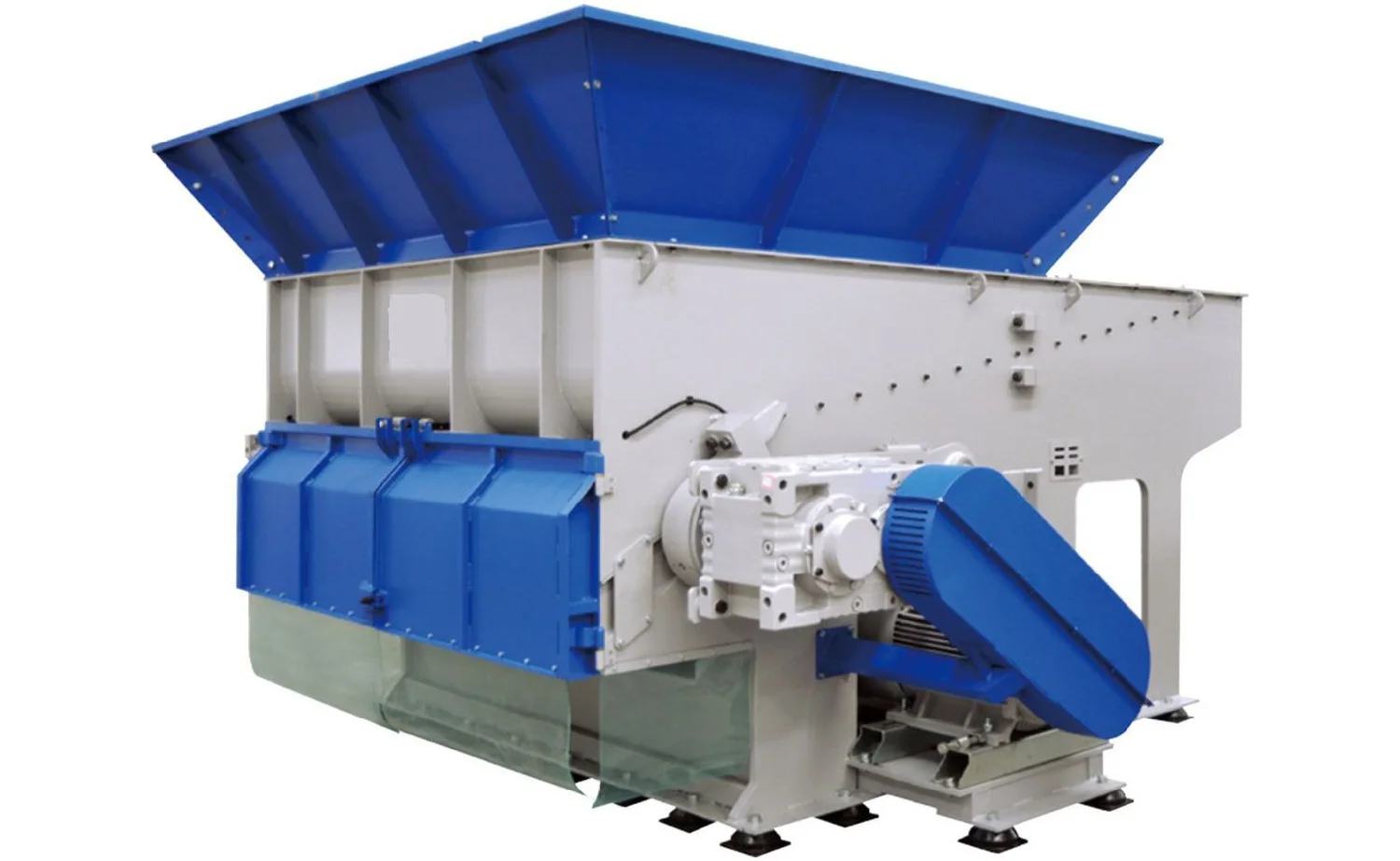
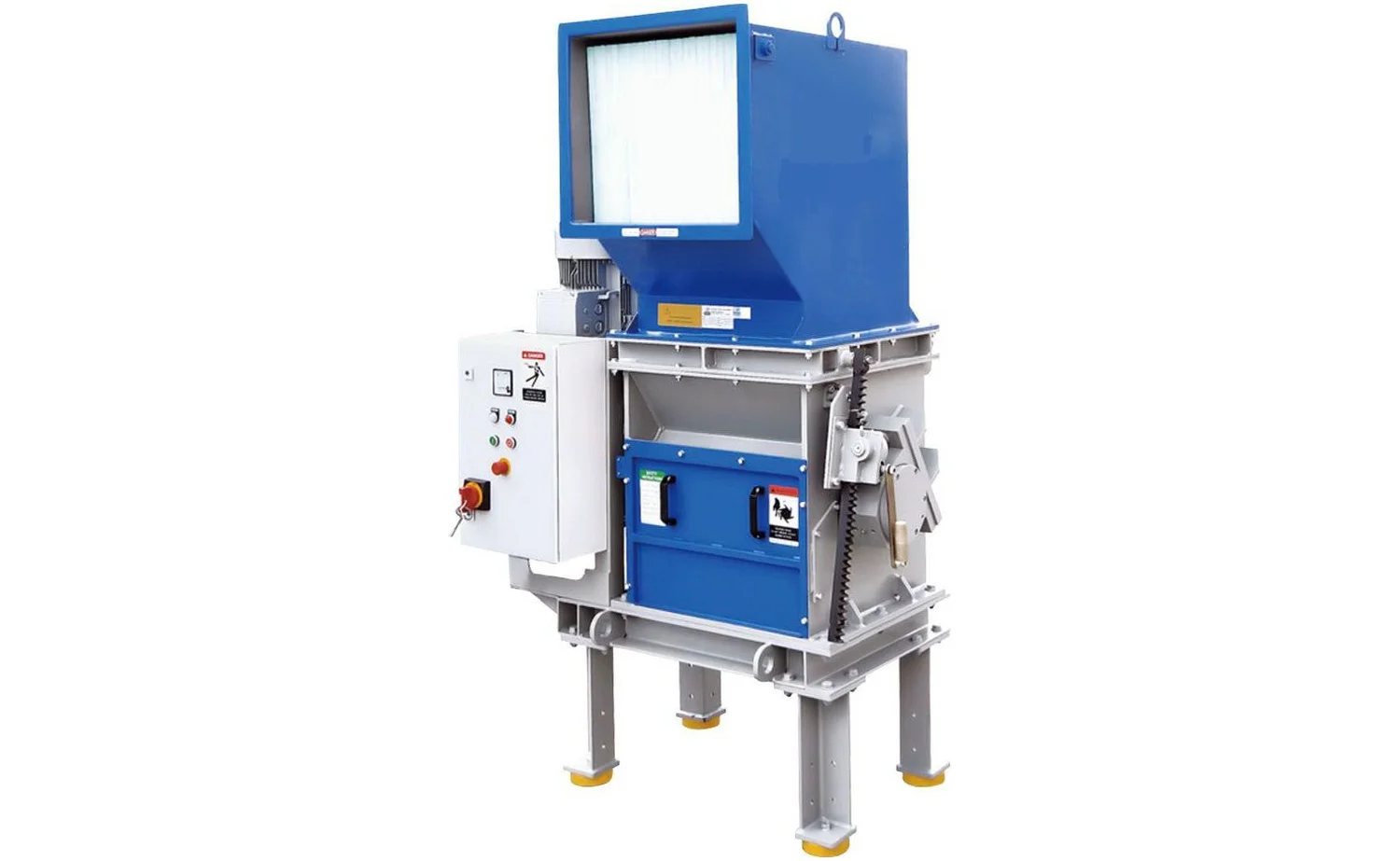
A shredder that jams on the same type of part every time may simply be the wrong machine for that part. ZERMA America builds specific machines for difficult material:
- The ZBS lump and purge shredder handles lumps and purgings up to 400 mm in diameter.
- The ZIS big volume shredder is designed for IBCs, wheelie bins, pallets and large drums.
- The ZRS pipe and profile shredder processes large diameter pipes and bundles of smaller pipes and profiles.
- The ZXS heavy duty shredder is built for tough, mixed inputs and offers optional hard facing for abrasive applications.
8. Heat
Friction heat softens many plastics. Soft material smears, sticks to knives and packs into screens, all of which lead back to a stall. Heat is usually a symptom of one of the causes above, so trace it back rather than treating it on its own. Our article Heat Is the Enemy of Good Regrind explains why.
Diagnostic table
| What you see | Most likely cause | Check first |
|---|---|---|
| Jams during heavy loading, fine during steady feeding | Overfeeding or bridging | Loading practice and hopper fill level |
| Ram pushes but material does not engage the rotor | Worn knives or ram settings | Knife edges, ram pressure and speed |
| Jams gradually increasing over weeks | Knife and stator wear | Knife condition and knife-to-stator gap |
| Chamber full, little output coming through | Blocked or undersized screen | Screen holes and screen size |
| Material wound around the rotor | Wrapping material | Feeding method, knife sharpness |
| Sudden stop with a loud impact | Tramp metal or foreign object | Knives for damage, upstream inspection |
| Jams on one specific part every time | Machine not suited to that part | Application review |
Preventing the next jam
Standardize feeding. Write down how each material should be loaded, and train every shift the same way.
Inspect cutting tools on a schedule. Our size-reduction maintenance schedule lays out daily, weekly and longer-interval checks.
Keep spare knives and screens on hand. ZERMA America spare parts and Virtus Equipment Direct keep wear parts close so a dull set does not become a week of downtime.
Keep guards in place. OSHA requires machine guarding that protects operators from point-of-operation and rotating-part hazards.
Revisit the application when the material changes. A new material, a new supplier or a new part geometry can change how a shredder behaves.
Machines mentioned in this article
Jams keep coming back?
ZERMA America can review your material, your feeding method and your machine setup, and get the right wear parts to you fast.
Frequently asked questions
What is the most common cause of a plastic shredder jam?
Overfeeding and worn cutting tools are two of the most common causes. Packing the cutting zone or running on dull knives both cause material to build up until the rotor stalls.
Is it safe to reach into a jammed shredder?
No. A jammed shredder can hold stored mechanical and hydraulic energy. Lock out and tag out the machine and follow the clearing procedure in your operating manual. OSHA’s 29 CFR 1910.147 covers this type of servicing work.
Why does film or fiber wrap around my shredder rotor?
Flexible materials can wrap instead of being cut, especially when knives are worn or the knife-to-stator gap is too wide. Sharp knives, controlled feeding and a machine suited to the material help prevent wrapping.
Can a screen cause a shredder to jam?
Yes. If material cannot pass through the screen fast enough, because holes are plugged or the screen is too small for the throughput, the chamber fills until the rotor stalls.
How do I stop my shredder from jamming on purgings?
Purgings are dense and solid, so they need a machine designed for them. The ZERMA America ZBS lump and purge shredder handles lumps and purgings up to 400 mm in diameter.